ibis

Thailand Birding: Black-headed Ibis & Other Large Waterbirds

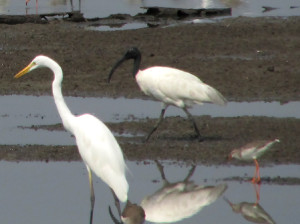
Black-headed Ibis is a very uncommon bird in Thailand, but, like many other large waterbirds, they are increasing in number.

In the past many large waterbirds, such as storks, ibises, pelicans, herons etc. were very common birds but years of agricultural intensification and persecution wiped many of these species out or made them very rare in Thailand. Fortunately, as persecution is not the problem it once was and many of these birds are making a comeback.  Read more »

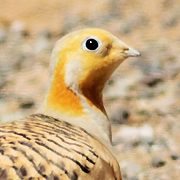
spoonbilledsandpiper.jpg

Thailand Birding: Spoon-billed Sandpiper Returns!

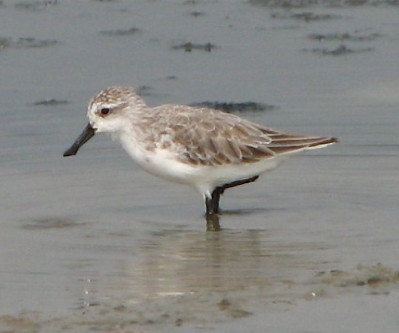
For all the birders visiting Thailand over the next few months who were getting nervous about whether this critically endangered species would make it back to Thailand this winter, the good news is yes it did! Phil Round informed me that at least 2 were seen at Khok Kham from 22nd October and 2 or 3 at Pak Thale from the end of October. I can confirm this as I saw 1 Spoon-billed Sandpiper myself at Pak Thale this morning. Read more »

long-toed-stint.jpg

Thailand Birding: Shorebirds at Pak Thale

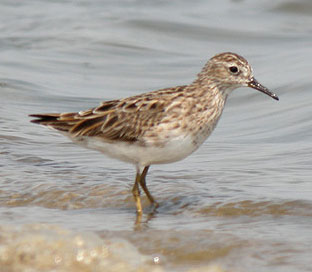
One of the most anticipated arrivals each year is Spoon-billed Sandpiper. Birdwatchers from all over the world come to Thailand to watch this critically endangered shorebird at Pak Thale and Khok Kham.

A few days ago on 25th October, 2012, I did a little birding at Pak Thale in the company of Jules Tolboom from The Netherlands. We spent around 1.5 hours in the late afternoon at Pak Thale watching large numbers of shorebirds.

We had a long hard look at all the shorebirds that could be seen from the dirt road at the Spoon-billed Sandpiper site at Pak Thale but despite looking hard none appeared to be present. In fact this is pretty much as expected as it was probably about 1 week too early for the bird.

Despite the lack of Spoon-billed Sandpiper there were very impressive numbers of Great Knot (1500+) and Eurasian Curlew (250+) as well as good numbers of Red-necked Stint, Lesser Sand Plover, Greater Sand Plover, Kentish Plover, Curlew Sandpiper, Broad-billed Sandpiper, Eastern Black-tailed Godwit and Marsh Sandpiper.

The most uncommon bird was one Eastern Curlew among the flock of Eurasian Curlews which I picked out due to its warm brown buffy appearance. Identification was ensured when it began to preen and showed me its dark underwing (pale/white on Eurasian Curlew). It ought to be noted that length of bill is not an identification point here where the female Eurasian Curlews have bills that are as long (if not longer) than the Eastern Curlews.

Other species present were Red Knot, Dunlin, Whimbrel, Spotted Redshank and Common Greenshank.

Elsewhere at nearby Wat Komnaram a Milky Stork was seen alongside two Painted Storks and 6 Black Ibis and 36 Grey-headed Lapwings were feeding.

Spoon-billed Sandpiper should be back next week!

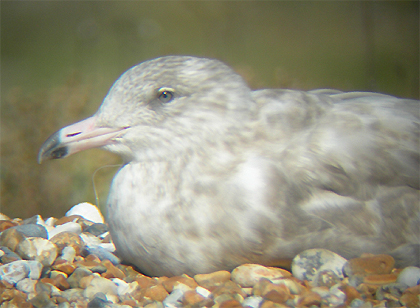
glaucous-gull.jpg

Birdwatching in UK: Six Weeks Back Home

From mid August to the end of September 2011 I spent six weeks staying with my family in southeast England. Whilst many British people head to Thailand for some warmth it was nice for me to get out of the humidity and heat for a while and experience some cool weather; in fact apart from some very windy days, the weather was actually pretty good for most of my stay.

Catching Up With Common Birds

Every year, when I return to Britain, one of the first things I do is head down to my old local patch along the Darent Valley in Kent. Read more »

black-and-red-nest.jpg

Wet Season Birding

The large majority of birders visit Thailand in the dry season (November to April). Why is this?

Well, firstly, there is a far higher number of species present in the country during the dry season due to the visiting migrants from China and Siberia and the largely dry and sunny weather is an attraction for many people. However, it may also be because many books and websites have always labelled the dry season as the “best” time to be birdwatching in Thailand. But best for what?

The dry season is most certainly the time to visit Thailand for migrant species, particularly shorebirds and specifically Spoon-billed Sandpiper. However, for many of the resident species that live in forests, the dry season most certainly is not the best time for birding in Thailand.

Species such as broadbills, pittas, woodpeckers, forest kingfishers and others, are all far easier to find in the beginning and mid wet season, when they are breeding, than in the dry season.
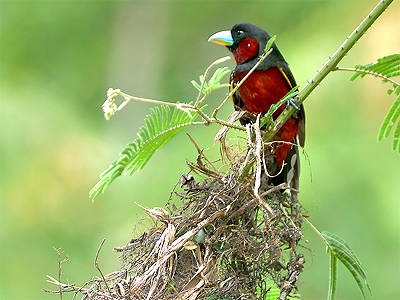
Black-and-red Broadbill on a nest by Alex Vargas

On a recent 3 days trip to Kaeng Krachan we saw 6 species of broadbill, 12 species of woodpecker, 3 species of pitta, 2 species of trogons, Grey Peacock Pheasant, Kalij Pheasant, Banded Kingfisher, Oriental Dwarf Kingfisher, Ratchet-tailed Treepie and many other tough species – this collection of birds could not be expected during a dry season visit to Kaeng Krachan.

Very few birders head to northern Thailand outside of the dry season but a recent wet season visit I made turned up Giant Nuthatch, Spot-winged Grosbeak, Pygmy Wren Babbler, Eyebrowed Wren Babbler, Spot-breasted Parrotbill, Lesser Rufous-headed Parrotbill, Grey-headed Parrotbill, Lesser Cuckoo, Lesser Shortwing in abundance and many other hard-to-find birds.

It has to be admitted that the dry season is the best time for general bird abundance, migrants and certain target birds, but birdwatchers who have been to the region several times and are still looking for many of those tough forest species should consider making their trip in the period May-July when a lot of great birds can be found.

If you are a birder who is looking for difficult resident species contact me and I can let you know whether the wet season might be a better time to look for them than the dry – nickupton@thaibirding.com
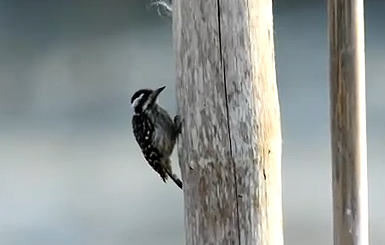
sunda-pygmy-woodpecker.jpg

Thailand Birding: Three New Species For Thailand

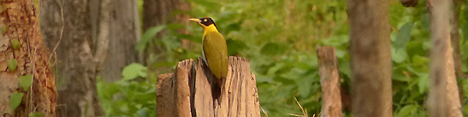
This morning I was alerted (sadly too late) to the presence of a Sooty Gull, which had been photographed at Bang Poo. This is the third new species for Thailand that I have been recently been made aware of with the other additions being Sunda Pygmy Woodpecker which was photographed in Satun province on the Malaysian border and has long been expected to occur in southern Thailand, and Northern Boobook which was caught and ringed at Laem Pak Bia by Phil Round in April 2011; this is a recent split from Brown Hawk Owl.

sunda-pygmy-woodpecker.jpg
Click the picture to watch Sunda Pygmy Woodpecker in Thailand on Youtube

With large parts of the country being underwatched or not watched at all, the lack of coverage of the seas around Thailand and the possibility of rare migrants turning up, there are undoubtedly more species to be added to Thailand’s growing bird list.

However, it should also be noted that Tawny Eagle and Pink-rumped Rosefinch have both been removed from the Thai list.

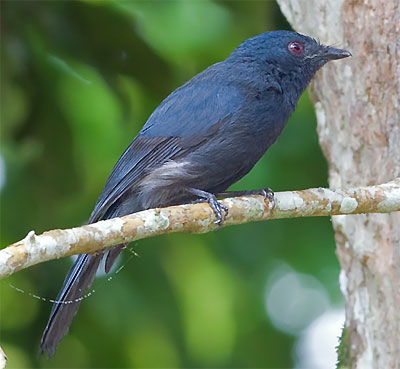
Female Maroon-breasted Philentoma by Alex Vargas

Thailand Birding: Maroon-breasted Philentoma

Female Maroon-breasted Philentoma by Alex Vargas

Alex Vargas recently took this photograph of a female Maroon-breasted Philentoma in the vicinty of Km 36 at Kaeng Krachan national park. He also saw the male well, through binoculars but only managed to obtain images of this female.

Maroon-breasted Philentoma is known from Kaeng Krachan but is very seldom seen, in fact it is seldom seen anywhere in Thailand – I have seen a pair just the once myself, at Krung Ching.

In this photo it is difficult to see the dark wash to the breast that field guides indicate the female should have, this may be down to the light conditions or the fact the field guides make more of this feature than is really visible.

Interestingly, Phil Round had this to say about the species;“The easiest place I know to see it, though, is (ironically) at its northerly known limit, at Phu Tho, Thongphaphum District, Kanchanaburi – a good 2 deg N latitude N of Kaeng Krachan. There there is some nice accessible evergreen forest at the base of limestone crags, which also holds Ferruginous Partridge and tons of other good birds. Nobody ever goes there these days since Kaeng Krachan was “discovered” some 20-plus years ago, but I visited the site last in May 2009 and saw a pair of philentomas just as easily as before.”

Alex has several more photographs of the bird here - Female Maroon-breasted Philentoma.

Free WordPress Themes