Nightjar listening and Mosquito feeding

Somehow I have never seen a European Nightjar – mainly due to the fact that every time I think about finding them I then decide I am too tired to stay out half the night as I have to get up for work. Well, with no work to worry about I headed, with my friend Simon Tonkin, to Crowle Moors, part of the Humberhead Peatlands National Nature Reserve.

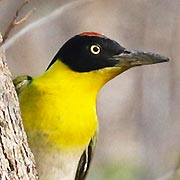
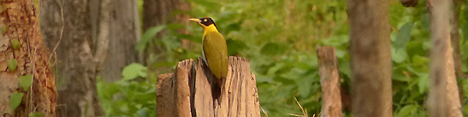
We got there at about 9 pm and walked into the best Nightjar habitat, seeing a juvenile Green Woodpecker along the way. We selected a watch point and waited for the churring. However, it very quickly became obvious that mosquitos were way more common than Nightjars here. In fact standing still attracted a huge cloud of monster mozzies that needed constant flapping of the arms to keep away. Whilst we were being driven crazy a number of mallard and smaller numbers of Teal flew overhead to roosting spots. Just before dusk a large group of Carrion Crows flew in to a roost too.

Unfortunately the mosquitos were by now co-ordinating their assualt, making it very difficult to stand still. Then, a churring Nightjar sparked our hopes, and it was soon joined by at least 5 others. I thought now that it would be a simple case of waiting for them to emerge. Something that they didn’t seem too keen on. No wonder – they had no need to fly to catch insects, simply sit with their mouths open and a swarm of mosquitos were bound to fly in.

By now, both Simon and I were swelling up from mosquito bites and dancing around trying to flap them away. We managed to stay still for a few moments to take a look at the amazing sight of Jupiter and 4 of its moons – wonderful, if only a Nightjar had flown past!

This had to be good enough to be the trip highlight and we made a hasty getaway, by this time we were both on the verge of insanity from the constant barrage from the mosquitos. Nightjars certainly live here, but if you decide to go to see them, soak yourself in deet for a week beforehand.

How to go birdwatching and see almost nothing

Step 1: Choose a warm, sunny day in mid summer.

Step 2: Take a long lie-in and slowly eat breakfast so as to miss any morning bird activity.

Step 3: Go out at midday.

Step 4: Sit in a hot car in atraffic jam for 30 minutes in order to dull the senses and increase impatience.

Step: 5: If the weather should become windy so much the better, this will drive any small passerines into the undergrowth and make it almost impossible to find birds.

This is exactly how I prepared for my walk along the River Hull to Eske/Pulfin and as a consequence saw almost nothing of note – in fact I may have set a record for the least eventful birdwatching walk in history. The “highlights” were 2 juvenile Grey Herons, a group of 21 Coot, 4 Cormorants, a male Yellowhammer and a female Kestrel. Wow!

In fact the walk was rescued from a total non-event by a noisy Little Owl which flew into a hawthorn tree from a point on the ground where presumably it had just caught something to eat.

An afternoon on the beach

What to do when the sea is calm and seawatching from Flamborough Head is pretty much a waste of time? Head to the beach at Bridlington, that’s what!

Unfortunately, the northerly winds that made seawatching at Flamborough on monday so good were not repeated today making it a pretty unrewarding past-time. In a couple of hours I saw much lower numbers of Kittiwakes and Gannets than on monday and just 5 Fulmars, although I did get lucky with 1 Arctic Skua coming quite close to shore. The only auks I saw were 6 very distant Razorbills, although plenty of Shags were busy flying back and forwards. The only other birds of interest were a group of 12 Common Scoters flying north.

I guess I will have to pay more attention to the weather report before heading back to Flamborough; any easterly or northerly winds over the next few months should turn up some good birds.

Heading to Bridlington’s north beach, I walked to the most northerly end to have a look at the gulls that hang out where some freshwater springs feed into the sea. A couple of hundred Kittiwakes were bathing, about 50-60 Herring Gulls, 13 Lesser Black-backed Gulls, 9 Great Black-backed Gulls and 7 Black-headed Gulls were all loafing around as well as around 20 Sandwich Terns, with a number of adults feeding juveniles. Also present on the rocks were a few waders: 2 Sanderling (actually they were on the beach), 1 Bar-tailed Godwit, 9 Turnstones, 23 Oystercatchers, 8 Ringed Plovers and 3 Knot. Far out to sea a couple of Gannets could also be seen fishing.

The sunshine lent itself more to eating ice cream than to birdwatching so I headed into town to get one.

flowers-flamborough-30070.jpg

British Birding: Seabirds at Flamborough Head

Finally, the sunshine came out, so I had to get out. However, I badly twisted my ankle a few days ago so walking was out of the question, therefore I decided to go back to Flamborough Head to just sit and watch the seabirds.

On arrival a stiff northerly breeze was creating quite a swell on the sea and blowing large numbers of seabirds close to shore – the prospects of seeing something interesting were better than I had thought. I sat in a sheltered spot  on the cliff top and watched the birds from 11.30 am to 2.15 pm. Very large numbers of Kittiwakes, both adult and juvenile, were feeding and heading north along with good numbers of Gannets. Herring Gulls, Lesser Black-backed Gulls and Greater Black-backed Gulls were also numerous, with a few immature Common Gulls. Manx Shearwaters were also heading north in small groups, with a total of 14 birds seen throughout the period. I also saw about 40 Flumars cruising around and about 20 Sandwich Terns.

Although there were large numbers of these species present, there was  little else, with only about 10 Guillemots, 8 Puffins and 30 Razorbills seen, and constantly staring across the sea began to make me dizzy, particularly when the sun went in and the colour of the sea became dark – as you can imagine, if just looking at the sea makes me dizzy then going on a pelagic trip is out of the question. I have been known to suffer seasickness even before the boat had left port!. I did see a  single Oystercatcher flying south and also a Whimbrel going in the same direction. As I was getting ready to leave I decided to have a last look and very quickly found an adult Great Skua coming quite close to the shore. Quite exciting as this was a new species for me. I’m not really sure how I’ve failed to see this species in the past as it isn’t especially uncommon – more to do with my lack of interest in standing on windy cliffs in autumn than its scarcity.

One more interesting species also turned up a few minutes afterwards – a dark morph Arctic Skua, which was attacking Kittiwakes and a Fulmar, but it didn’t seem to get a meal from them. Also worth a mention are 3 Harbour Porpoises that were hunting in the area; they are actually pretty common here and anyone spending an hour or so watching the sea here is likely to spot some.

After a successful time watching the seabirds just 2 Linnets and 4 Jackdaws flew past on my way back to the car.

, ,

Scarlet Pimpernel

They seek him here

They seek him there

Those Frenches seek him everywhere

Is he in Heaven?

Or is he in Hell?

That demned illusive Pimpernel.

Odds fish m’dear!

Flamborough Head

Yesterday I suddenly realised that I hadn’t seen any seabirds this year and as Flamborough is just 40 minutes away I drove there whilst the weather was acceptable. I didn’t see anything unexpected but it was nice to watch large numbers of Kittiwakes, Gannets, Puffins, Razorbills and Guillemots go about their business.

Lots of Gannets were flying past, both north and south with quite a number of juveniles amongst the flocks. Kittiwakes were the most numerous with better numbers of juveniles fledging than in the previous few years when the breeding season was a massive failure. Below is a picture of Kittiwakes nesting on one of the cliffs.

Whilst watching these a single Fulmar flew past as did a pair of noisy Sandwich Terns. Good numbers of House Martins and Swifts were feeding in the air and a couple of Skylarks were in aerial song. On the rocks below the cliffs were large numbers of gulls; Herring Gull, Lesser Black-backed Gull, Great Black-backed Gull and a single Black-headed Gull along with a few Oystercatchers and a lone Redshank.

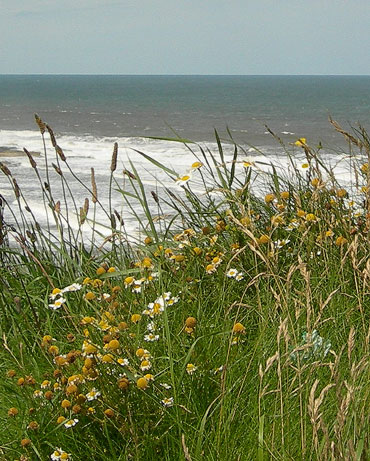
I took a walk around some of the farmland adjacent to the cliffs where I came across a Pied Wagtail, a Wren, a male Reed Bunting, 2 Meadow Pipits and a Coot on a farm pond. This farmland is being managed for wildlife and there were loads of nice flowers in the field margins including piles of Kidney Vetch, pictured below.

Blea Tarn and Eskdale

With another huge fried breakfast inside me I headed uphill from Boot village towards Blea Tarn. The by now customary Yellowhammers, Willow Warblers, Wrens and Chaffinches were joined by plenty of Robins, including a number of juveniles, and a family party of Great Tits.

Once upon the ridgetop a Raven flew over doing its best demonstration of its “graak, graak” call and a Kestrel was hunting over some very boggy land. Somehow I got a bit lost amongst the crags and bogs, which is strange as this is exactly what happened to my dad and I when we came up here 27 years ago – he carried me across the bogs – this time I had to manage on my own getting very wet feet in the process. I found Blea Tarn and nearby Stiny Tarn where a Reed Bunting was busy calling – a quite unexpected species here. The view across the valley to Harter Fell, where I was yesterday was quite good and foretold the rain that was to come later.

Harter Fell

I walked across the moors where some old druid circles exist and some farmers were using sheepdogs to round up sheep before heading downhill. The path down was full of birds with 5 Tree Pipits, 2 juvenile Great Spotted Woodpeckers, a male Blackcap, a Whitethroat and many more common species.

Back down in the valley I walked down to the River Eske and along through the woods. Whilst walking across some fields I came across some juvenile Swallows being fed by their parents and allowing me to approach very closely: a nearby sheep seemed very interested in the whole episode too!

The woodlands were once again alive with species; Coal Tit, Nuthatch, Treecreeper, Spotted Flycatcher, Goldcrest, Blue Tit, Song Thrush, Great Spotted Woodpecker, Green Woodpecker and a pair of Jays. The river Eske here is very beautiful, I remember having picnics here when I was small but today a Grey Wagtail was picnicking on insects. Heading back to the car the rain began to fall quite heavily so I drove to the coastal village of Ravenglass.

Free WordPress Themes