 August 21st, 2025
  Nick
Nick 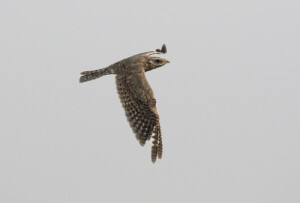
My annual migration between Thailand and UK has not only seen the cost of direct flights rise dramatically but I have grown very tired of sitting on a plane for twelve hours, if only I was able to make the journey under self-powered flight like a Bar-tailed Godwit! Indirect flights are, of course, a solution to this and while fiddling around in a second airport is also annoying it provides birders such as myself the opportunity to go birding somewhere along the way, with stopovers of one, two or even three days often being cheaper than simply boarding the next plane. On this note I found myself in Qatar, with around twenty four hours to play with and a few key target birds to look for as well as several more species that I have seen only a few times as additional distractions. It was easy to deal with a hotel for the night, car rental and driving around Qatar and despite the brutal heat in early August I got great views of species I was hoping for such as Egyptian Nightjar, Greater Hoopoe-lark and Cream-coloured Courser with plenty of others thrown in for good measure.

My short stay in Qatar began with getting a local SIM card, so that I would have an internet connection everywhere for navigation, collecting a hire car and checking in to Premier Inn Doha Airport for dinner and a good night’s sleep before waking up early and heading towards Irakhiya Farm, to the west of Doha. Like many birders visiting this small country, I used eBird to identify this location as one of the best birding spots to visit, particularly to look for some of the birds I was targeting. It took me around 50 minutes of easy driving to reach the site and before entering the farm proper I drove a short distance around the perimeter to the lagoon on the western edge of the site, easily viewable from the traffic-free road.
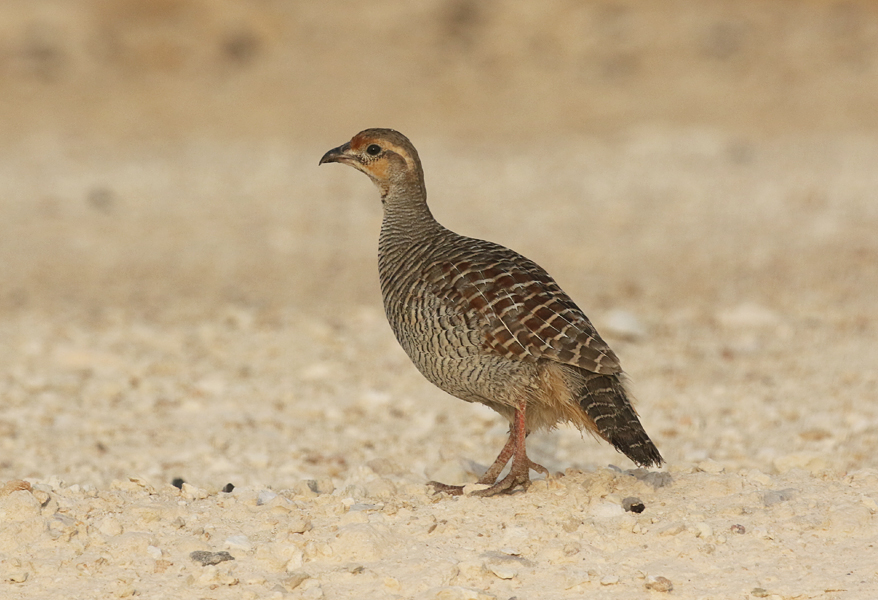
By the roadside were several Red-wattled Lapwings but for a brief moment I thought that I saw a Spur-winged Lapwing among them so drove along the road a little further to get a better angle but I was distracted by a pair of Grey Francolins preparing to cross the road. Taking a few shots of one of the pair I realised that I had no memory card in the camera before it disappeared behind some rocks. Fortunately, these birds gave me a second chance after frantically finding a memory card in my bag.
On roadside wires and fence posts there were large numbers of House Sparrows, Spanish Sparrows, Collared Doves and Laughing Doves along with a single Great Grey Shrike but as I got out of the car to get a decent look over the pool of water I flushed one of the birds I had come here to see: Egyptian Nightjar.
Keen to photograph and video these birds I walked very slowly and scanned the ground for more of these cryptic birds. Despite it being only 6.30am there was already a heat haze building up but I spotted several Egyptian Nightjars on the ground and got close enough to take a few decent photos. However, getting video was much more challenging with heat haze rendering all footage unusable and I started to bake in the heat while taking the video so I decided to give up with that and stick to enjoying birds through the binoculars and taking photos where possible.
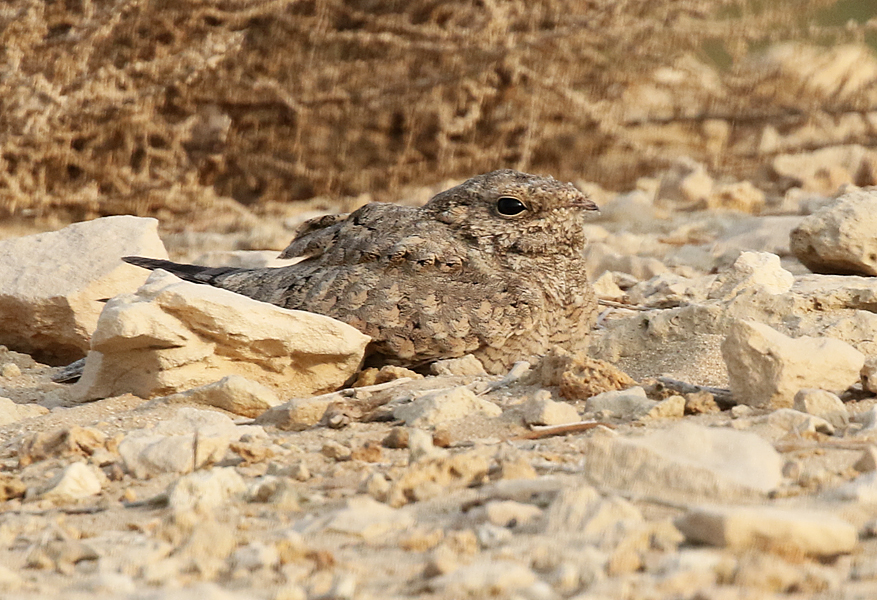
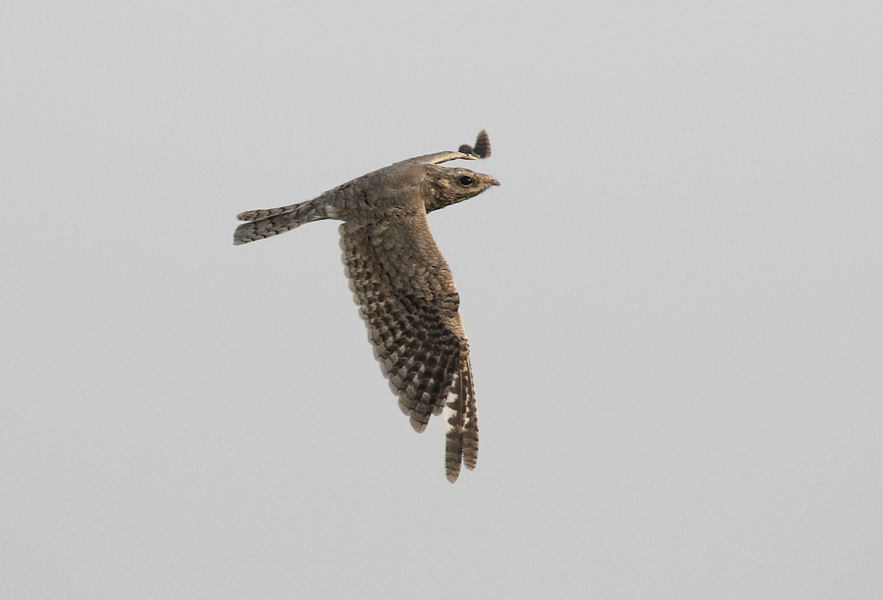
After enjoying around 6-7 Egyptian Nightjars I took a look at the pool where large numbers of birds were present. Species such as Eurasian Coot, Common Moorhen and Grey-headed Swamphen were in big numbers along with Little Grebes and a single Great-crested Grebe. Scanning through these birds I also came across a small group of 7 Garganey, a few of which still had traces of breeding plumage, a single Gadwall and at least one Ferruginous Duck.
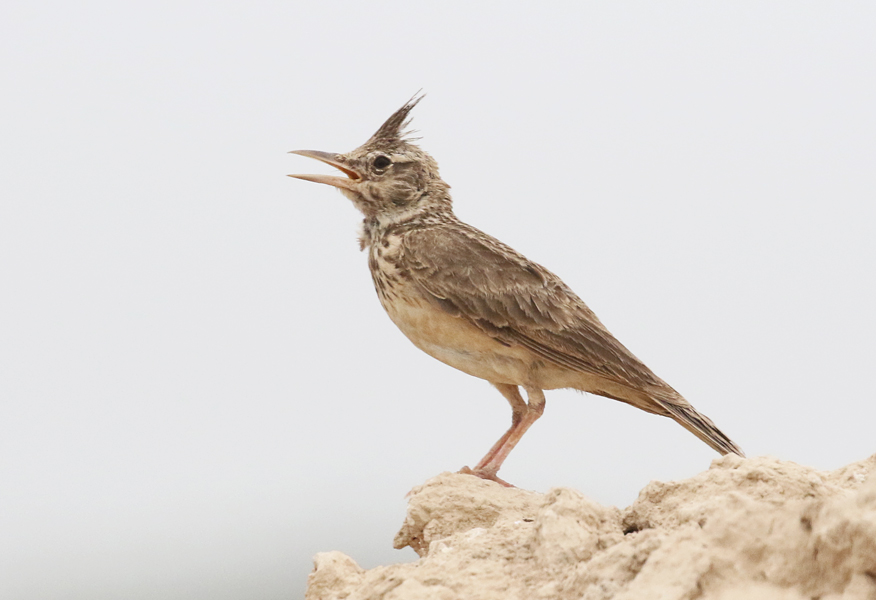
This reed-fringed pool proved to be a very birdy spot, perhaps unsurprisingly considering it was the largest body of freshwater for quite some considerable distance. The reeds were alive with the scratchy song of Clamorous Reed Warbler, several of which showed themselves well and there were also a few White-eared Bulbuls and a couple of Delicate Prinias too, calling from the tops of reeds. Crested Larks are usually common in this region and so it proved here too with plenty of them in the stony habitat alongside the road, chasing each other around and engaging in bursts of song with a couple of flyby Eurasian Hoopoes adding a splash of colour to the proceedings.
Having enjoyed the nightjars and many other birds in the habitats around the pool my attention went to the muddy edges of the water body. With the naked eye I could see there was a variety of waders to look through and I was hoping for Cream-coloured Courser here. Black-winged Stilts stood out due to their striking colouration and Red-wattled Lapwings were obvious too but the next species to catch my attention was Collared Pratincole; a group of around a dozen were loafing around on a sandy margin, already starting to pant from the heat of the sun. Alongside them were lots of smaller waders with Kentish Plover being the most numerous but with also at least twenty Little Stints probing around in the soft mud. Ruddy Turnstone seemed a little out of place at an inland site with a few Temminck’s Stints, Green Sandpipers, Wood Sandpipers, Little Ringed Plovers and Common Sandpipers to add numbers and variety.
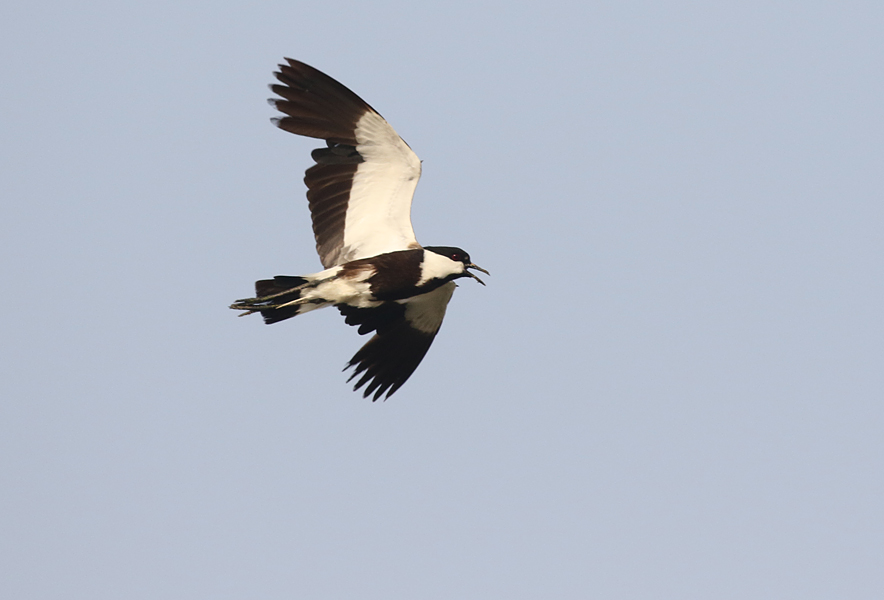
As I scanned through these birds I noticed a Lapwing in flight that seemed different to the Red-wattled Lapwings in the area and so it proved with the bird being a Spur-winged Lapwing, the species that I thought I had seen earlier. Although I was especially close to them, these two Spur-winged Lapwings began to fly around close to me, in a typical Lapwing-style nest predator attack, so perhaps they next here?
While enjoying these birds a couple of Squacco Herons flew past as well as a Grey Heron but another of my target species remained to be found and it seemed like within Irakhiya farm itself would be the place to look. A very short drive back along the farm perimeter I reached a small entry gate. For those thinking of visiting this site themselves the map below shows the entry gate marked with the blue pin and the pool marked with the yellow pin.
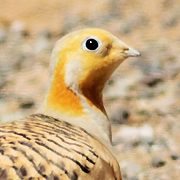
On approaching the gate a member of staff came out and opened it for me. I opened the car window, showed him my binoculars and said that I was going birdwatching and he waved me through with a smile. Once inside the farm I spent time driving around the tracks that go around the large circular fields, observing birds from the car as by this time it was extremely hot. In fact it was so hot that despite taking hundreds of photographs of Black-crowned Sparrow Larks that were within five metres of the car, almost all of them were useless due to heat haze. By leaning out of the car I was able to minimise the haze coming off of the car and get a few usable shots of this striking little bird that was extremely common around Irikhaya Farm.
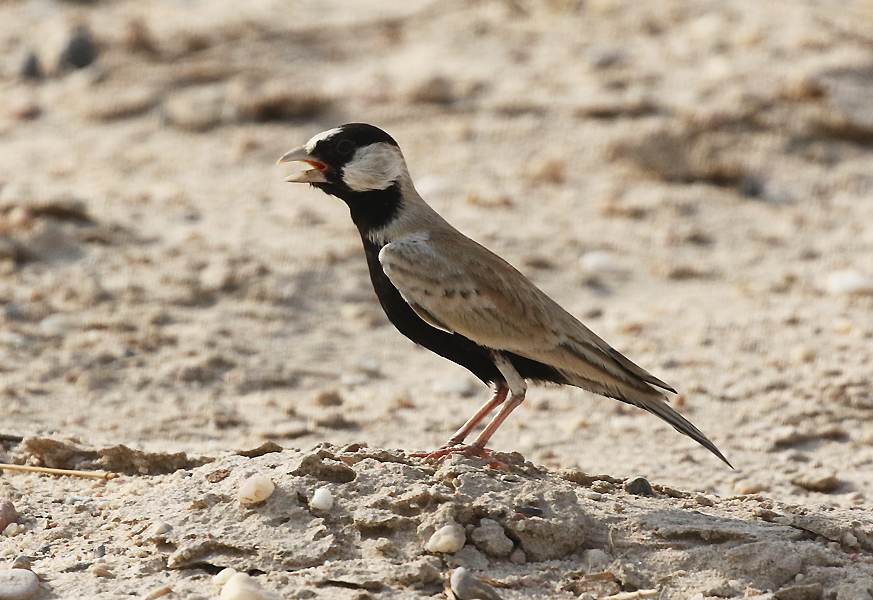
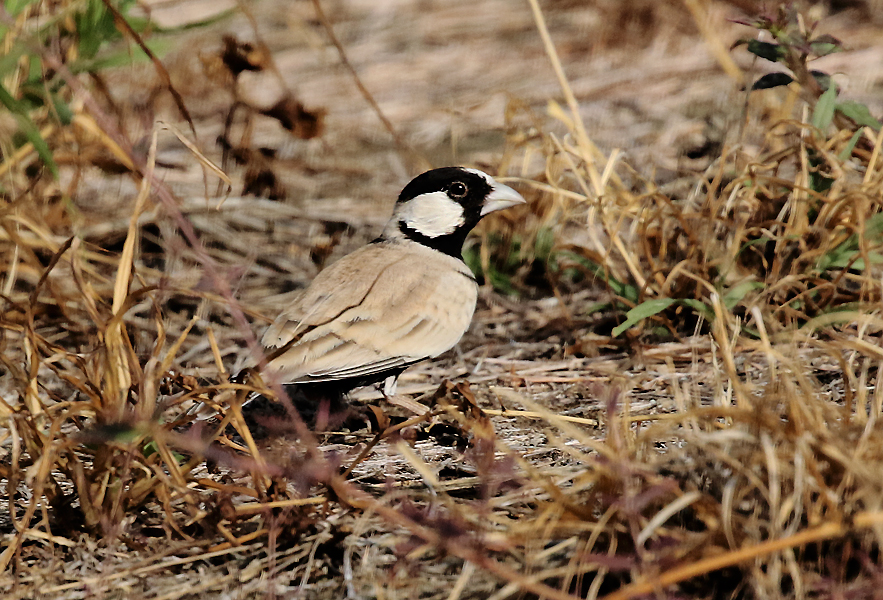
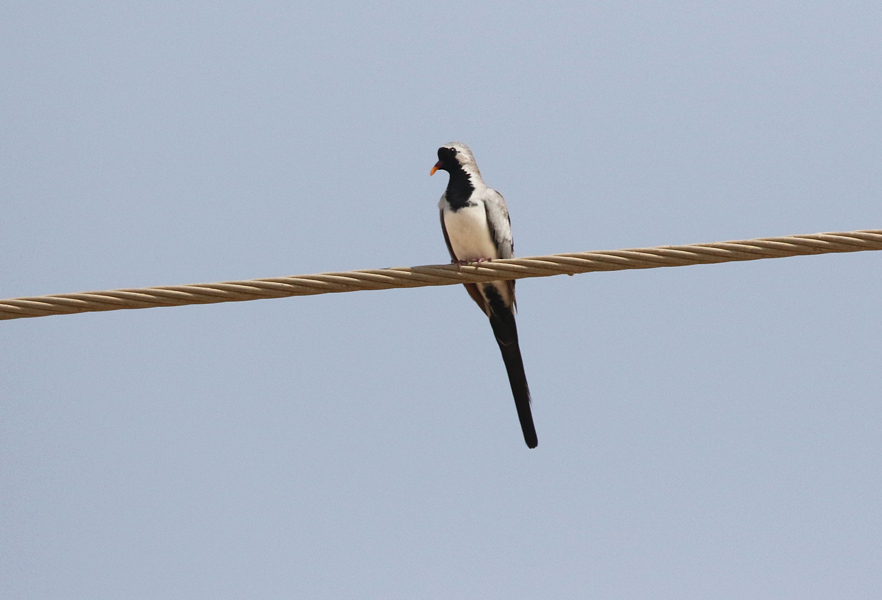
As I drove around the farm I came across half a dozen or so Great Grey Shrikes and a couple of Isabelline Wheatears, both of which I failed to photograph because of heat haze while a European Roller on a wire was a nice addition to the day list. I was guilty of neglecting to take any photos of the masses of Laughing Doves, Spanish Sparrows and Collared Doves but one bird I was keen to photograph was Namaqua Dove; a species I have seen a few times in Oman but have never managed to get a decent shot of. This time a nice male posed on an overhead wire for me.
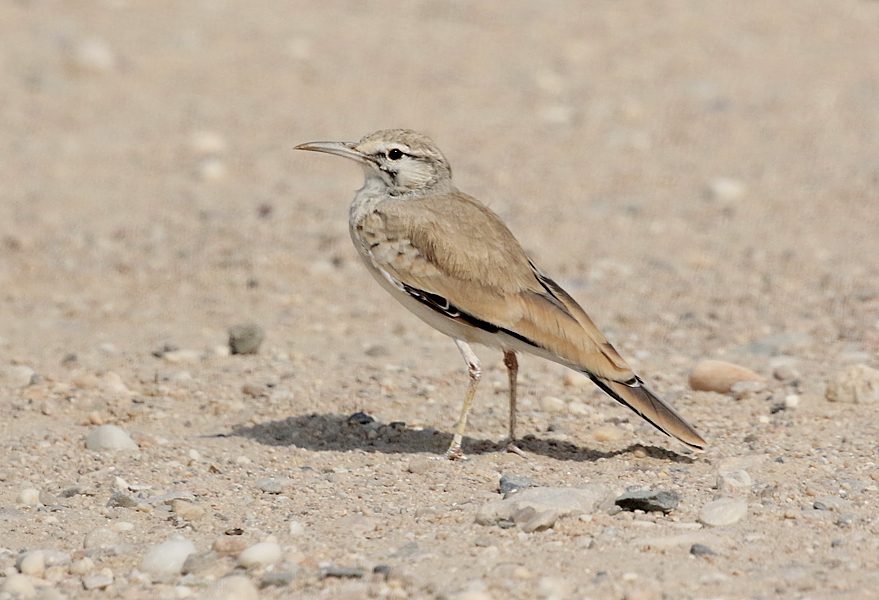
However, my second main target species for the morning was yet to be found but as I drove into some of the driest parts of the farm I noticed a bird in flight with a black and white wing pattern that made me stop immediately. Pulling up my binoculars it proved to be the bird I was looking for: Greater Hoopoe-lark. Over the next thirty minutes or so I came across at least another seven of these interesting birds, certainly one of the most easily identified of this group of birds that can often be very similar to each other. It seemed, somehow, that they did not want to be photographed, constantly running when I brought the camera up, hiding behind the only tuft of vegetation available and finding the most intense patches of heat haze but eventually a few Greater Hoopoe-larks gave themselves up.
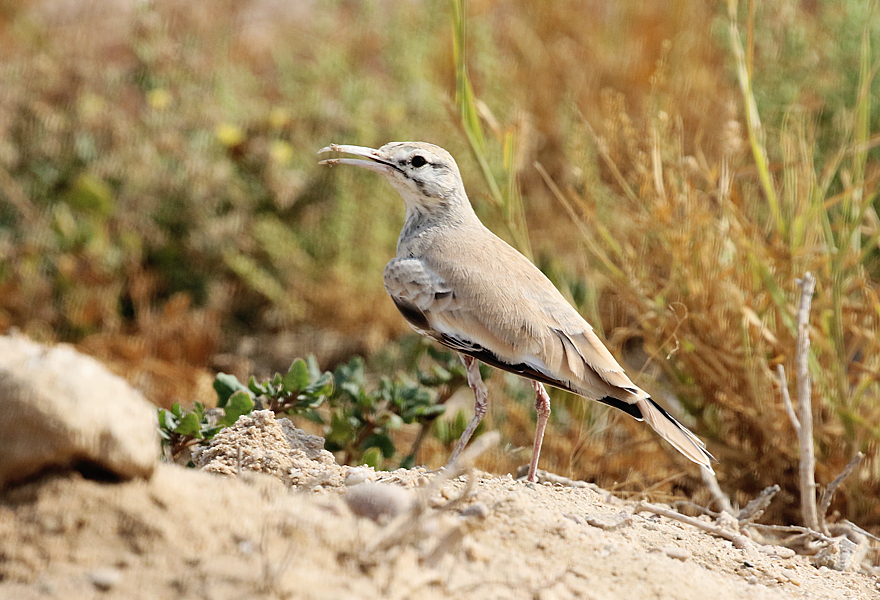
Having seen two out of the three of my target species and driven around the while of Irikhaya Farm I decided that the chances of seeing anything new at this time of the day were slim. In the run up to my trip to Qatar I had noted another site on the northern tip of the country where lots of shorebirds were regularly seen so I decided to make the drive of around one hour forty minutes to get to Al-Ruwais where there are a series of beaches, islets and mangrove scrub.
On arrival I headed towards the A-Ruwais mangrove area and found the water at high tide, meaning that birds were difficult to observe on distant islets. Access was tricky, with a series of dirt tracks meandering around but eventually I got close to an inlet where lots of birds were roosting on a beach at high tide. Many were still rather far away but I could pick out Great Crested Tern, a single Gull-billed Tern, a few Lesser Crested Terns and Common Terns. best of all were around a dozen Saunders’s Terns very close to me but as my camera had been overheating I had left it in the car! Several Socotra Cormorants flew by, a few Tibetan Sand Plovers and Terek Sandpipers were also present while Whimbrel was the only bird I photographed from the car on arrival, having quickly reversed onto solid ground having strayed into sand that I almost got stuck in.
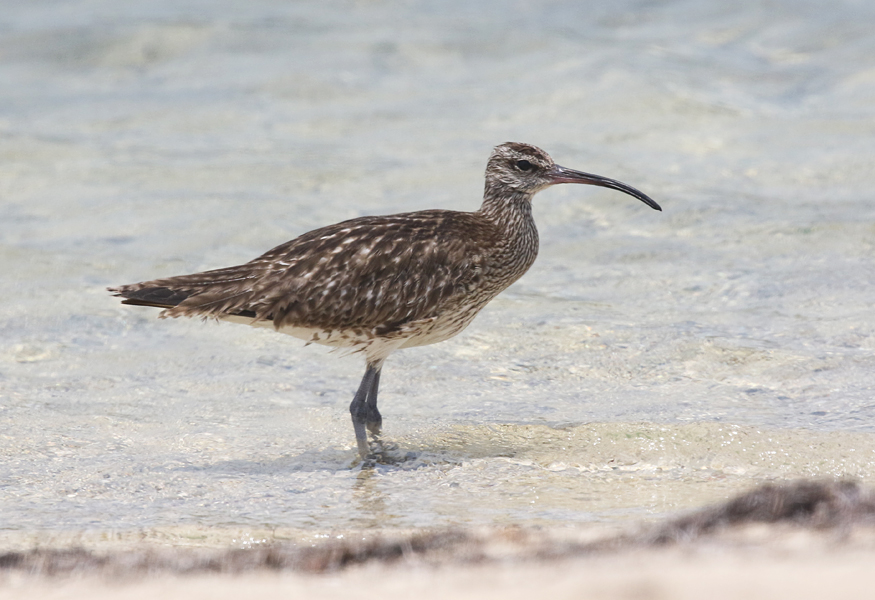
Mostly birds were too far away to identify and I was more or less resigned to not seeing very much more here but before I left I decided to visit the beach immediately to the east of the town of Al-Ruwais. A new road took me right up to the sea where on the rocky foreshore a Socotra Cormorant stood in shallows water. I was able to get out of the car and get closer to this bird to cut out the worst of the heat haze to get a photograph of this regional speciality.
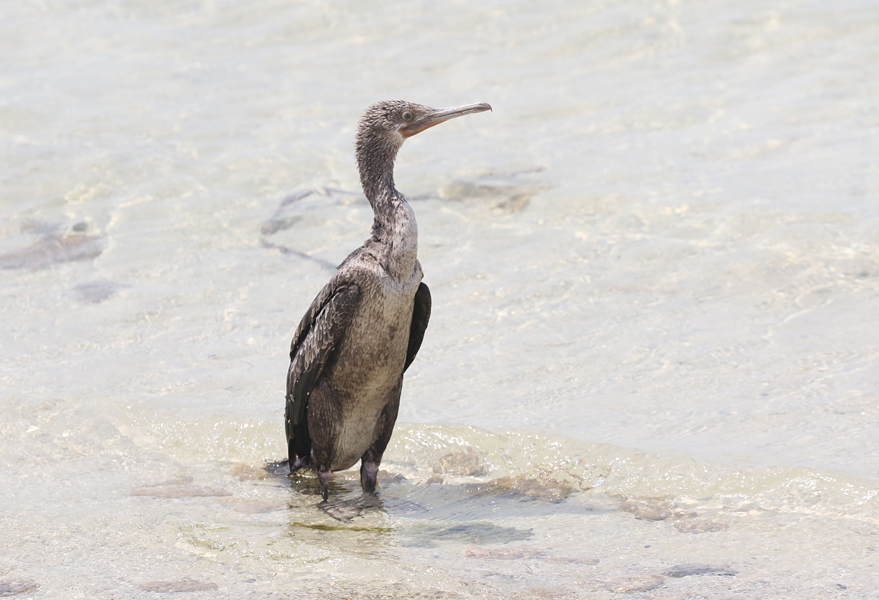
There didn’t seem to be much more around but I took a quick look up the beach and noticed good numbers of waders as the tide was still on its way in here. A good track took me along the beach where there were a number of shelters for beach-goes but as I had the place to myself they became birdwatching hides. Flocks of Bar-tailed Godwits were obvious along with good numbers of Tibetan Sand Plovers and Greater Sand Plovers while searching among them revealed a few Ruddy Turnstones, Broad-billed Sandpipers and Curlew Sandpipers. A couple of Common Greenshank were also new for the day list as were Sanderling and Eurasian Curlew while a pair of Slender-billed Gulls were resting on an offshore islet. However, all of these were thrown into insignificance when I spotted a pair of Crab Plovers. This awesome bird never gets boring and although I have seen it before in Oman and Thailand, this sighting became one of the instant highlights of my trip to Qatar. I got great views and under normal circumstances I would have got some great photographs but the heat haze made that difficult.
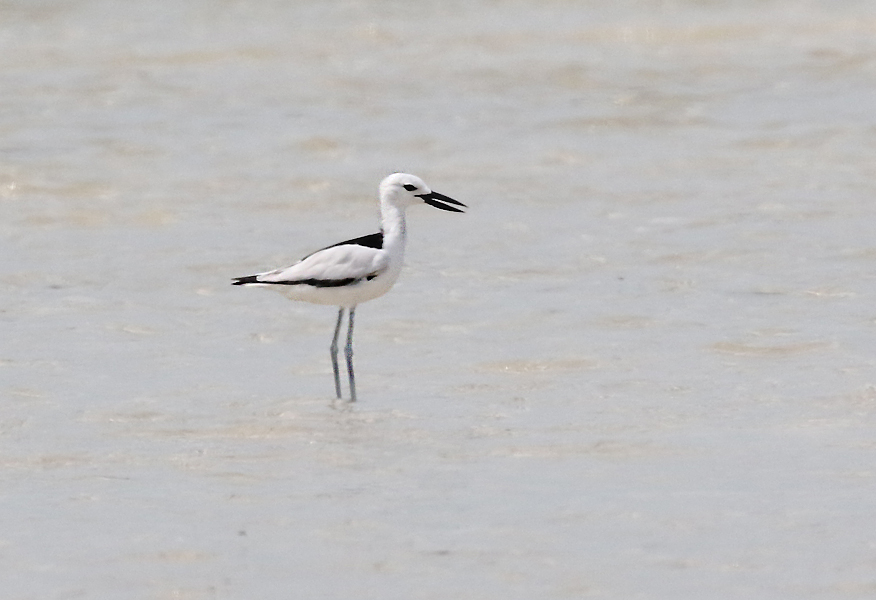
Had I not seen another bird I would have considered the drive to this northern part of Qatar to have been worth it with this sighting of Crab Plover and a nice collection of birds at fairly close range on an incoming tide. However, as I was scanning the foreshore for any other birds among the throng my binoculars fell on a species I had almost forgotten: Cream-coloured Courser! On eBird I had seen a few sightings of this bird at this location at the same time of the year and it was the main reason for visiting so to see a pair of them in good light at close range was a great ending to a birding day, as time was ticking by with an onward flight in the evening. I managed to get close enough to get a few reasonable shots of the Cream-coloured Coursers including a flight shot when another car came along and scared many of the birds off to their high tide roost.
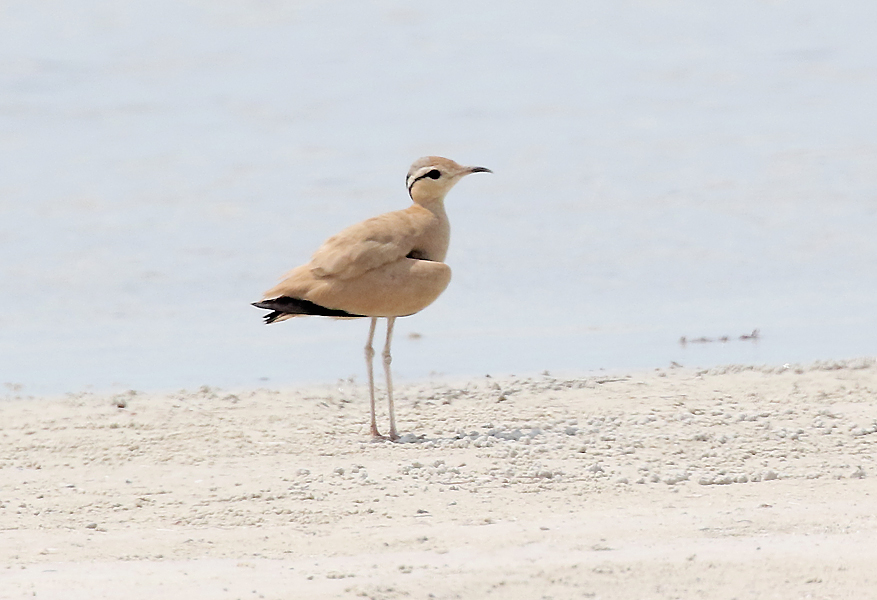
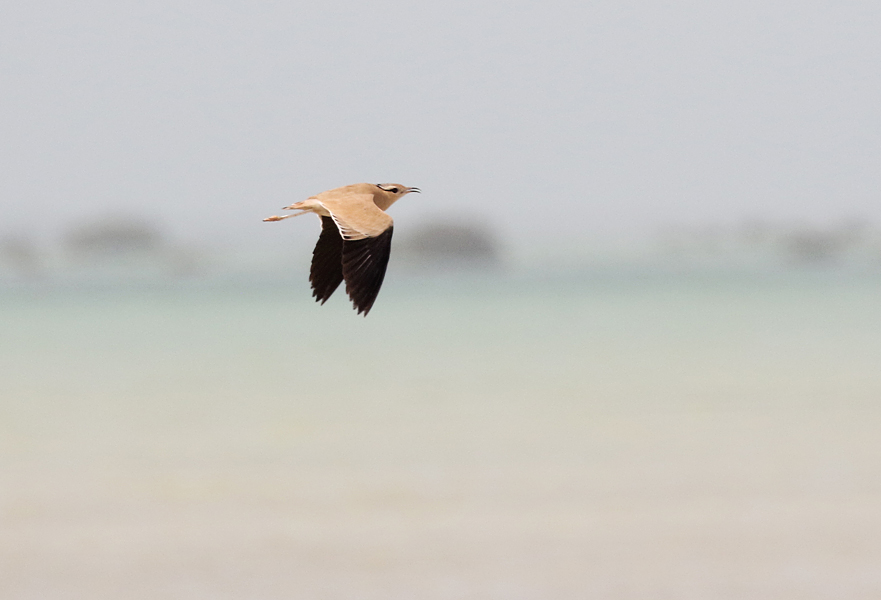
As most birds headed offshore to high tide roosting places that were too far away to appreciate it was time to drive back to my hotel in Doha, with just a couple of Ring-necked Parakeets in the town of Al-Ruwais to distract me. The drive back to the hotel was simple and a shower prepared me for my onward flight to Bangkok. However, the flight was overbooked, I was not able to get on it so Qatar Airways put me up in a nice hotel where all my food was covered and upgraded me to business class for the flight twenty four hours later.
 Posted in
  Tags:
Tags: