 June 20th, 2025
  Nick
Nick 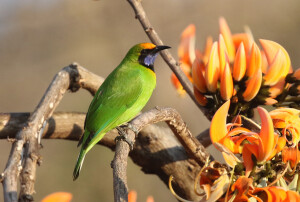
One thing I have learned over the years that I have been bird watching is that there are many different ways for people to enjoy birds. I started birding by going on long country walks in England with birds being perhaps the most accessible category of wildlife to enjoy along the way. Friends of mine enjoy sitting in hides for long periods to photograph and observe birds at close range while others drive the length of the country to see rarities. Done with respect to the birds and to other people, all of these methods, or any other, is the right way to go birding if that is what you enjoy. However, another thing I have learned is that it is good to combine different methods of birding, sometimes walking, sometimes sitting and waiting or sometimes covering a lot of ground quickly but standing in an observation tower and waiting for birds to arrive is a birding style that does not present itself to most birders very often. However, at the base of Doi Inthanon, over the course of several visits in early 2025, doing exactly this resulted in great views of a lot of birds, including highlights such as the magnificent Green Peafowl and Blossom-headed Parakeet.

Visiting this bird watching tower is always a bit of fun and a nice change of pace from searching for birds in the forest, just standing and waiting with the bird that attracts most people being Blossom-headed Parakeet. Indeed, Khun Anusak, the owner of the observation tower, has named the location “Blossom-headed Parakeet Conservation Area” and this is how it is referred to on eBird. Every time I have visited the tower at least one Blossom-headed Parakeet has turned up, usually around three to six birds seen perched but on one occasion we did see them only in flight; around ten birds that time. In the early morning or late afternoon sunshine these parakeets are very smart, particularly the males with their rose-coloured heads adding illumination to their bright green bodies.
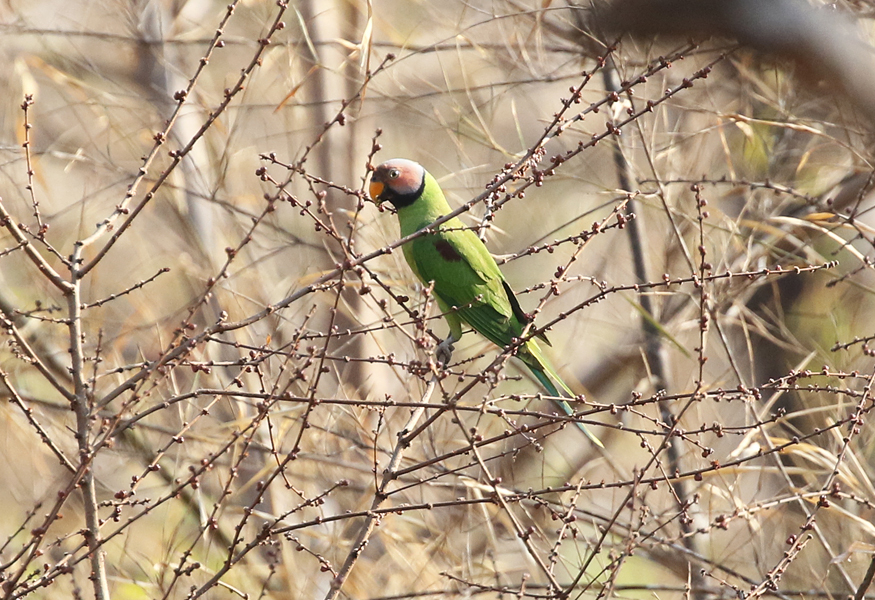
Over the course of some of the visits I made in early 2025 the area had both fruiting and flowering trees attracting the Blossom-headed Parakeets, and many other birds, to come down to feed on them, allowing me to get some photos of these often skittish birds.
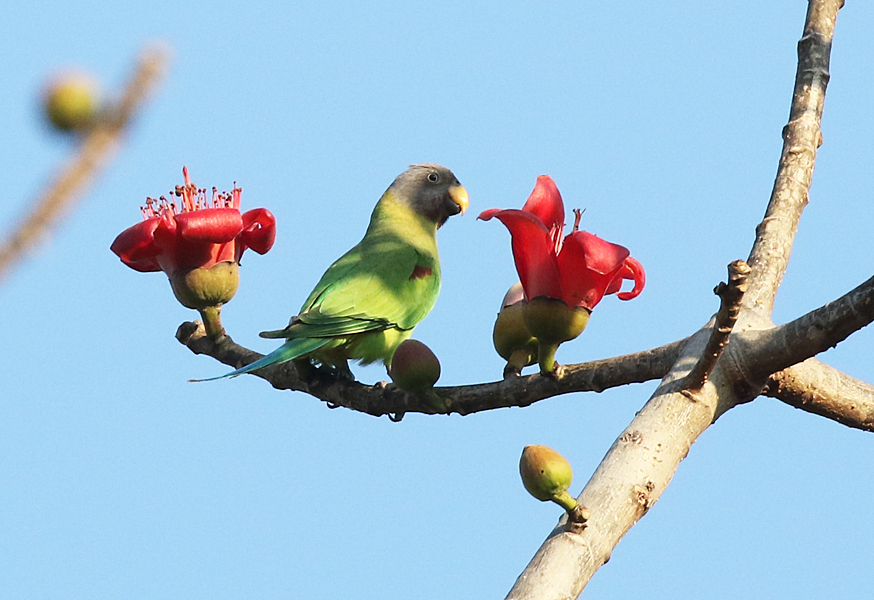
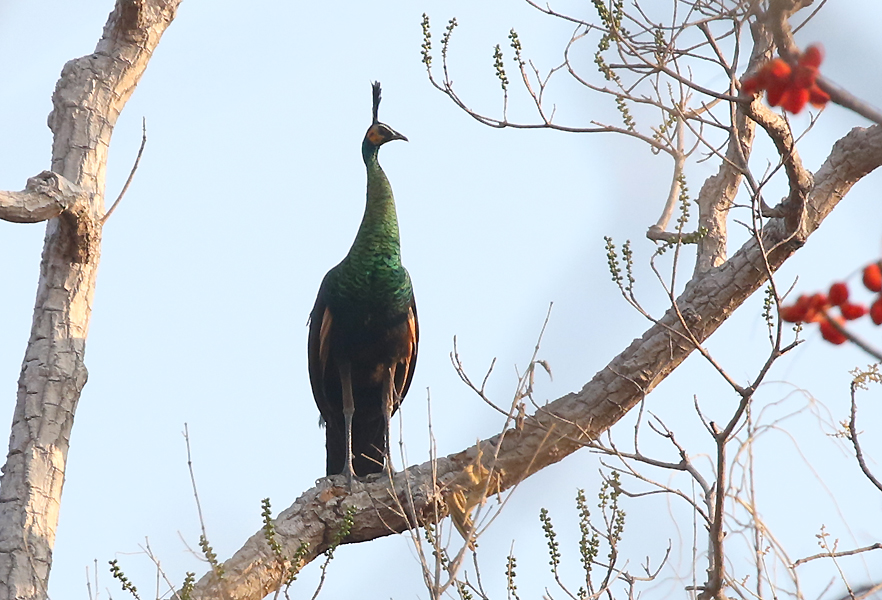
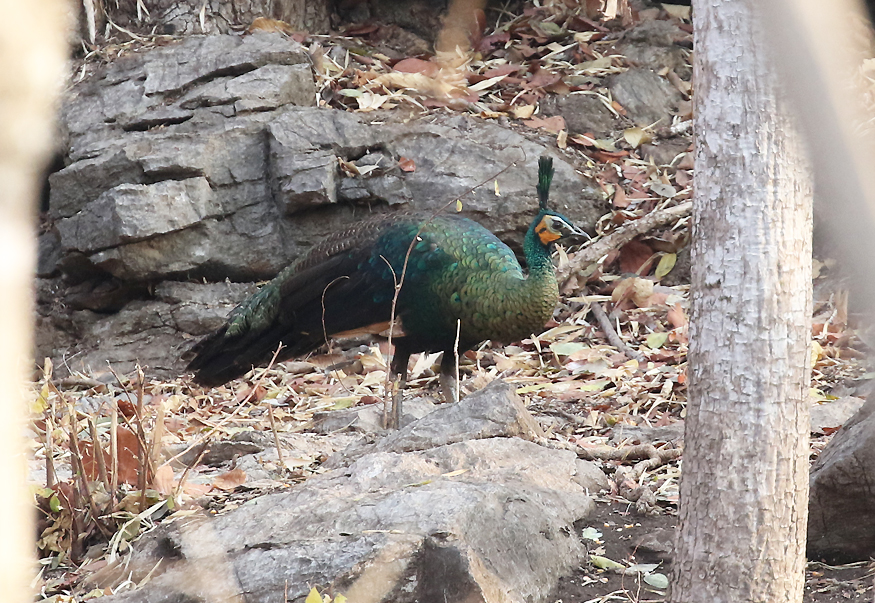
While many birders visit this location to add Blossom-headed Parakeet to their list but while we were happy to see this bird, on my visits in 2025 we treated the tower as an opportunity for a different type of birding in a different habitat that made for a nice balance in the longer birding tours that we were enjoying. Indeed, on every visit we also saw Green Peafowl, a bird that was virtually extinct in Thailand but since the early 2000s they seem to be making a comeback and this seems to have become a fairly reliable spot to see them. On some of the visits we saw them in the very early morning, sitting in the treetops only, but on some visits we saw them at close range, feeding on the woodland floor.
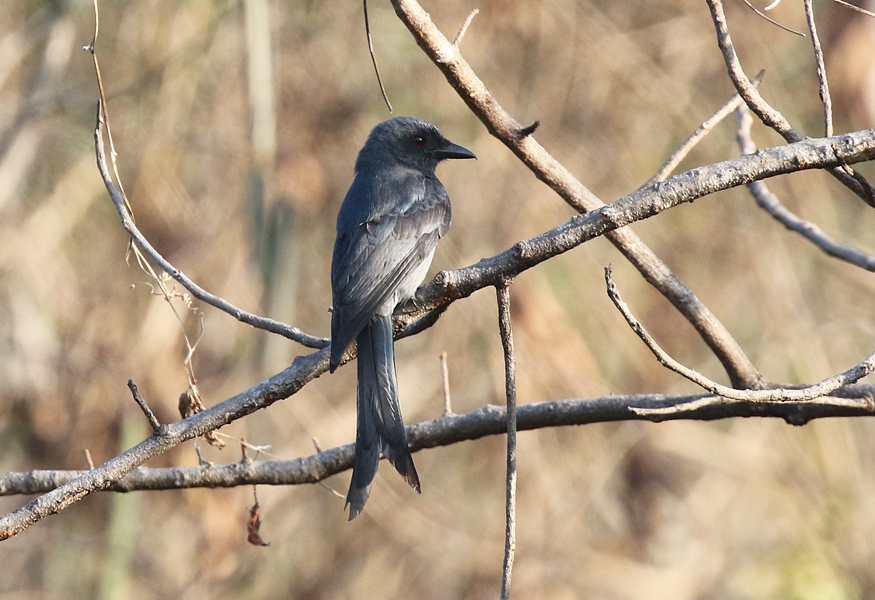
Khun Anusak has planted a lot of flowering trees over the years and on all of my visits in early 2025 there were some trees in flower and these made for excellent viewing of a wide variety of birds. Drongos were often some of the first birds to appear with Greater Racket-tailed Drongo, Hair-crested Drongo and Ashy Drongo all regularly seen.
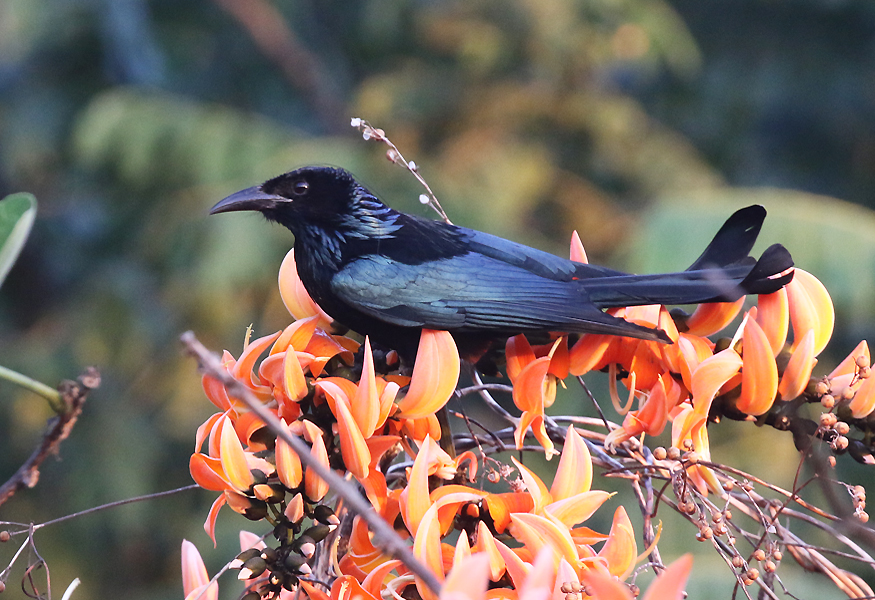
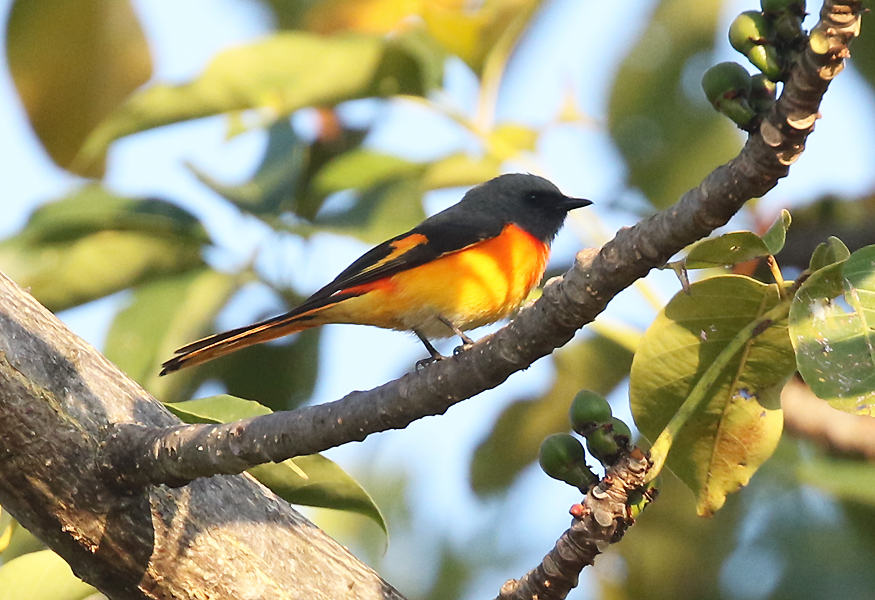
We saw lots of other common birds coming to feed on these flowers including Red-whiskered, Sooty-headed and Streak-eared Bulbuls; Yellow-browed and Two-barred Warblers; Common and Great Mynas; Spotted, Red-collared and Zebra Dove; Coppersmith and Lineated Barbets; Oriental Magpie Robin and others. On all of my visits we were able to enjoy a flock of around a dozen or so Long-tailed Minivets of the wintering race, most of which were female types but on one visit we got lucky with a pair of Small Minivets, a bird which is strangely scarce given how common they can be in other nearby countries.
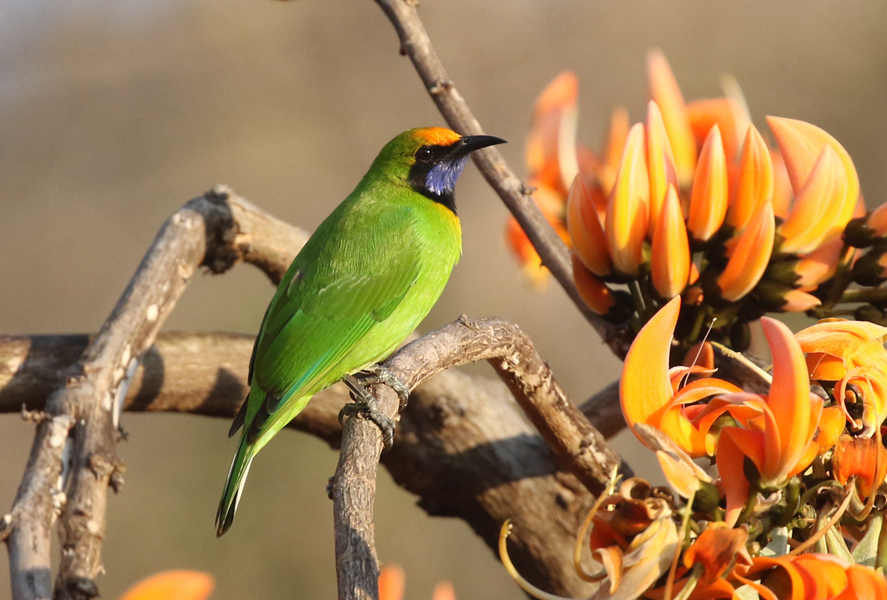
Perhaps another of the highlights on each visit was Golden-fronted Leafbird. This species seemed to really capture the imaginations of those who were with me here and it certainly made for wonderful photographs when feeding among the orange flowers.
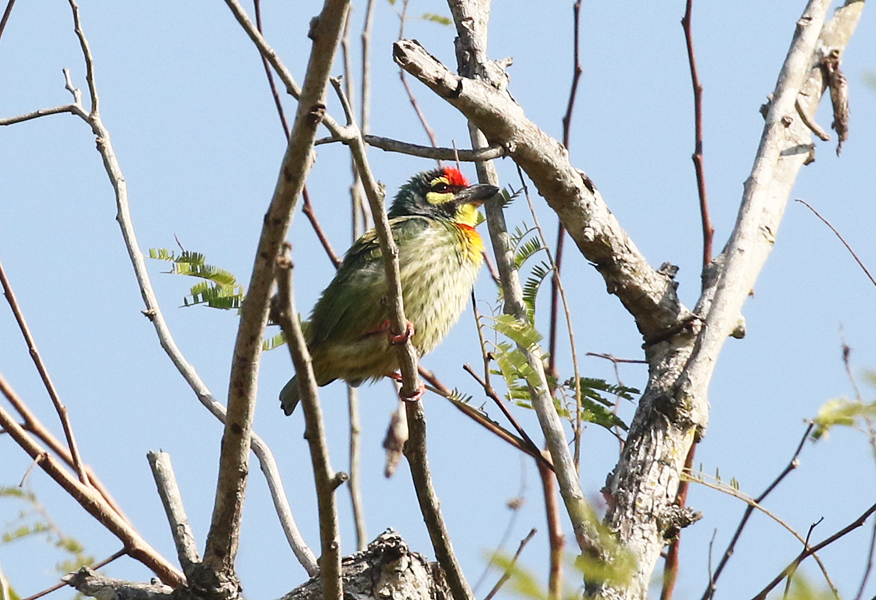
As my visits here were in the dry season a lot of the surrounding trees had few or no leaves at all, being in the deciduous forest ecological zone and this meant that we could spot many species perched on them in the very early morning as the first light hits them including Oriental Honey Buzard, Shikra and Asian Barred Owlet spread over a few visits. Of course, Coppersmith Barbet was one of those species taking advantage of these exposed perches and on one visit in mid-January there was a flock of around twelve birds together! Coppersmith Barbet is always a nice bird to see regardless of it being common in Thailand. It’s colourful plumage combined with its instantly recognizable call makes it a favourite of mine.
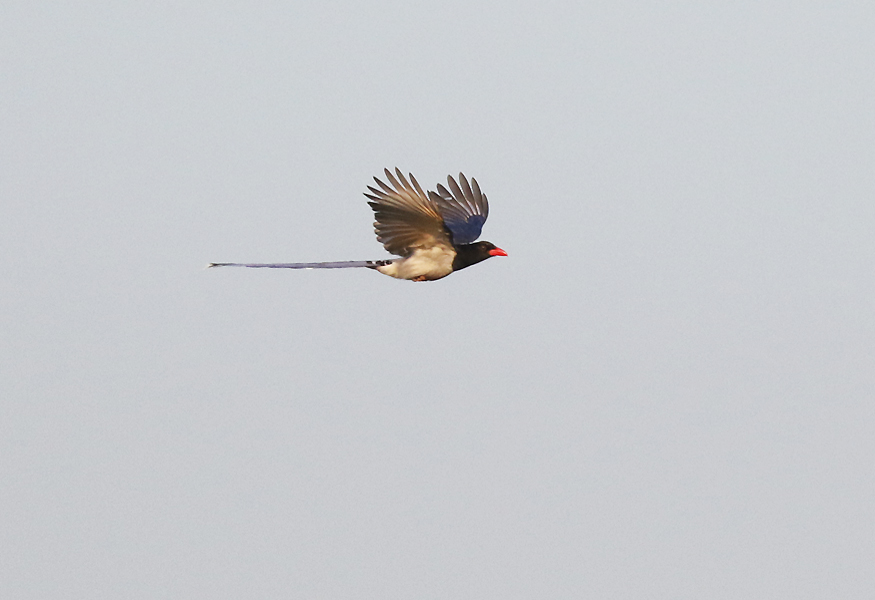
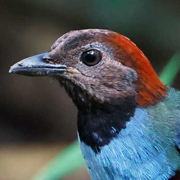
The elevated aspect of the observation tower gives birders a view across a lot of surrounding countryside and this is good for spotting birds in flight at distance too. Eastern Cattle Egrets, Indochinese Roller, Large-billed Crow and various other species can usually be seen in flight and on one occasion we got lucky with some Red-billed Blue Magpies putting on a great show. I saw this species here on other visits but usually they were hard to see, bouncing around in the forest.
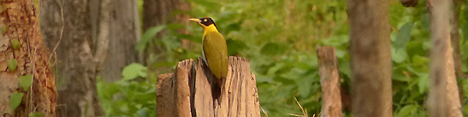
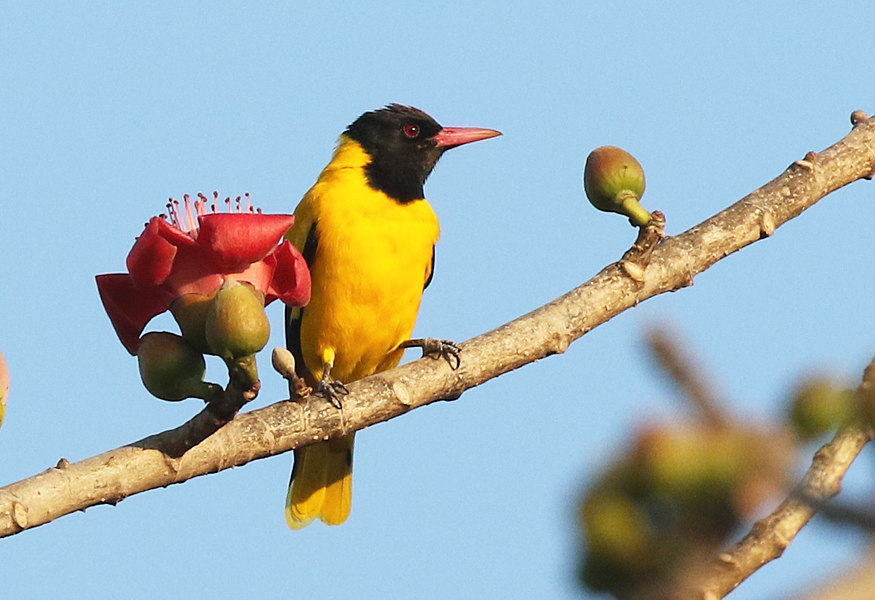
One colourful bird that was a reliable sighting on all of my early 2025 visits was Black-hooded Oriole. This resident species is very common in some nearby countries but not especially abundant in Thailand and restricted to habitats that we do not spend much time in on Thailand birding tours, so it was always a welcome sighting, especially as it is such a colourful bird; a real crowd-pleaser. As you can see Black-hooded Oriole was another bird attracted to flowering trees but we also saw it calling from treetops in the early morning sunshine.
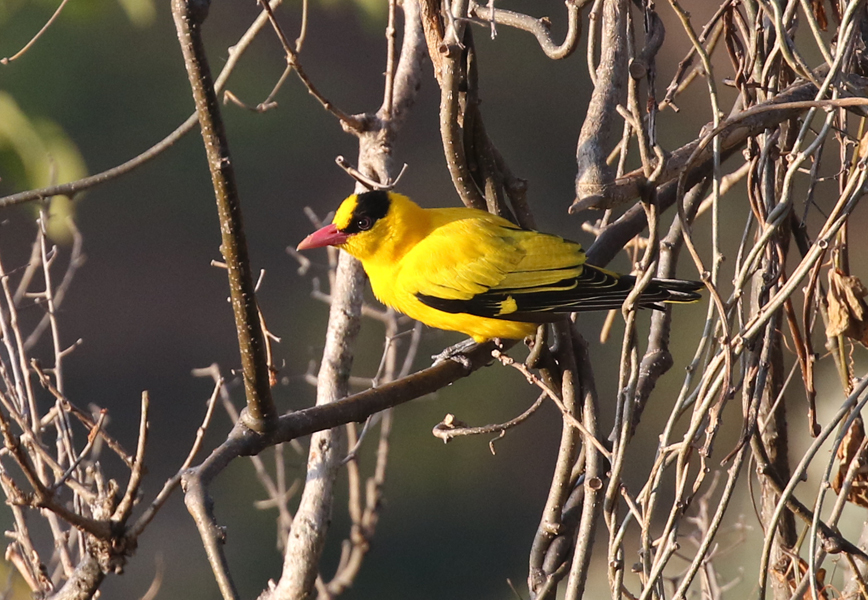
Although I haven’t visited this observation tower outside of the dry season it is highly likely that Black-hooded Oriole can be seen here all year round as they are resident and territorial. However, another species that is only present as a migrant in the dry season is Black-naped Oriole which we saw here on a couple of occasions, another colourful highlight to our mornings here.
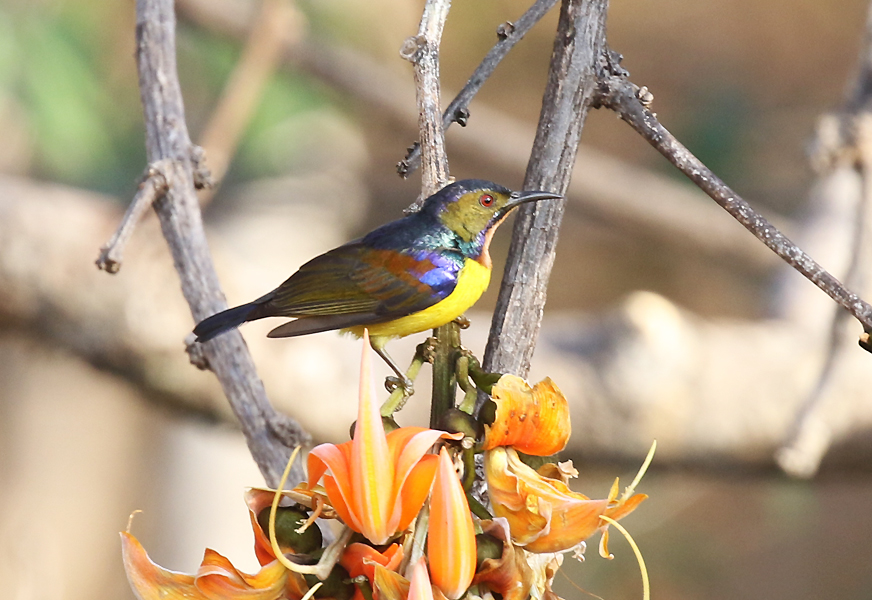
Sunbirds are a group of birds that many visitors to Thailand are keen to see. There are a few species in the mountains that are quite easy to see but a few other species are most easily seen in parks and gardens, habitats that we do not spend much time in on birding tours, and also they can be tricky to see in the treetops. However, this observation tower is really great for watching Purple Sunbird, Brown-throated Sunbird and Ornate Sunbird as they feed on insects and flowers. I have chosen a photo of a male Brown-throated Sunbird to represent the group here.
Usually things are fairly cool at sunrise, in the dry season, but as it gets towards 830-9am things start to warm up and after this the flurry of bird activity slowed down. However, late attendees, on several visits, included White-crested Laughingthrush, Red Junglefowl, Puff-throated Babbler, Indochinese Blue Flycatcher and a remarkably predicted species. On one occasion we were going to leave, having already stayed rather longer than usual, but Khun Anusak told me that if we waited just a little longer then Crested Treeswift would start flying overhead.
As predicted we first heard the distinctive call of Crested Treeswift before they came closer to the tower and proceeded to feed in flight right in front of us.
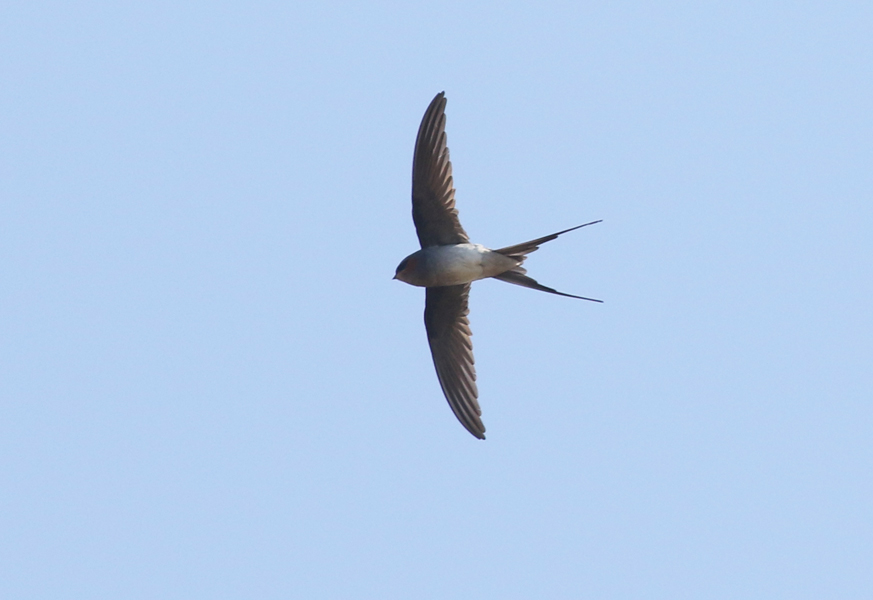
This was a nice conclusion to one of the several visits I made to the Blossom-headed Parakeet Conservation area and it makes a nice addition to birding at Doi Inthanon with a host of species that will not be seen when concentrating on birding at the higher elevations.
 Posted in
  Tags:
Tags: 





I remember a lot of these birds! But I don’t remember a tower. Is that a new addition, or is my memory just too foggy? We did see the parakeets at the base of Doi Inthanon, as you described.
It’s been there for 20 years or so but it is somewhere that I have only started visiting over the last few years.