tree.jpg

British Birding: Coot versus Moorhen

A dim but very calm day today and the numbers of winter visitors are beginning to build up at Eske. On my walk to the lake this morning I saw just 2 Meadow Pipits and a group of about 100 Common Gulls on the way up. However, at the lake hundreds of Redwings and Fieldfares kept flying out of the trees and bushes and wildfowl numbers had increased a little since last week.

Most interesting was a Chiffchaff calling from amongst some willows. I don’t see very many Chiffchaffs here in the spring or summer and it may be that this one has arrived to winter here; one did so last winter. Wildfowl and waterbird numbers were 9 Mute Swans, 26 Greylag Geese, 64 Tufted Ducks, 14 Shoveler, 51 Wigeon, 163 Mallard, 11 Teal, 3 female Goldeneye, 13 Great Crested Grebes, 1 Little Grebe, 4 Gadwall, 1 female Pochard, 11 Cormorants and a handful of Coots and Moorhens.

At the small pond at Pulfin Fen I watched a Moorhen cruising along, minding its own business, casually pecking at a piece of vegetation whenit was mugged by a Coot. Instead of letting go of the reedy fragment it pulled back on it. The Coot also pulled and it created something of a tug-of-war. Neither bird would give up and some flapping and scratching began followed by the Coot pecking the Moorhen. Eventually the Moorhen won the pulling battle and the Coot just sat there and watched the Moorhen finish its piece of weed. Peculiar really, it’s not like there isn’t plenty of weed to go around.

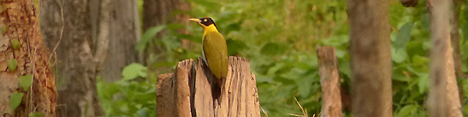
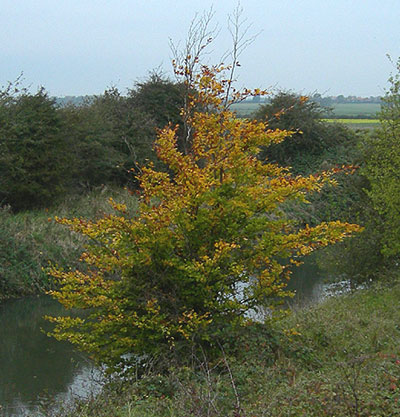
I also noticed a colourful tree beginning to lose its leaves, with a bright yellow fringe.
A few other birds were feeding in the trees, with fewer leaves on the trees they are easier to see now; a Great Spotted Woodpecker on a dead tree, a few Blue Tits, a Great Tit and some Chaffinches were easy to pick out amongst huge flocks of Redwings. On the way back I noticed a Grey Heron in a field and a female Kestrel hunting in a fashion more like a Sparrowhawk. By this time the wind had increased and it was a good time to go home for lunch.
, ,

Earth in the Balance

A few days ago I wrote a short book review on Al Gore’s book “Earth in the Balance” on bookreviewblog. For anyone who is interested in environmental ideas this is an excellent source of information. Gore does a great job of taking a holistic view of environmental problems and this book was published in 1992, proof that the author is not jumping on the environmental bandwagon in the last few years – something that he has been accused of.

Here is my mini review: Earth in the Balance by Al Gore.

British Birding: Another lap of Swinemoor

Another chilly trip to Swinemoor this morning turned up some more nice birds. The, by now, customary Redwings greeted me as I walked through a copse of hawthorns, accompanied by a few a Long-tailed Tits and Chaffinches.

Out on the floods the numbers of gulls are still building up with around 150 Black-headed Gulls and 20 Common Gulls. Lapwings were also obvious and at least 70 were present across the common. A group of 30 Golden Plovers were increased by arriving squadrons and eventually they totalled at least 200 birds, but again they were very nervous and flew into the air at the slightest disturbance by horses or crows. I then came across a Greenshank feeding on the mud and 2 Redshank. I didn’t get long to look at these before they flew to another section of the floods.

Walking further along a spotted 4 Curlews feeding with a large group of Moorhens alongside a reedy ditch and when I reached the River Hull flood defences I noticed 2 more; a total of 6 birds with at least 2 juveniles easily identified by their shorter bills and buffy colouration. I agian saw the Greenshank, this time in company of a female Ruff and at least 31 Snipe all feeding together in a compact group.

After counting the Snipe I began heading back and came upon 2 Mistle Thrushes which seemed extremely startled by my presence. By the time I reached the northern end of the common, 4 more Redshank had joined the original 2 and a group of 6 Teal were also feeding in the shallow floods. Suddenly the Pasture Master drove along in his tractor, shouting and tooting his horn at the horses for some reason and scared away all the birds – my cue to go home.

, ,

goldfinches-eske-171007.jpg

Flowering Plants in October

A very sunny day was made surprisingly cold by a brisk north westerly wind, but I managed to find some sheltered, warm spots at the lake at Eske this morning. Although bird activity was not at its most spectacular today I noticed that there were still quite a few flowers around. I decided to see how many species of flowering plants I could find still flowering in mid October. I managed to find 14 species and here is a photo gallery of those that I found.

From top left to bottom right they are Dandelion, Selfheal, Red Clover, Ragwort, Teasle, Thistle sp., White Clover, Mayweed sp., Red Campion, Common Catsear, Bramble, Black Knapweed, Daisy and Large-flowered Hemp Nettle.

On the lake there seemed to have been another arrival of wildfowl with well over 100 mallard, 24 Wigeon, 16 Shoveler, 45 Tufted Duck, 12 Mute Swans including 2 juveniles, over 200 Greylag Geese and 2 Pink-footed Geese. Also present were 14 Great Crested Grebes, 1 Little Grebe, 34 Coot, 4 Moorhen, 5 Cormorants, about 80 Black-headed Gulls, 7 Common Gulls and, today’s highlight, 1 male Pintail.

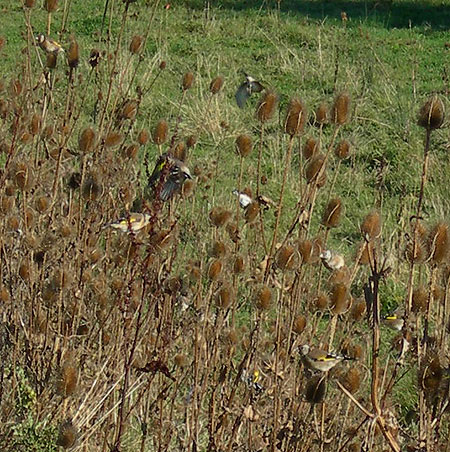
A Grey heron was fishing beside the lake and large numbers of Redwings were feeding on hawthorn berries all around the lake. Lots of small passerines were feeding on seeds and lurking around in the willows including a Chiffchaff which was persuaded into song by the sunshine and a group of about 30 Goldfinches typically feeding upon teasle seeds.

Making my way back towards my car I flushed a lone Meadow Pipit from under a bush, but a few Skylarks were attempting to break into song, also confused by the sun. In one of the more mature hedges it was noticeable that the number of Blackbirds had increased, not quite to the winter peak, but most certainly in higher numbers than in the summer.

With the northerly winds there should be a further influx of winter migrants soon I hope.

mute-swan-juv-1-swinemoor.jpg

A Short Walk

I took another short walk around Swinemoor again this morning to see if any interesting waders were still to be found.

The first birds I came across was a party of 5 Redwings which flew away from their feeding spot on the hawthorn bushes. On the floods the numbers of Black-headed Gulls had increased to 45 with 4 Common Gulls and about 60 Lapwings were present. A few Golden Plovers were also amongst the Lapwings and a group of about 30 More Golden Plover were nervously flying around. Close to the path 2 Ruff were feeding – a male and a female. This species seems much more approachable than other shorebirds and I again got very good close-up views.

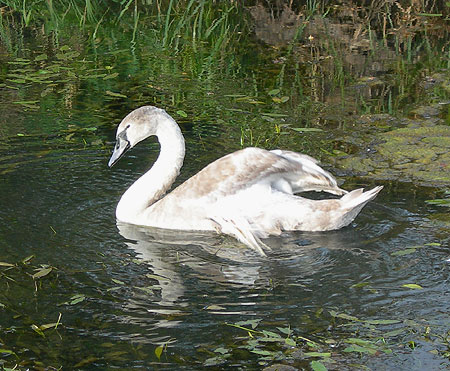
Not much else to be seen so I resorted to taking photos of some Mute Swans with 2 juveniles.

It wasn’t until I got onto the River Hull flood defences that I saw 3 Snipe although I am sure there were plenty more lurking in the wet grass. Scanning across the common I also spotted 2 Curlew feeding amongst rushes, one bird was a juvenile with a relatively short bill and the other was an adult. A little further along another Ruff was feeding alongside a couple of Lapwings and the final species of interest was a group of 4 Fieldfares which flew towards me from across the common, but when they spotted me, they turned around and flew back. So, I did the same thing, and headed back.

whooperswans-hornsea-1310.jpg

Ornithological Research into Wildfowl

On Saturday morning my wife and I went to Hornsea Mere to feed the ducks – I’m afraid that statement alone says a lot about our so-called “research”. The ducks, geese and swans at Hornsea must be some of the best fed birds in the country, but whenever we turn up with some bread they seem on the verge of starvation judging from the reaction we get.

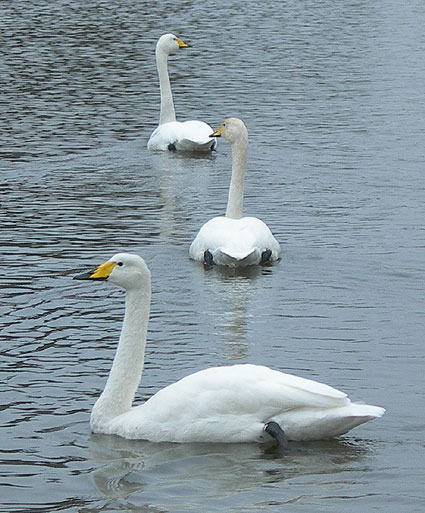
It’s quite funny to watch the ducks and geese fighting over pieces of bread and the odd Coot or two manages to get involved, although they seem to get chased off pretty quickly. There is a Whooper Swan which must be injured or something which is always present at Hornsea but today there were 3 more Whooper Swans which were obviously genuinely wild birds as they were fairly shy when approached by humans.

However, it is the Mute Swans that are the bosses at Hornsea and 4 of these approached the car, where we were sitting and feeding the ducks from, and violently pecked any ducks that snatched bread from their feet. Some ducks were braver than others and showed their boldness by jumping into the air to grab bread, and the bravest of all snatched pieces of bread that fell upon the swan’s back.

Quite a number of Black-headed Gulls also turned up and these were able to catch morsels of bread that were thrown into the air. However, the Common Gulls and Herring Gulls that were also present didn’t seem to have the agility to catch bread in mid air.

Other species that were in the vicinity were Tufted Duck, Pochard and Pied Wagtail and a couple of Jackdaws and a Carrion Crow joined in the feeding frenzy.

With our 2 loaves of bread, the ducks got something of a banquet today, particularly with a couple more car loads of people also feeding them. Some of the children that arrived to feed the ducks were scared stiff of the aggressive swans and got chased around by hungry wildfowl whilst clutching their bread slices.

My wife and I came to a conclusion from our ornithological studies: Ducks like bread. Although we wouldn’t like to jump to conclusions and suggest further research on this subject is necessary – take a loaf of bread to your local duckpond and see if your results lead you to the same conclusion.

Yamoogle search engine for carbon offsetting

For those who are into carbon offsetting there is a new search engine on the web which donates all its profits to recognised carbon offsetting projects. Yamoogle.com 

Carbon offsetting is a dubious science and most certainly should not be a substitute to becoming less wasteful and less polluting at a personal level. However, if it helps to create or protect good wildlife habitat and to bring low polluting technology to areas where it would not otherwise be used, carbon offsetting cannot be seen as a bad thing – just not a solution in itself.

Yamoogle.com claims that by using it as your search engine of choice every day, one can offset 18.1 tonnes of carbon per year. Worth a try I guess.

Free WordPress Themes