siberian-rubythroat6

North & Central Thailand Tour, February 2016 – Thailand Birding

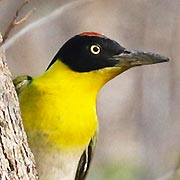
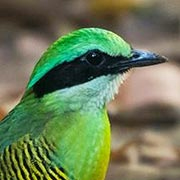
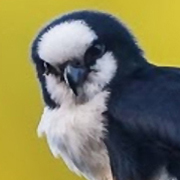
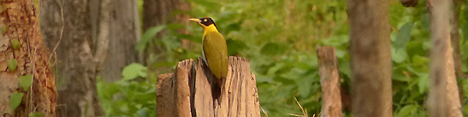
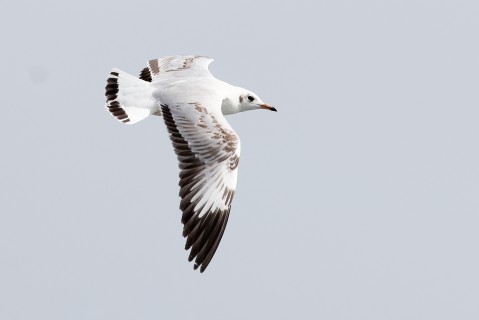
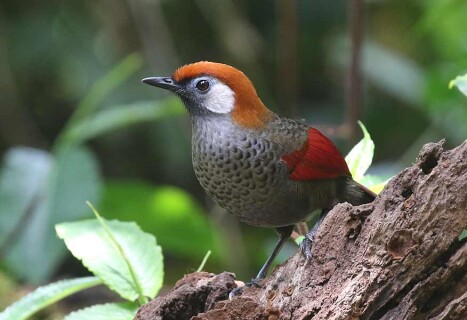
For the last seventeen days I havebeen in Northern and Central Thailand. This year we saw over 470 species in the 17 days of the trip with another 5 leader-seen-only and 10 heard only species recorded despite some unusual weather conditions resulting in some difficult birding at several locations. Some personal highlights included Rusty-naped Pitta, Green Cochoa, Silver-eared Mesia, Baer’s Pochard, Falcated Duck, Jerdon’s Bushchat, Black-headed Bunting, Red-headed Bunting, Pied Harrier, Western Marsh Harrier, Pygmy Wren Babbler, Rufous-throated Partridge, Black-headed Woodpecker, Chestnut Thrush, Grey-sided Thrush, Blue Pitta, Silver Pheasant, Siamese Fireback, Great Hornbill, Mrs Hume’s Pheasant, Black-and-red Broadbill, Long-tailed Broadbill, Black-and-yellow Broadbill, Red-headed Trogon, Collared Falconet, Great Slaty Woodpecker, Heart-spotted Woodpecker, Asian Dowitcher, Spoon-billed Sandpiper, Steppe Gull, Red-bearded Bee-eater, Pallas’s Grasshopper Warbler, Baillon’s Crake and Spot-billed Pelican.

Starting on 11th February we visited Northern Thailand first in order to miss the poor air quality that can build up in early March, but with this being a very dry year there was already a haze in the northern skies and the cool weather was already over but we were still able to find a lot of good birds; Read more »
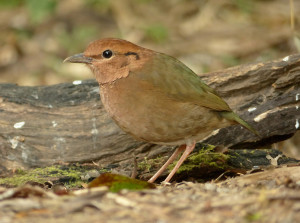
rusty-naped-pitta8

Watching Rusty-naped Pitta: Thailand Birding

Pittas are one of the most sought-after group of birds in Thailand as well as one of the hardest to observe so it is always a special experience to see any of the species that occur here. Of all the Pittas in Thailand, Rusty-naped is one of the hardest to see when bird watching in the forest with it lurking down steep gullies in mountainous areas making it very hard to approach as well as not being particularly responsive to call playback. So, it was a real pleasure to be able to watch a pair of Rusty-naped Pittas this afternoon, at Doi Ang Kang, feeding out in the open at a distance of only a few feet away for more than half an hour.

Read more »

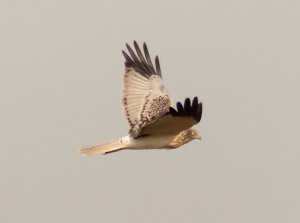
eastern-marsh-harrier3

Birding in Petchaburi Province: Thailand Birding

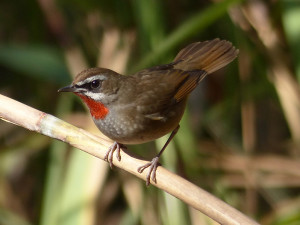
I sometimes wonder where the best place to live in Thailand is in terms of the potential for the best birding. Chiang Mai is an obvious candidate with a wide variety of forest types and wetlands but my recent 6 day trip in Petchaburi with a group of birders from South Wales produced a wide variety of great birds, raising the possibility that this could be the Thai province with the widest variety of bird species. Some of our highlights included 5 species of Broadbill, 44 species of shorebird including 3 Spoon-billed Sandpipers & 450+ Asian Dowitchers, 21 species of raptor including 2 male Pied Harriers, Great Hornbill, 2 species of Trogon, Blue Pitta, amazing views of Pallas’s Grasshopper Warbler, Siberian Rubythroat, 4 Baillon’s Crakes, Red-bearded Bee-eater and many more. Read more »

white-naped-crane2

Photos From South Korea

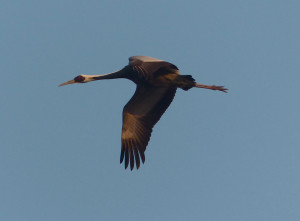
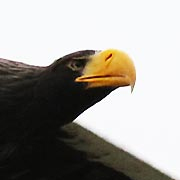
I am back in Thailand enjoying the warmth after leading a cold but successful birding tour of South Korea alongside Nial Moores of BirdsKorea. Despite the unusually severe temperatures we found a high proportion of our target species including a magnificent Steller’s Sea Eagle, Relict Gull, 25+ Scaly-sided Mergansers, 3 Solitary Snipe, Red-crowned Crane, Hooded Crane, White-naped Crane, Long-billed Plover, Pallas’s Reed Bunting, Oriental Stork, Glaucous-winged Gull, Saunders Gull, Varied Tit, Swan Goose, Baikal Teal, 200+ Asian Rosy Finches, Siberian Accentor and many others.

A full trip report will follow but for now I will just post some photos from the trip with some notes about them;

Details of the next trip can be seen here – South Korea Winter Birding Tour.
Read more »

chinese-egret8

Birding at Laem Pak Bia & Pak Thale: Thailand Birding

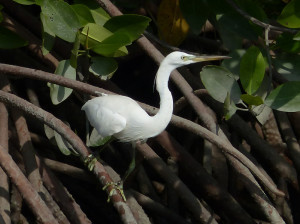
The twin sites of Laem Pak Bia and Pak Thale on the Gulf of Thailand are well-known for being a great place for watching shorebirds. It has been suggested by an increasing number of birders that it may, in fact, be the best shorebird site in the world. Indeed it is hard to think of anywhere which has a combination of such huge numbers of birds, massive variety of species coupled with critically endangered and endangered species which can be regularly seen.

I have made several visits over recent months and on every occasion I have left feeling like more time spent at these adjacent sites would have been well spent. Spoon-billed Sandpiper is every birder’s prime target here and on every visit I have been successful in finding them with a maximum of 4 birds seen on one recent trip but also on every visit the list of rare and sought-after species has been satisfying.

Read more »

indochinese-ground-squirrel2

Mammals at Lung Sin Waterhole

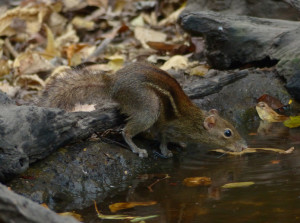
The Lung Sin waterhole at Kaeng Krachan national park is a great spot to see and photograph many species of birds that visit to feed, drink and bathe but it is also worth talking about the species of mammals which are regular visitors too. I recently spent an afternoon at the Lung Sin waterhole with Frank Conjaerts from The Netherlands where we had a great afternoon watching many of the regular visitors including highlights such as Large Scimitar Babbler, Kalij Pheasant, Bar-backed Partridge and Scaly-breasted Partridge; these birds are well-known to appear here and highly anticipated by birders, but what perhaps is less expected by most visitors is the number of small mammals that they also see; the Indochinese Ground Squirrel that I have used to introduce this post is one of the regular visitors, although I do not see it every time I visit Lung Sin waterhole. Read more »

purple-sandpiper5

Birding Bridlington Harbour – British Birding

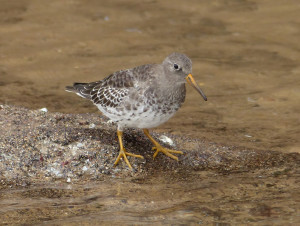
A few days ago I spent a morning birding around Bridlington harbour in East Yorkshire. This is often a good place for wintering and passage migrants, even in October, and is somewhere I used to visit regularly when I was at university in the area. One of the specialities of the site is Purple Sandpiper which can usually easily be found on the rocks around the harbour walls and I was hoping to be able to get close and take some photos. On a cold and breezy morning I got onto the south beach at low tide and quickly found a group of waders feeding on the rocks at the water’s edge which included Ruddy Turnstone, Purple Sandpiper, Red Knot, Oystercatcher and Common Redshank along with large numbers of gulls. Read more »

Free WordPress Themes