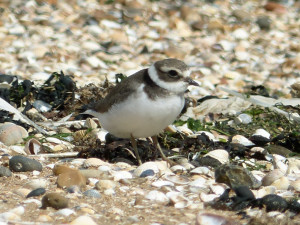
Much is said about the loss of mudflats which are used by waders to feed on and in some parts of the world the result has been catastrophic to wader populations, but less frequently discussed is the pressure on waders by the loss of high tide roost sites. These sites are often destroyed as part of coastal development and even more frequently they are ruined as roost sites due to human disturbance, however, the beach at Shellness is protected as part of a national nature reserve at the Southeast of the Isle of Sheppey and it attracts thousands of waders at this time of year. With this in mind I made a visit at high tide yesterday in order to get some close up views and photos of some of the many birds that would be present.
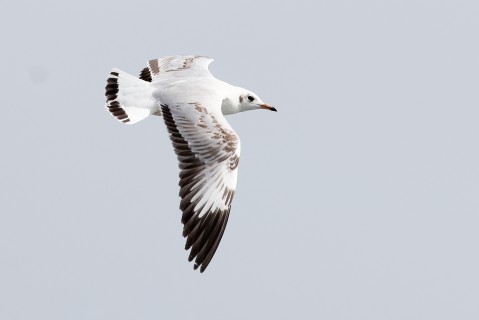
Gull Feeding Frenzy at Samut Sakhon | Birding in Thailand
A beautiful sunrise, thousands of birds, the sound of the sea; all the ingredients for one of the world’s birding hotspots, but in reality this is the atmosphere I was able to enjoy on a short morning excursion from Bangkok when visiting the “Red Bridge” coastal boardwalk in neighbouring Samut Sakhon province. Rather than being [...]
Birds in a Park in Bukhara | Birding in Uzbekistan
Uzbekistan is one of those countries that is great for birding and at the same time extremely interesting in touristic terms too; an ideal place to travel with a non-birding partner and then to find time to go birding in locations near the tourist spots and to visit some really spectacular scenery. In late April [...]
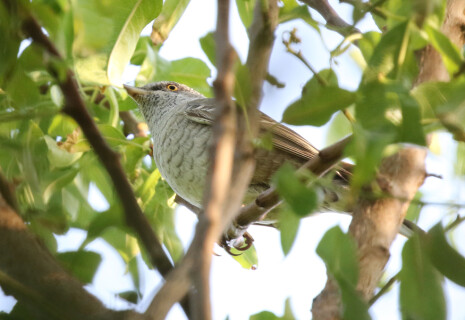
Top 5 Birds of Vietnam Birding Tour 2025 | Birding in Vietnam
Vietnam is the country in mainland Southeast Asia with the highest number of endemic species and the best place to see a number of regional endemics too as well as a fantastic supporting cast of more widespread birds. Leading the Calidris Birding Tours trip to Southern and Central Vietnam in March/April 2025 gave all participants [...]
A Day Birding in Qatar | Birding in Qatar
My annual migration between Thailand and UK has not only seen the cost of direct flights rise dramatically but I have grown very tired of sitting on a plane for twelve hours, if only I was able to make the journey under self-powered flight like a Bar-tailed Godwit! Indirect flights are, of course, a solution [...]
Parakeets & Peafowl | Birding in Thailand
One thing I have learned over the years that I have been bird watching is that there are many different ways for people to enjoy birds. I started birding by going on long country walks in England with birds being perhaps the most accessible category of wildlife to enjoy along the way. Friends of mine [...]
Birding in the Wind & Rain: British Birding
 August 25th, 2015
  Nick
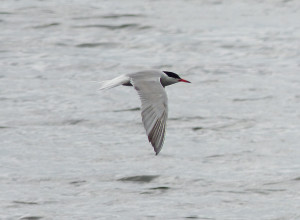
Nick At the end of August many birds are already migrating and with southerly winds and rain forecast it seemed like it would be a good time to make another trip to Dungeness which is usually one of the best places in Kent to see migratory seabirds passing close to the shore. This time of year is usually an excellent one to see Black Tern at Dungeness and often other species including skuas and shearwaters. On arrival the weather was sunny but once I was onto the shingle beach at Dungeness the wind was quite strong; I was very grateful for the shelter the beach hide gave me where I was able to watch large numbers of birds feeding at the “patch” – the water outflow from Dungeness Nuclear Power Plant.
Cavenham Heath Stone Curlews: British Birding
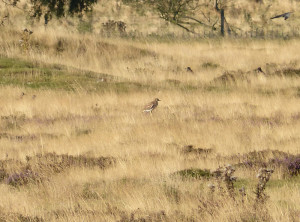
August 23rd, 2015 Nick On my way back from the British Birdwatching Fair I made a little detour to Cavenham Heath National Nature Reserve in Suffolk to search for Stone Curlews. Last year I was told about this area by another birder as a location where Stone Curlews gather before migrating and I saw quite some number of them in late September 2014 so I was interested to see if they were easily seen at this time of year. The site is part of “Breckland”, the dry stony heaths and grasslands that are unique to the Thetford area on the Suffolk/Norfolk border and when one approaches the site from the village of Tuddenham there is some woodland before the area opens up into rough grassland with patches of heather. A little scanning quickly revealed a Stone Curlew’s head above the grass but I spent more time to see how many birds I could count.
Seabirds at St Bees: British Birding
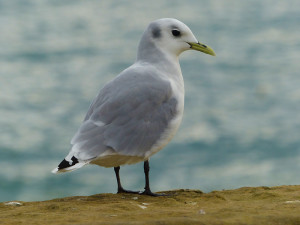
August 16th, 2015 Nick Doing most of my birding in Thailand I do not get to see seabirds very often; only on my visits back to UK. So, as part of my visit to the north east of England I decided to pay a visit to the RSPB’s clifftop reserve at St Bees Head well aware that it was rather too late in the year to see most of the nesting species (the peak time being May/June) but at the same time hoping that there may be a few still hanging around. Guillemot, Black Guillemot, Razorbill. Kittiwake, Fulmar and a very few Puffins breed at this location and watch points constructed by the RSPB give good views over the cliffs where the seabird colonies are situated. It turned out that in mid August rather fewer seabirds were still present than I was hoping for, but there were still some interesting species that I was able to see and get close to.
Nesting Bee-eaters in Cumbria: British Birding
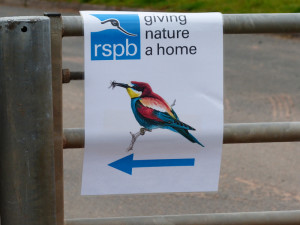
August 15th, 2015 Nick For few weeks now the RSPB has given British birders the opportunity to watch European Bee-eaters nesting at a sand quarry near Brampton in Cumbria. Bee-eaters are a very rare breeding bird in UK and this, combined with their colourful plumage, has meant that many people have made the journey to northern England to see them. Although I am not much of a twitcher, I decided to combine a trip to see these birds with a short visit to the nearby Lake District National Park, as well as a short stop to see a Sabine’s Gull near Manchester.
Sabine’s Gull at Pennington Flash | British Birding
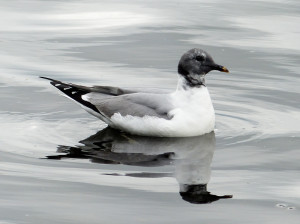
August 14th, 2015 Nick I spent the last few days walking in the mountains in the Lake District National Park, but on my way I decided to stop off to look for a couple of unusual birds, the first being an adult Sabine’s Gull which had been reported as present for a few days at Pennington Flash, near Manchester. Finding Pennington Flash Country Park was easy with just a short excursion off of the M6 motorway and on arrival the large lake had the potential to make for a long search, being full of a variety of Gull species. However, as if often the case when twitching a rare bird, other birders were around to point the way to a nearby hide where it had been seen on a daily basis. A short stroll revealed a small group of birders photographing the Sabine’s Gull which was feeding on pieces of bread being thrown to the ducks; the cutting edge of birding!
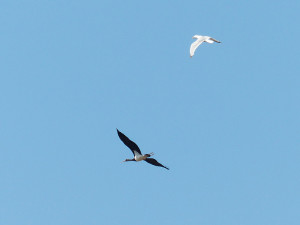
Black Stork at Dungeness: British Birding
August 7th, 2015 Nick It’s funny how one bird can completely change the way a day is going. After seeing several reports of interesting species at and close to Dungeness I set off to enjoy a sunny day with several species as targets. The first of these was Spoonbill which had been reported on several days at Scotney Gravel Pits. However, despite much searching and waiting a failed to find these birds, instead I spent the time photographing the feral Barnacle Goose flock. Next it was off the Dungeness RSPB reserve where a number of species were possible but despite seeing the Wood Sandpiper which had been present on my previous visit to Dungeness last week, there was very little to see, just Green Sandpiper, Common Sandpiper and a few Golden Plover.
The next birds to miss were a flock of Black Terns that had been reported near the nuclear power plant but had departed only to leave Herring Gulls and a single juvenile Yellow-legged Gull and I also could not find any Black Redstarts which are resident at the power station. At this point I was setting a record for failing to see any target birds but as I was sitting eating my sandwich, parked close to the beach screeching Herring Gulls alerted me to a bird that was to totally turn around my run of poor luck. Read more »