
This morning I received a text message from Sukanya Thanombuddha telling me that she had found a male Narcissus Flycatcher at Sri Nakorn Kuen Khan park. over the last few weeks I have seen some interesting migrants at the same location including a female Narcissus Flycatcher, a male Yellow-rumped Flycatcher, Himalayan Cuckoo and Chestnut-winged Cuckoo. Dave Gandy has also been reporting some interesting migrants on his blog – Bangkok City Birding – from Suan Rot Fai and nearby. With migration now in full swing it is time for birders in Bangkok to visit their nearest park and see what they can find. Read more »
Gull Feeding Frenzy at Samut Sakhon | Birding in Thailand
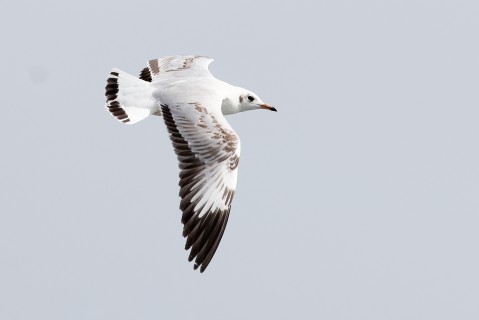
A beautiful sunrise, thousands of birds, the sound of the sea; all the ingredients for one of the world’s birding hotspots, but in reality this is the atmosphere I was able to enjoy on a short morning excursion from Bangkok when visiting the “Red Bridge” coastal boardwalk in neighbouring Samut Sakhon province. Rather than being [...]
Birds in a Park in Bukhara | Birding in Uzbekistan
Uzbekistan is one of those countries that is great for birding and at the same time extremely interesting in touristic terms too; an ideal place to travel with a non-birding partner and then to find time to go birding in locations near the tourist spots and to visit some really spectacular scenery. In late April [...]
Top 5 Birds of Vietnam Birding Tour 2025 | Birding in Vietnam
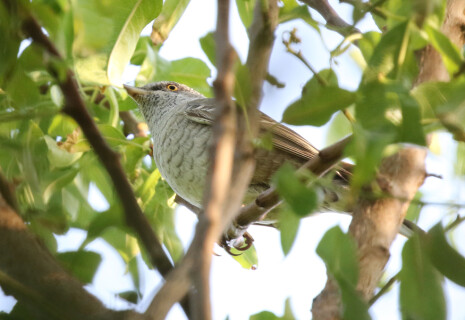
Vietnam is the country in mainland Southeast Asia with the highest number of endemic species and the best place to see a number of regional endemics too as well as a fantastic supporting cast of more widespread birds. Leading the Calidris Birding Tours trip to Southern and Central Vietnam in March/April 2025 gave all participants [...]
A Day Birding in Qatar | Birding in Qatar
My annual migration between Thailand and UK has not only seen the cost of direct flights rise dramatically but I have grown very tired of sitting on a plane for twelve hours, if only I was able to make the journey under self-powered flight like a Bar-tailed Godwit! Indirect flights are, of course, a solution [...]
Parakeets & Peafowl | Birding in Thailand
One thing I have learned over the years that I have been bird watching is that there are many different ways for people to enjoy birds. I started birding by going on long country walks in England with birds being perhaps the most accessible category of wildlife to enjoy along the way. Friends of mine [...]
Birdwatching from the Roof: Thailand Birding
 March 22nd, 2014
  Nick
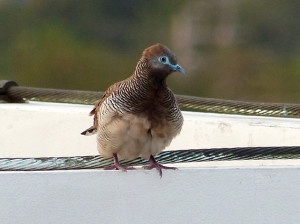
Nick Yesterday afternoon I spent an hour and a half on the roof of my apartment block watching birds from this elevated position. The building has 9 floors and is located in Pracha Utid road, a busy part of Bangkok on the west side of the river. It is one of the highest buildings in the area so I had a good view of passing birds and a few species in wasteland down below.
Migration has already started and although it is probably a little bit early to see large numbers of birds moving I did witness fair numbers of Blue-tailed Bee-eaters on the move, perhaps as many as 50 birds in total, as well as a single Black-naped Oriole. In a week or so it may be worth trying in the morning to see if I can observe any large movement of birds on migration.
Apart from these migrants, I managed to see quite a few resident species of birds, several at very close range as they passed by the roof. Read more »
Black-collared Starling In Bangkok: Thailand Birding
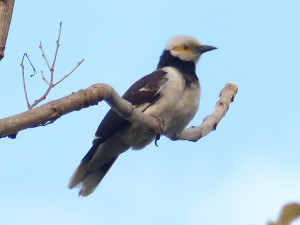
March 18th, 2014 Nick Yesterday afternoon I spent an hour at Sri Nakorn Kuan Kan park in Bangkok. The humidity was quite uncomfortable and clear weather did not seem to be the right recipe for migrating birds to land with just a couple of Hair-crested Drongos, an Ashy Drongo, 1 Asian Brown Flycatcher and a Black-naped Oriole. However, for the first time in this park I saw a pair of Black-collared Starlings; I was alerted to their presence by their rather discordant singing.
Recently some visiting birders mentioned to me that although Black-collared Starling’s range map in Robson’s Field Guide to the Birds of Thailand covers most of the country they had not seen even one! Casting my mind back it occurred to me that this species used to be rather more common in the central region and while it remains common in farmland habitats in northern Thailand, it may be in decline in and around Bangkok. Read more »
A Successful Birding Tour: Thailand Birding
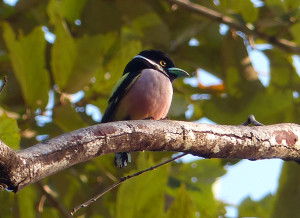
March 17th, 2014 Nick From 11th January to 4th February 2014 I led a birding tour of central and northern Thailand. We all have high hopes when starting a birding trip but all those who have been bird watching for some time will know that it is not always easy to find the species that make the trip a success. With this in mind it was very pleasing that things came together well for this trip and we found a large number of excellent birds as well as enjoying spending a lot of time photographing many species close up at the many stakeouts around the country. Indeed, it was enjoyable for all to study many birds at length and to see them at close range as well as enjoying a lot of good food and a lot of laughs along the way.
I will talk about the birding and mammal highlights of the trip here; Read more »
Dry Dipterocarp Forest at Doi Inthanon: Birding in Thailand
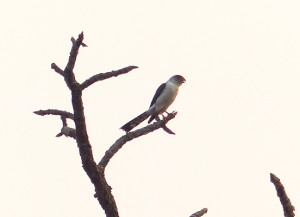
March 14th, 2014 Nick Dry dipterocarp forest has a high number of bird species that are specialists to this niche and the dry forest at the bottom of Doi Inthanon has long been a location for visiting birders to catch up with a number of these species. For most birders resident in Thailand the dry dipterocarp forest at Doi Inthanon is extremely poor in bird abundance with locations such as Mae Ping and Nam Nao far better places to catch up with many of the birds associated with dry woodland. However, on the morning of 11th March 2014 I took a walk along the road at Km 13, Doi Inthanon, with Hugues Dufourny, Guy Mirgain & Patrick Derennes as we did not have enough time to travel to Mae Ping national park.
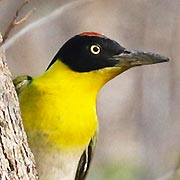
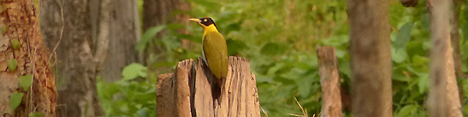
My warning that we would experience extremely low levels of bird activity proved to be accurate, but with a lot of patience and effort we managed to find quite a few of the species that we had been hoping to see. Although Black-headed Woodpeckers are fairly common along this trail it took us quite some time before we managed to see a group of at least six birds. At one point they became quite agitated and fluffed up their red rump patches – quite a sight! We all felt like we deserved to see these birds after having chased several groups of them that we had heard; they were all completely unresponsive to call playback. Read more »
Doi Lang Photography Stakeouts – Thailand Birding
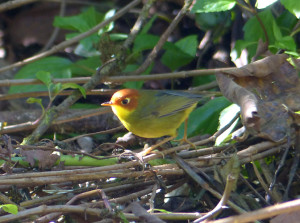
January 7th, 2014 Nick I have written a number of times about the photographic stakeouts at Doi Lang but my recent visit on 1st-3rd January resulted in a large number of excellent sightings worth mentioning here for others who may be planning to visit the mountain themselves.
The first thing to mention is that if one is heading up from the Fang side there is now a checkpoint where national park staff are charging visitors to enter. the tickets are valid at all entrances to Doi Pha Hom Pok national park and valid for 7 days. Read more »
Common Birds – Thailand Birding
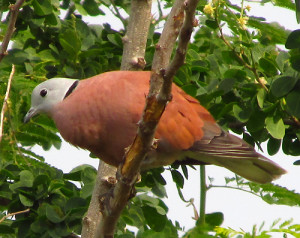
December 5th, 2013 Nick We all like to find rare birds and species that we have not seen before but sometimes it is worth going back to basics and taking time to look closely at some of the common birds that can be seen frequently. Too often many bird watchers will breeze past the common birds forgetting that these species are frequently beautiful and have interesting behaviour to observe.
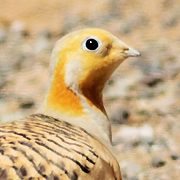
While taking photographs of birds to use on my websites I have taken more time to look in detail at species that I see all the time and it has been interesting to notice subtle details in plumage on a number of common shorebirds and several other superficially “dull” birds. Read more »