Thailand Birding: Spoon-billed Sandpiper Returns

I spent a couple of days with my wife in Petchaburi province on 29th and 30th October doing some birdwatching and some lazing on the beach.

On the afternoon of 29th I headed to Pak Thale to see if I could find a returning Spoon-billed Sandpiper. A new road was being layed part the way into the site and I was unable to drive in, leaving me with a long and hot walk. The workers said it would be finished in three days though. They were laying a concrete road and where it joins the dirt road towards the sandpiper site there is now a large drop of about 7-8 inches. Unless something is done about this, access to the site will be impossible in a saloon car or even a minibus. A vehicle with very good ground clearance will be needed. I will look at the situation on my next visit.

Despite much searching I could not see any Spoon-billed Sandpipers. Lots of commoner waders were present – Marsh Sandpiper, Spotted Redshank, Broad-billed Sandpiper, Rufous-necked Stint, Long-toed Stint, Temminck’s Stint, Curlew Sandpiper, Eurasian Curlew, Common Greenshank, Lesser Sand Plover, Greater Sand Plover, Kentish Plover, Black-winged Stilt, Common Sandpiper. Also seen were about a dozen Great Knot, 1 Turnstone and 1 Grey-tailed Tattler.

Having sweated myself silly I moved off and checked some wader flocks on my back to Had Chao Samran. Somewhere near the sign which demarcates the boudary between Laem Pak Bia and Pak Thale I checked out a flock of stints and found a single Spoon-billed Sandpiper amongst them! Hooray, it’s back!

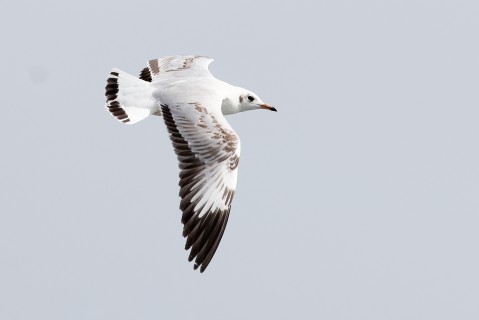
I checked out a couple of other spots and found lots of Brown-headed Gulls with a Caspian Terna dna Black-headed Gull, a flock of c40 White-shouldered Starlings gathering to roost with huge numbers of White-vented Mynas and in some freshwater wetlands a Painted Stork was in the company of an Asian Openbill, a male Painted Snipe and 2 Purple Herons.

Khao Look Chang
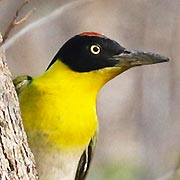
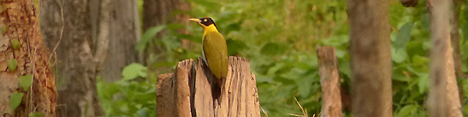
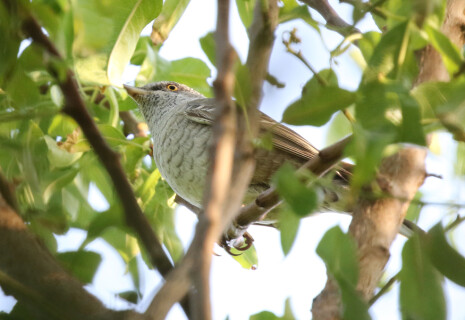
A few months ago David Scott took me to some dry dipterocarp woodland at Khao Look Chang, Petchaburi. My wife and I went there for a quick look on 30th October. We arrived at 11.30am so I didn’t really expect much, however, within 30  minutes I had seen an Asian Barred Owlet, 5 Black-headed Woodpeckers, 4 Lineated Barbets, 5 Greater Racket-tailed Drongos, 1 Spangled Drongo, 1 Green-billed Malkoha, 1 Rufous Treepie and a Puff-throated Babbler, not bad for such a quick stop in the middle of the day.

Khao Yoi
Later in the day (about 4.30pm) we were nosing around in rice fields near Khao Yoi. Most of the normal birds for that habitat were easily seen but most impressive was a flock of Black Kites. At first I saw 2 birds but then noticed many more sitting in palm trees. Through my telescope I could see that there were large numbers in all the surrounding palms and more birds began to descend from above. I counted an impressive 473 Black Kites sitting in trees and wheeling around in the sky but with many many more high above and many birds unviewable on the blind side of the trees I would imagine the real total to be somewhere between 6-700.

As we were leaving a superb adult male eastern Marsh Harrier flew alongside the car, hunting over rice fields.
curlew-sandpiper.jpg

Thailand Birding: Art Exhibition

Some time ago Louise Truslow contacted me asking where she could go to see birds in large flocks. I suggested wetlands around Petchaburi as a great place to look. The reason she wanted to know was to get some ideas for a series of oil paintings of birds.

It seems that she found what she was looking for as now she has an exhibition of her bird art at the Neilson Hays library in Suriwong Road, Bangkok; she has very kindly invited me to the opening of the exhibition this evening.

The exhibition will run through October and the paintings will be auctioned to raise funds for the care of HIV orphans.

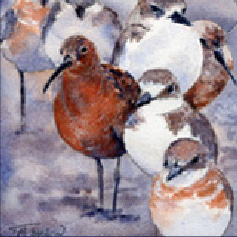
Here is an example of her artwork.

More information on the exhibition can be found on Lousie’s own website: Louise Truslow; When Kingfishers catch Fire.

Birdwatching in Britain: My Trip

Back in Thailand I have been going over my notes from my 5 week visit to England. It wasn’t really a birding trip, just a visit home, although I did go out birding a fair bit.

In total I saw 129 species. The best of which I suppose were Red-backed Shrike, Great Egret and Glossy Ibis. For me though the highlights were some of the more mundane species that I only get to see when back home.

I always enjoy seeing Treecreepers and I only saw a few which made the sightings even nicer. I got great satisfaction out of a flock of 5 Corn Buntings near my home – birds which breed in that area but in late summer are hard to find. 3 yellowhammer sightings, all within a short walk of home, were lovely and some summer visitors which I haven’t seen for years; Sedge Warbler, Reed Warbler, Lesser Whitethroat and Cuckoo were great too.

glossyibis.jpg

British Birding: Glossy Ibis

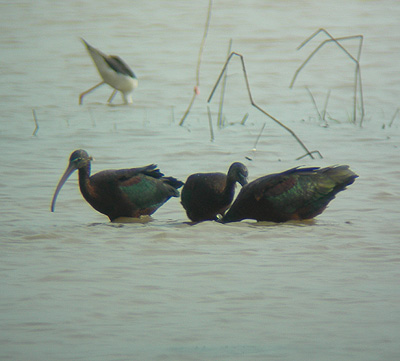
There seems to have been a mini invasion of Glossy Ibises into Britain over the last week with around half a dozen birds present. Last Thursday I caught up with one at Stodmarsh in Kent, the first time I have seen this species in Britain. However, I have seen plenty of them in India and Thailand where, at Bueng Boraphet, they seem to be increasing in numbers quite rapidly.

The amusing thing for me was that while quite a number of bird watchers were all concentrating on this UK rarity I was more interested in some of the commoner British species; I was particularly happy to see Cetti’s Warbler and Reed Warbler, birds that I hadn’t seen for over 2 years.

The Glossy Ibis was a nice bird to see, but it was a bit far away to photograph, instead here is a photo that I took in Thailand back in March.


Glossy Ibises
(Photo by Nick Upton)

, ,

comma4.jpg

British Butterflies

One thing I have noticed over the last few weeks in the UK is how many butterflies are around. A walk around farmland and nature reserves seems to reveal a plentiful supply of butterflies of a variety of species. A few years ago the EU changed agricultural subsidies so that they would only paid if some simple conservation measures were taken. These measures include not trimming hedgerows in the bird breeding season, leaving unsown strips around field boundaries and planting seed and nectar mixes for birds and insects. I have heard that the measures for birds are having some success but it is quite obvious that butterflies are benefitting considerably and I am now seeing more butterflies in the British countryside than I have for very many years.

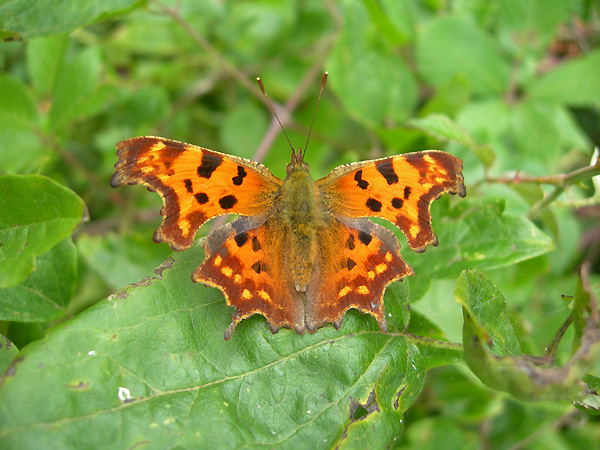
Today I got this shot of a Comma and the photos that follow have all been taken in the last couple of weeks.

red-backed-shrike2.jpg

Birdwatching In UK: A Day at Dungeness

Back in the UK it is always nice to catch up with some birds that I haven’t seen for ages due to being in exile in Thailand. Having been back for a few weeks and already met up with most of the commoner birds I decided to head to the shingle headland of Dungeness on a hot, sunny day yesterday.

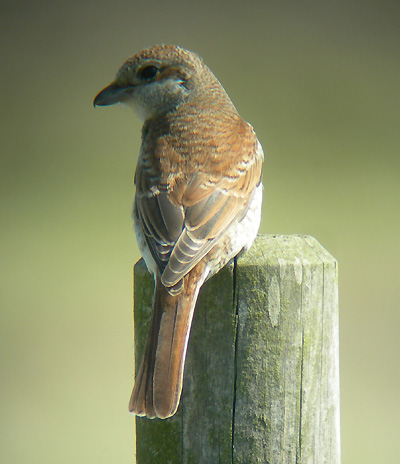
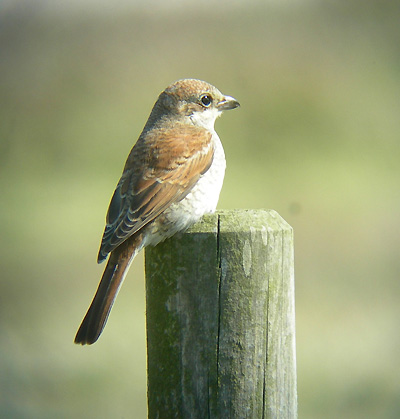
I didn’t get there at prime time, arriving somewhere around 10.30am but there were still some nice birds to see on the RSPB reserve. With migration beginning now in earnest there were lots of Whitethroats, Wheatears and Chiffchaffs to be seen and a couple of Whinchats were also amongst the migrant flocks. The star though was an incredibly tame Red-backed Shrike. This species was once a common breeder in Britain but is now pretty much relegated to passage migrant. This was only the 4th one I have seen in Britain and even managed to get a couple of photos.


Red-backed Shrike
(Photo by Nick Upton)


Red-backed Shrike
(Photo by Nick Upton)

Another very uncommon species that was present at Dungeness was a Great Egret, only the second I have seen in UK but a very common bird back in Thailand. However, several Marsh Harriers, a Hobby, a Sparrowhawk and a Sedge warbler were nice birds to see.

Seawatching
After leaving the RSPB reserve I spent an hour outside Dungeness nuclear power station watching sea birds on the warm water “patch”. In that brief time I managed to see a number of species that I haven’t seen for quite some time; these included 1 Arctic Tern, several Sandwich Terns, 1 Arctic Skua and 1 Great Skua but in the warm sunshine I started to feel sleepy so left for a cold drink.

Back on the Reserve
I had an hour left before I needed to go home so I went back to the RSPB reserve where I had heard a Black-necked Grebe had been seen. Sitting in a hide it didn’t take long to locate this bird which had only a little of its black neck remaining but it put on a good show. 2 Black Terns were also great to see and Ruddy Duck was another year tick for me.

All in all I had a really nice day at Dungeness and this is a really good time to visit. 5 Clouded Yellow butterflies were also really nice to see although rather frustrating as just as I was about to press the botton on my camera to photograph one, it flew away. That’s wildlife I guess.

tripreport-minla.jpg

Thailand Birding: Doi Inthanon Summit

  
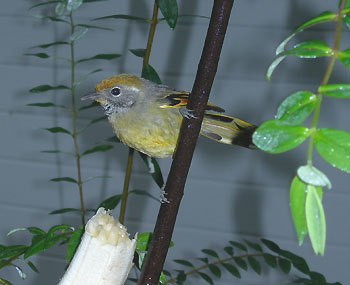
Chestnut-tailed Minla at summit of Doi Inthanon
(Photo by Nick Upton)

The summit of Doi Inthanon is one of my favourite birding spots in the world. There are a number of species which are specialities of the summit and most of them are fairly easy to see and can even be found in the worst of weather conditions – they are vitually guaranteed. The above photo was taken next to the coffee/hot chocolate hut next to the summit toilets. The people at the coffee stand put out bananas and the birds come to eat them, only a few feet away from where people are standing.

I was on the summit of Doi Inthanon in mid July with Robert King and the weather was terrible; strong winds, rain and cold. However, in two visits (both in the same conditions) we managed to see the following species:

Chestnut-crowned Laughingthrush
Chestnut-tailed Minla
Yellow-bellied Fantail
Ashy Woodpigeon
Ashy-throated Warbler
Davison’s Leaf Warbler
Green-tailed Sunbird
Snowy-browed Flycatcher
Pygmy Wren Babbler
White-browed Shortwing
Dark-backed Sibia
Flavescent Bulbul
Blue Whistling Thrush
Rufous-winged Fulvetta
Yellow-cheeked Tit

We ended up at the summit of the mountain when the weather further down was too poor for birding – at the top it was just a little better and as it is higher up there is more chance of a break or the sun buring the cloud off for a while. Certainly on our second visit we had about 10 minutes where the sun almost broke through and we had time to see the Ashy Woodpigeons and Green-tailed Sunbirds were encouraged enough to come out and feed on flowers in the garden at the top.

One thing about being at the summit of Doi Inthanon in the rain is that the elfin forest looks amazingly lush and the plants are wonderful covered in raindrops.

A full report of the 14 day trip around Thailand in July 2009 can be read here: Rainy Season Birding Tour of Thailand, 1st-14th July 2009.

Free WordPress Themes