flamingo.jpg

Thailand Birding: Greater Flamingo

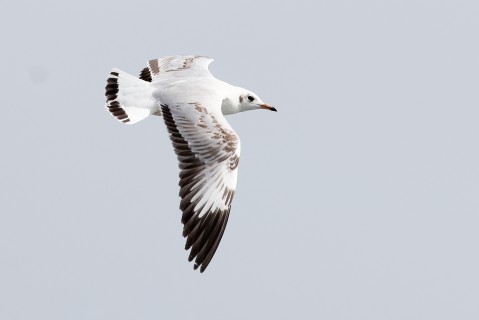
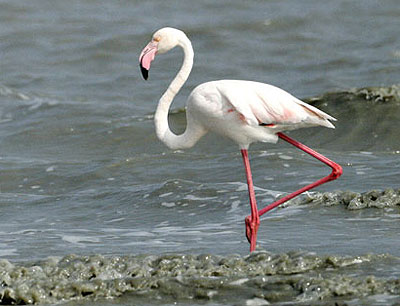
Whilst Greater Flamingo is not on the Thai checklist of birds, it is a species frequently seen in the wild by many birders here. The reason for this is that a Greater Flamingo which has been resident in the Laem Pak Bia/Pak Thale region for a number of years now is in fact an escaped bird.


The above photograph was taken on mudflats at Pak Thale on 20th December by Esa Keikka.

When this bird first turned up in the area in the early 2000s it was thought by many to be a genuine vagrant. However, when I went to the area with Phil Round we could clearly see that all the secondary feathers growing back in a straight line, indicating that at some point they had been cut and that the bird had escaped from a waterbird collection.

I get many reports of this bird from birders excited to find a new species for Thailand and whilst I have to inform them that it is an escape, it is still a beautiful bird to see.

, , , ,

mesia.jpg

Thailand Birding: Silver-eared Mesia

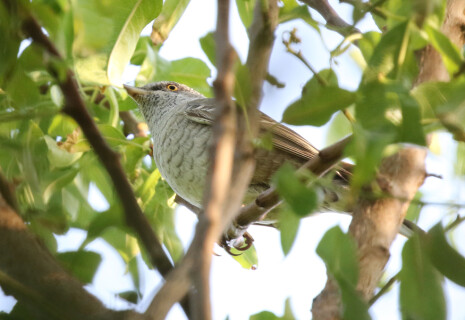
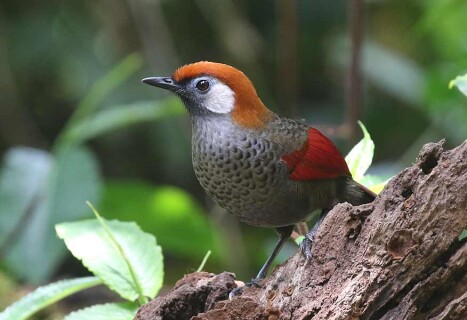
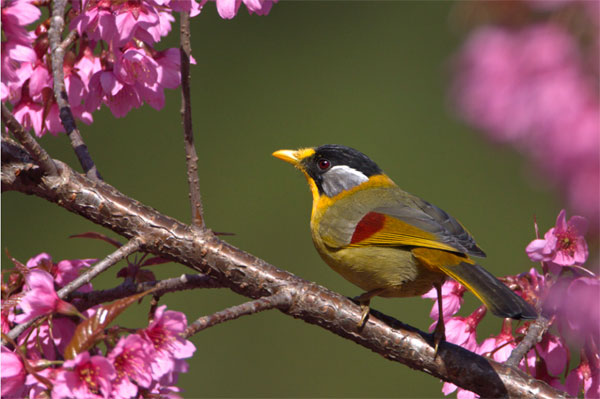
Johan Svensson Kindly e-mailed me this photograph of a Silver-eared Mesia in a cherry tree; it is so nice I thought that I would share it with everyone. 

Johan correctly stated that it was one of my favourite birds, something that I have written about here: My favourite birds of Thailand.

Silver-eared Mesia is a fairly common bird in the mountains of the north of Thailand but its amazing combination of colours always make it a welcome sight as far as I am concerned. I always encounter this species on my trips to Doi Ang Kang at various points around the mountain, but I find the Mae Per forest trail to be particularly reliable for it.

, , , ,

weirdegret.jpg

Thailand Birding: day Trips to Laem Pak Bia/Pak Thale

The Laem Pak Bia/Pak Thale area of Petchaburi province has established itself as the best shorebird site in Thailand and one of the best in the world. What is impressive about this site is:

1. The Size

2. The sheer number of birds

3. The variety of species

4. The quality of species

Recently, I have been to this area 6-7 times and each time have seen 85 species plus, including a number of very rare birds and a few that are uncommon. It is not that unusual to see more than 100 species in a day.

On the 8th December I spent the day at Laem Pak Bia/Pak Thale with Des and Tina Langford from UK and we had an excellent day starting with Nordmann’s Greenshank (it’s good to get this bird early before work on the salt pans flushes them away) and then moving on to look for Spoon-billed Sandpiper in it regular location (also good to see this bird early for the same reasons). This bird took some time to find and it was getting tot the point where we thought we might not see it; fortunately as things were getting desperate we found 1 bird on the last pool we looked at.

The Sand Spit

We hired a fishing boat to take us out to Laem Pak Bia sand spit which is a great place to find Malaysian Plover. This is a non-migratory shorebird with a restricted range; confined to sandy beaches in Southeast Asia. As sandy beaches in South East Asia suffer from development pressure from the tourist industry, this species is threatened.

The boat trip takes about 30-40 minutes to get to the sand spit and Malaysian Plover is easy to find. White-faced Plover is alos usually present but often requires a lot more effort to locate – we found one in a roosting flock of Greater Sand Plovers, Lesser Sand Plovers, Kentish Plovers, Curlew Sandpipers, Sanderling and Red-necked Stints.

Freshwater Wetlands

The Petchaburi region has a lot of freshwater wetland areas too and a short distance from the main shorbird sites are a small area where a good number of species can be found. From the main crossroads near Hat Chao Samran one should drive back towards Petchaburi and take the first right hand turning (about 1km). This turning is for a temple and as one apporaches a village there are some nice reedy areas on the right of the road. Here we found Painted Stork, Asian Openbill, Black-faced Spoonbill, Purple Heron, Pied Kingfisher, Eastern Marsh Harrier, Ruddy-breasted Crake, Oriental Reed Warbler and Greater Painted Snipe.

Also in this area was a very strange Little Egret with some sort of aberrant plumage.

The King’s Project

This area is great for seeing lots of birds at very close range. Lots of egrets, herons and shorebirds such as Pintail Snipe and Ruff can be seen easily. One must enter before 6pm but between 5pm and dark large numbers of birds come to roost in the nearby mangroves. In the region of 10-15000 Black Drongos sometimes pass through and in the winter there are always small flocks of White-shouldered Starlings too.

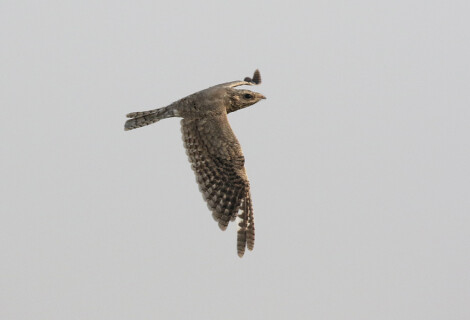
We saw around 150 White-shouldered Starlings and some other good birds we saw were Oriental Reed Warbler, Ruddy-breasted Crake, Caspian Tern, Black-crowned Night Heron and Collared Kingfisher. Indian Nightjar can be found here too.

Upon entering, one is sometimes given a brochure which explains what the purpose of this area is.

Conclusion

Whether you are with a guide or choose to go independently, birders will find that Laem pak Bia/Pak Thale gives a great day’s birding. Indeed, many experienced and well-travelled birders have told me that it was their best day ever! Most people visit for just 1 day but I am increasingly often spending 2 days in the area and by visiting a variety of habitats can see in excess of 130 species over the 2 days. I would suggest that more people take their time in this area and find many species that they did not expect on their Thai birding holiday.

Thailand Birding: Some Notes on Birdwatching in November

Throughout November I was away from home most of the time, visiting some of Thailand’s best birdwatching locations with a number of visitors who provided some excellent company. The sites visited in November included Khok Kham, Laem Pak Bia/Pak Thale, Tung Bang Jak, Kaeng Krachan, Doi Inthanon, Doi Ang Kang, Huay Tung Tao and Doi Lang. All of these sites provided some of their specialities and one or two surprises.

November is a time of year that I have not done much birding in the past, so there were a few things I discovered that I will pass on here to others.

Generally, resident forest birds were rather quiet and difficult to find; this was particularly true around Ban Krang at Kaeng Krachan where woodpeckers, broadbills and kingfishers were almost impossible to locate. Local birders and rangers told me that they hadn’t seen a broadbill for more than a month, however, towards the end of the month I did hear a pair of Banded Broadbills calling.

Despite resident birds being rather trickier than at other times, migratory birds were more rewarding. Although November is a little early for large numbers of migrants to be present, “falls” of migrants were quite obvious and it was interesting to turn up species that are either scarce passage migrants or winter visitors that were more active than normal because they had just arrived. At Doi Ang Kang, Bush Warblers were rather more active than at other times, with Aberrant Bush Warbler and 2 Manchurian Bush Warblers being seen. Perhaps they were busy feeding up after their long journey.

In the north Thrushes were beginning to arrive in small numbers and 2 Eyebrowed Thrushes were seen, 1 Dusky Thrush and 2 Black-breasted Thrushes. Also the Dark-sided Thrush had recently shown up at Mr Daeng’s at Doi Inthanon and there was an arrival of caeruleus Blue Whistling Thrushes at Doi Inthanon on the 12th November.

In the lowlands things were exceptionally quiet at Huay Tung Tao with many of the regular birds being absent. There was no sign of Purple Sunbird, Lineated Barbet, Rufous-winged Buzzard, Bright-headed Cisticola or Chinese Francolin but the Wire-tailed Swallows were present.

November also saw the return of Nordmann’s Greenshank & Spoon-billed Sandpiper to Pak Thale and Laem Pak Bia, with 1 Spoon-billed Sandpiper turning up at Khok Kham on 28th October. Any visitors coming to Thailand at the end of October/beginning of November would do well to visit Khok Kham as the bird always seems to turn up there first.

In the freshwater wetlands weavers and jacanas were in short supply, but plenty of other birds were to be found such as Reed Warblers, Spot-billed Pelican and Black-headed Ibis.

I hope that these random notes will be of some assistance to birders planning their trips to Thailand in the future.

nightheron.jpg

Thailand Birding: Get to Phuttamonton Park

I recently wrote about Phuttamonton Park on this blog – Autumn Migration & Phuttamonton Park - and created a page for it on thaibirding.com – Phuttamonton Park, but it seems I may have understated the potential of the site for birding.

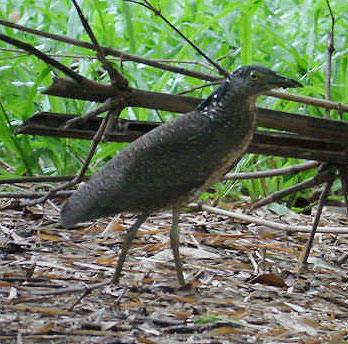
I received a couple of e-mails from Stijn De Win who visited the park after reading about it on thaibirding and he has added some excellent birds to the list including Indian Nightjar, Collared Scops Owl, Mugimaki Flycatcher and this juvenile Malayan Night Heron below.

 
Malayan Night Heron
by Stijn De Win/Birding2asia

Along with these birds he also reported some of the other good birds that I have seen there before; Red-billed Blue Magpie, Lineated Barbet, Black-naped Oriole, Small Minivet and others.

 With migration still taking place it looks like Phuttamonton Park is well worth a visit right now and with many of these birds being resident it looks good for all year round.

, , , ,

bluerockthrush.jpg

Thailand Birding: Birds on the Balcony

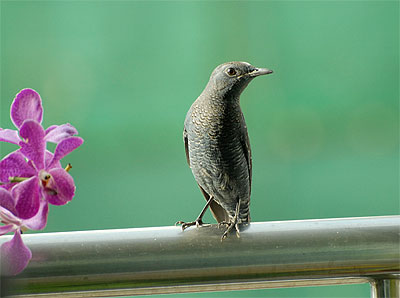
Today I received an e-mail from Jorgen Eriksson with a very nice photo of a Blue Rock Thrush attached (see below).

Apparently this bird made Jorgen’s back yard in Bangkok its winter territory last year and now it has returned for a second year. I am constantly amazed at how many species can exist in such an urbanised area as Bangkok, a sentiment shared by Jorgen in his e-mail to me. In fact, Bangkok has quite a high level of biodiversity due to its fairly haphazard development; many areas have patches of wasteland and unkempt corners and these along with small yards, balconies with plants and a few parks creates a number of foraging opportunities for birds.

Even in an area as busy as Sukhumvit and its side roads birds such as Plaintive Cuckoo, Plain Prinia, Brown Shrike, Common Iora, Scaly-breasted Munia, Olive-backed Sunbird and Coppersmith Barbet can be found.

Particularly at this time of year, when migration is in full swing Leaf Warblers, Flycatchers and Shrikes often turn up in gardens of shopping centres, restaurants, embassies as well as Bangkok’s parks, making it worth keeping ones eyes open even the most central areas of the city, indeed, Bangkok is one of the best places for watching House Swifts in huge flocks an hour or so before dusk – try standing on Chidlom Skytrain station at 5.30pm and watch the House Swifts swooping around in front of you.

However, if you see any Weavers flying around in central Bangkok they were certainly victims of the release-birds-to-make-merit trade: Weavers for sale on Sukhumvit Road.

, , , ,

ferruginous.jpg

Thailand Birding: Autumn Migration & Phuttamonthon Park

Autumn migration is in full swing now and I have had a number of people sending reports of passage migrants in parks in Bangkok recently, including a Brown-chested Jungle Flycatcher in Suan Rot Fai. With reports of Yellow-rumped Flycatchers and Tiger Shrikes from a number of locations I decided to get out and look for some passage migrants myself.

Although Suan Rot Fai seemed to be producing some good birds and with a report of Grey-backed and Tiger Shrike in Lumphini Park heading to one of Bangkok’s parks seemed like the thing to do, but then I remembered Phuttamonthon. This is a huge park just outside the western bounds of Bangkok in Nakorn Pathom province and although it is largely manicured, it is so big that one can always find some unkempt areas that could attract passage migrants.

Resident Birds
Phuttamonthon Park is not particularly rich in resident species, playing host to mostly very common birds such as Common Myna, White-vented Myna, Cattle Egret, Indian Roller, Red-wattled Lapwing, Large-billed Crow, Paddyfield Pipit, Black-crowned Night Heron, Pied Fantail and Oriental Magpie Robin. Whilst I saw all of these there were a few other species that can always be found here that made for a fairly interesting day list. I found 3 Racket-tailed Treepies and a number of Green-billed Malkohas in mature open woodland as well as good numbers of Greater Racket-tailed Drongos, but probably the most interesting residents that I found were two groups of Small Minivets and Lineated Barbet; the Minivets were very obliging and I had excellent views. The Barbet is fairly abundant at Phuttamonthon but it was nice to get such excellent views of one and heard a couple more; Coppersmith Barbet, is very common here.
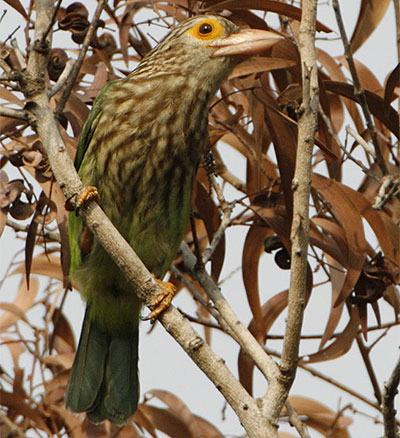

Lineated Barbet by Johan Svensson

Migrant Species
Whilst the residents were nice to see, it was migrants that I had made the trip for. At first it was slow with a few Asian Brown Flycatchers and Eastern Crowned Warblers but when I found some overgrown parts of the park I ran into a couple of mixed groups of migrating birds. In fact, every time I found a part of the park that had rough undergrowth remaining under the trees, there were migrants to be found.

At the first spot I found a few Asian Paradise Flycatchers which were aggressively chasing a number of Eastern Crowned Warblers and an Arctic Warbler. Also a Crow-billed Drongo was getting a lot of aggressive attention from resident Black and Greater Racket-tailed Drongos.

At a second stop I found 3 Pale-legged Leaf Warblers, detected by their “tink” call, along with a Plain-tailed Warbler, a Forest Wagtail and more Eastern Crowned Warblers and Asian Brown Flycatchers.

However, when I found an area of bamboo gardens I found lots of birds. This area was swarming with mosquitos and I got badly bitten, but that is of course what had attracted the migrant birds. Here I found Siberian Blue Robin, Ferruginous Flycatcher, Chinese Blue Flycatcher, Hainan Blue Flycatcher, Taiga Flycatcher, more Asian Brown Flycatchers and Asian Paradise Flycatchers, Yellow-rumped Flycatcher and more Eastern Crowned Warblers and Pale-legged Leaf Warblers – far more migrant species than I had expected.
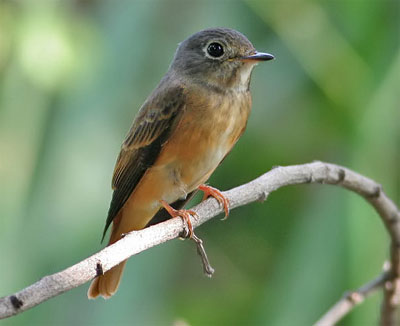

Ferruginous Flycatcher by Peter Ericsson

Summary of Migrants Seen
Here is a summary of all the migrant species I saw at Phuttamonton on 24/09/09.

1 Ferruginous Flycatcher
1 female Yellow-rumped Flycatcher
1 female Chinese Blue Flycatcher
1 male Hainan Blue Flycatcher
10 Asian Brown Flycatchers
1 Taiga Flycatcher
6 Asian Paradise Flycatchers
1 female Siberian Blue Robin
1 Crow-billed Drongo
4 Brown Shrikes
1 Forest Wagtail
1 Arctic Warbler
5 Pale-legged Leaf Warblers
11 Eastern Crowned Warblers
2 Plain-tailed Warblers
20+ Yellow Wagtails
1 Chinese Pond Heron (Still in partial breeding plumage)
Many Barn Swallows

The One That Got Away
One other interesting bird I saw was a White-crested Laughingthrush. This is one of my favourite species and I am always happy to see it but one doesn’t really expect to see it in a park. This bird was alone, something that almost never happens to Laughingthrushes, and had no tail. Of course it was an escaped cage bird and, judging by its lack of tail and the nearby efforts of some workers to call it into be re-trapped, it hadn’t been free for long. Considering the terrible conditions that most birds are kept in in Thailand I hope that this one finds success in its freedom as many other White-crested Laughingthrushes have in and around Bangkok where there are a number of feral colonies.
Free WordPress Themes