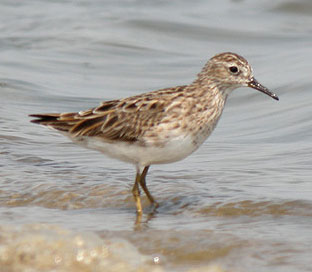
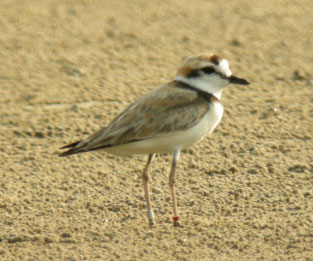
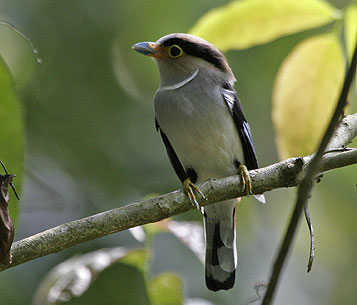
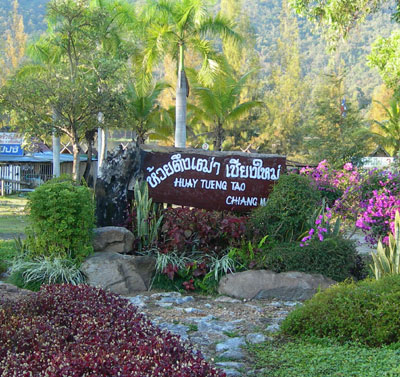
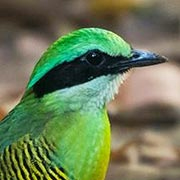
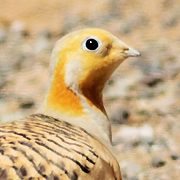
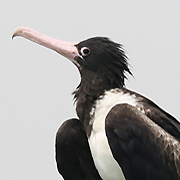
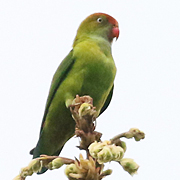
The reason for not posting on this blog for over 2 months is that I have been busy on numerous birdwatching trips around Thailand. The longest of these trips was a three week tour, beginning in Bangkok and finishing in Chiang Mai, taking in a number of excellent birdwatching sites: Laem Pak Bia/Pak Thale, Kaeng Krachan, Khao Yai, Nam Nao, Chiang Saen, Doi Ang Kang, Doi Chiang Dao, Huay Teung Tao and finally, Doi Inthanon.
For the whole of this trip I was in the excellent company of Pamela Piombino, Glenn and Carol Cushman & Linda and Jean-Pierre Georges. For the northern sites we were also joined by Pamela’s husband Joe.
17th January
We started off with meeting everyone at Suvarnaphumi airport and headed straight out to Laem Pak Bia. By the time we got there it was quite hot and even after lunch and a brief rest enthusiasm for distant shorebirds wasn’t at its highest! However, we saw most of the usual species and headed off for a boat trip to the sand spit in the late afternoon. This was far more the pace that was required after long plane journeys and the common but colourful Collared Kingfisher was appreciated by everone. Also as we headed out through the mangroves a very obliging Chinese Egret kept flushing from in front of the boat giving everyone excellent views. Out on the spit were 4 Pallas’s Gulls, including one in almost complete summer plumage, 2 Heuglin’s Gulls and a selection of Caspian, Little, Common, Greater Crested and Lesser Crested Terns. Everyone seemed to enjoy the gradual cooling of the day on the sand spit and we headed back as the sun was beginning to set.
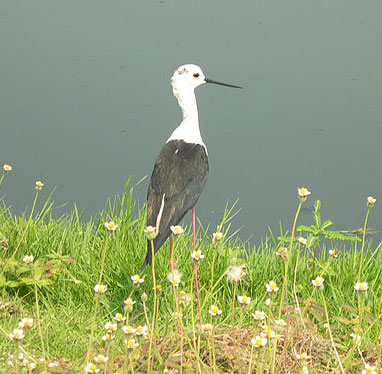
With some light remaining there was time to get into the King’s Project area where waterbirds such as Grey Heron, Great Egret, Black-crowned Night Heron, Black-winged Stilt, Little Cormorant, Long-toed Stint, Ruff, Wood Sandpiper and Common Snipe, amongst many others, are so easy to see at very close range. Even with my rudimentary photographic skills I managed to get a decent photo of a Stilt as it was only a few feet away from the car.
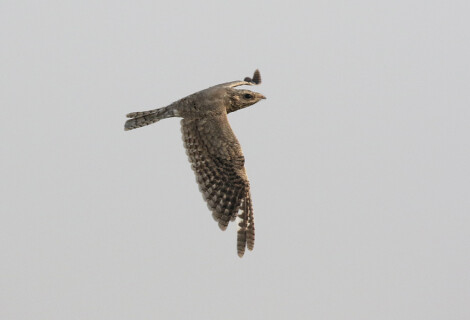
I told the others that the best was yet to come and as darkness came so to did many Black-crowned Night Herons coming out to hunt. These were followed just a little later by hundreds, if not thousands, of fruit bats emerging from the mangroves and heading inland to forage. Everyone seemed suitably impressed by this spectacle and as we headed off I spotted the glow of a Nightjar’s eyes in the headlights. Very quickly we successfully spotlighted 4 Indian Nightjars and watched them at quite close range swooping after insects. Considering the vast number of biting mosquitos here it would seem that they could just sit on a perch and open their mouths to get all they need to eat.
We finished the day with an excellent fried fish and vegetables meal, washed down with badly poured beer!
18th January
Everyone other than myself was suffering from jetlag and they were all awake at about 3am, which was fortunate because I overslept! When we were ready we headed out to a road which runs through paddie fields and provides some excellent open country birdwatching in the mornings. With so many new birds for most of the party it was difficult to know where to look next, but a singing Indochinese Bushlark, large parties of Asian Openbill Storks, 2 Black Bazas, lots of Green Bee-eaters, Indian Roller, Black-eared Kite (lineatus race of Black Kite) and Long-tailed Shrike were probably the highlights for most people. For me at least one, or possibly two, Barn Swallows of the tytleri race were of interest.
Lunch was taken in a hut selling grilled chicken and somtam, in Petchaburi, and no-ne seemed to bat an eyelid when we all walked into the local government offices to use the toilet – in fact people went out of their way to help us find the toilets.
We next headed to our accommodation at Kaeng Krachan – Gaeng Phet Resort which was recommended to me by Peter Ericsson. It proved to be a good recommendation, in an attractive spot next to the lake. After an hour or so relaxing we decided to spend a couple of hours in the forest. However, the national park staff insisted we paid the 200 baht per person even for just a few hours, something which we weren’t inclined to do. Still, the guy at the gate was kind and told us that we could park at the gate and walk along the road without paying – this enabled us to see some birds but not really anything very special as the habitat is quite poor there. However, we did see a Thick-billed Pigeon on its nest.
19th January
Up early and into Kaeng Krachan park. We stopped at various points along the access road and got lucky with some good activity although things got pretty quiet by 10am. Probably the best sighting for most of the group were the flyover Great Hornbills and a huge group of Oriental Pied Hornbills. We also saw many barbets – Coppersmith and Green-eared and a few Crested Serpent Eagles, a species which is common in all forest habitats in Thailand. Many other colourful birds were seen including Black-naped Oriole, Common Flameback, Scarlet Minivet, Asian Fairy Bluebird and Thick-billed Pigeons.
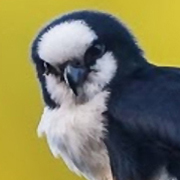
We also had superb views of a pair of Black-thighed Falconets perched upon a dead tree – always a nice species to see.
Walking up the road from Bang Krang campsite we really struggled to see anything at all, although we did get excellent views of a apir of Sultan Tits and a male Shikra. About the only other thing we found was an Asian Paradise Flycatcher in the gloom of the forest.
At lunch we did a little better with Hainan Blue Flycatcher, White-rumped Shama, Verditer Flycatcher, Taiga Flycatcher and Common Tailorbird all showing up behind the shelter we were sat in. In the afternoon the road was painfully slow with almost no bird activity although we did have great views of Black Giant Squirrel, Leaf Monkeys and Lar Gibbons to make up for it, as well a few Red Junglefowl by the roadside as we were leaving. After such a slow afternoon’s birding most people were keen to get back and take a shower – which we did followed by an excellent dinner and beer.
20th January
Most of the party were feeling a little disappointed with Kaeng Krachan as there are virtually no trails to walk on, just the dirt road which can get quite busy at weekends. With this in mind we had a lie-in and departed for Khao Yai. We made a few brief stops along the way, the most memorable of which was to view a male Pied Harrier. The journey between the 2 parks is quite long but stopping for fruit and a few photo opportunites broke up the journey and we arrived Duangporn resort for lunch. We got our act together quite quickly and went straight into the national park – we were charged 400 baht per person!
We did find some nice birds though with a number of new species along the road although a walk in search of Pittas proved rather abortive due to the narrow, overgrown trail. In order to make up for this we went to Pa Gluai Mai campsite where Great Eared Nightjar didn’t disappoint and calling owls included Collared Owlet, Brown Hawk Owl, Brown Wood Owl and Mountain Scops Owl. As we drove back we stooped many times for Sambar and Barking Deer and a stop at a lookout was very nice as we managed to spotlight large-tialed Nightjar in the car headlights and get good views through the telescopes.
21st January
A full day at Khao Yai was not disappointing with an excellent number of species turning up in thr morning at Pa Gluai Mai campsite. Here we saw Black-naped Oriole, Laced Woodpecker, Hill Myna, Green-eared Barbet, Blue-eared Barbet, Blue-bearded Bee-eater, Wedge-tailed Pigeon, Radde’s Warbler, Siberian Blue Robin, Swinhoe’s Minivet and much, much more.
Walking along the trail to Haew Suwat proved a little tricky as many overthrown trees now cross the trail. However everyone enjoyed the walk, even if it was a little longer than some expected and it certainly provided us with some nice photo opportunities.


We also saw some nice birds with Sulphur-breasted Warbler being a nice record and Heart-spotted Woodpecker being a highlight. Other species were Barred Cuckoo Dove, White-bellied Yuhina, Great Iora and Mountain Imperial Pigeon.
We had a nice lunch at Haew Suwat and were kindly driven back to the campsite by a friendly local guide who also showed us where to look for Blue Pitta. As soon as we entered this stakeout a Blue Pitta flew across the gulley and landed, but unfortunately only 2 of us saw it. We all waited for it to come back but to no avail, although superb views of Orange-headed Thrush went some way to make up for it, although Pale-legged Leaf warbler was of less interest to most!
This stakeout is well-known and described in John Raven’s report: Central Thailand, 16-23rd February 2008. If you visit this spot please respect the other birders and as waiting silently in a crouched position can be quite uncomfortable a very small camping chair would be a useful tool.
In the afternoon we spent some time at a fruiting tree at the bottom of the Khao Khieo road where we saw many Thick-billed Pigeons, a couple of Wreathed Hornbills and some Chestnut-headed Bee-eaters. Everybody was keen to get down the mountain for the bat cave which was scheduled for about 6 o’clock. Local people kept telling me to be at the cave for 6pm, and when I said “about 6pm” to two girls they corrected me and said “no, at 6pm”. As we waited we saw a resident race Blue Whistling Thrush and as 6pm approached we began to complain that there were no bats. I counted down to 6pm and rather flippantly said, “it’s 6pm now, where are the bats”. To everyone’s amazement, there they were, a long stream of bats coming out of the cave. We could see the front of the line at 10 seconds past 6 so they must have come out at exactly 6pm!!!!!! An amazing coincidence or an even more incredible natural phenomenon?
22nd January
This was our day to move on to Nam Nao National Park and most people were in favour of a slow drive through the countryside. Our route took us off the mains roads and through some interesting country where sugar cane seemed to be the main crop. Many open-country birds were about including the usual but impressive Indian Roller and Black-shouldered Kite.
On our way we took a stop at Sri Suthep Historical Park which had some less than impressive ruins some of which are around 1000 years old and some even less impressive birdwatching – the only species we added to our list were Purple Sunbird and Red-rumped Swallow, species that we would see plenty more of later on. However, Pam said she had visited the site a year earlier, and at a slightly earlier time of day, and there had been many birds present, including raptors. With this in mind it may prove an interesting break in a journey for some.
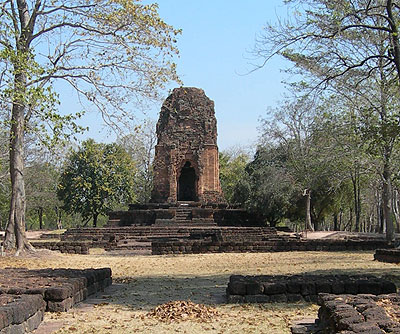
Finally, after a long drive, we arrived at Nam Nao national park a little before dark, in time to settle into our rather ramshackled accommodation and partake of an excellent dinner and a few beers.
23rd January
This was to be a full day in the national park and we began with some nice birds around the headquarters, White-crested Laughingthrush and Grey-headed Woodpecker, before heading into the pine woodland. In the past this area has revealed many woodpeckers, but on this walk things were strangely quiet, despite a good start with Great Barbet, Thick-billed Pigeon, Small Minivet and Hoopoe. Velvet-fronted Nuthatch, Scarlet Minivet and Large Woodshrike took us up to about 10am but after that things became very slow indeed. Eventually the heat and lack of birds sapped our enthusiasm and we turned around for lunch. Despite the slow birding, everyone appreciated the attractive forest we were in and eventually our persistence paid off with a clear but brief view of a Blossom-headed Parakeet, with as many as 4 birds circling the area.
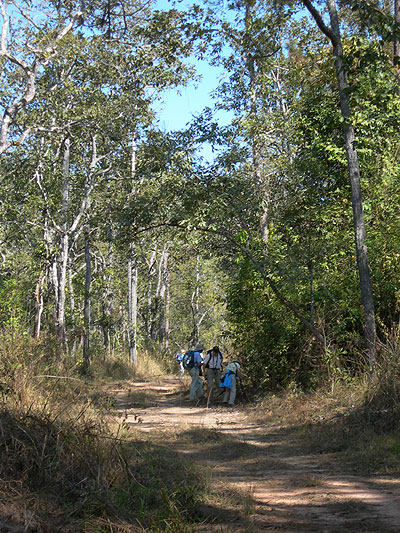
After a good lunch at HQ, I felt a little sick and took a nap. When I woke up later I found everyone’s enthusiasm was high again and I left to find Carol and Pam who were birding in the campsite. Such was the interest of the species in the campsite that we collected the others to enjoy a Lesser Yellownape drumming close-by on a tree. We quickly added Olive-backed Pipit, Grey-capped Pygmy Woodpecker, Verditer Flycatcher and Lesser Necklaced Laughingthrush to our list and spent time appreciating a flock of Eurasian Jays; the subspecies in Thailand is so different to the one we have back in Britain.
Although the birding was good around the campsite, I wanted to get the group into the forest and so we headed onto the 1km loop trail that begins behind HQ. I was pleased with this plan as very quickly we were rewarded with a close up and clear view of 3 Bar-backed Partridges quietly scratching around in the undergrowth. Further along we were frustrated by a brief glimpse of a Green Magpie but a pair of Golden-crested Mynas atop a snag sort of made up for it. Shortly after I heard the faint “chup” of a Siberian Blue Robin and before long most of us got a look at its tail quivering action. Fortunately, a little further up the trail another male Siberian Blue Robin showed itself nicely on the trail.
As it was becoming dark we moved out of the forest and into the restaurants for dinner and celebratory beers.
24th January
Although we were due to spend an afternoon at the temples in Sukothai I advised the group to spend the morning at Nam Nao campsite birding and we were rewarded with some excellent birds. Coppersmith and Blue-eared barbet were easy to see and a pair of Hill Mynas flew into a nearby tree for us. As well as yesterday’s Yellownape and Jays we found ourself lucky with almost certainly the same group of Lesser Necklaced and White-crested Laughingthrushes which gave everyone an excellent performance. Joining the group was a noisy Green Magpie. “Now that’s what I call a bird” said Jean-Pierre. Amazingly, this colourful guy was then spotted attacking a nest of a large rodent. The nest, about 15 feet in the air in bamboo, was vigourously defended byits occupant – what I believe now to be some sort of Bamboo-rat. Every time the magpie looked like it would break into the nest, the rodent leapt into its face, eventually succeeding in scaring away the raider. Now if only I had videoed all that action!
After that excitement the campsite also provided us with Blue Rock Thrush and a party of Red Junglefowl, which finally the whole group managed to see despite their best efforts to miss the birds.
Down by the stream a pair of White-crowned Forktails showed off for a while but eventually it was our time to leave for Sukothai which we reached in time for a late lunch. Our host, Malcolm, took us to his guesthouse, the Mountain View Guesthouse, which was very nicely situated in attractive countryside, outside the old city of Sukothai.
Malcolm proved to be a very genial host, taking us around the old temple ruins and proving very knowledgeable about them. Of course even the most ardent birdwatcher falls foul of the photo-lunacy of old, photogenic ruins, and I too took some obligatory snaps.


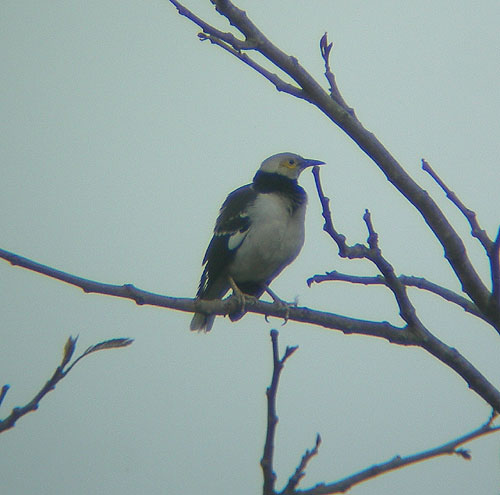
Despite the afternoon being a non birding session we managed to add a few species to our list with Black-collared Starling the most interesting. However, a good number of species was seen; Green Bee-eater, White Wagtail, Chinese Pond Heron, Koel, Coppersmith Barbet, Taiga Flycatcher, Chestnut-headed Bee-eater and Grey-headed canary Flycatcher and I am sure that if the temple grounds were visited early in the morning some interesting birds would be found.
Back at the Mountain View Guesthouse a large group of Plain-backed Sparrows was preparing for roost – possibly the biggest number of this species I have ever seen. Meanwhile, next to the swimming pool, I missed the flyover of an unidentified Nightjar and Malcolm supplied us with a delicious dinner.
25th January
This was to be our longest drive of the trip: Sukothai to Chiang Saen. Some early birding at the guesthouse revealed Black-collared Starling, Black-shouldered Kite, Greater Coucal and Siberian Stonechat but after a swift breakfast we moved along.
The drive was a pleasant one, in good company, but we were all releived to take a break at Wat Rong Kun, near Chiang Rai. This was to be one of our most talked-about and memorable non birding stops. The temple is a fairly new creation; still being built in fact, but it looks like it has been made from icing sugar. It also contains some very bizarre images of hell and the craziest paintings in the prayer hall. These paintings combine Buddhist themes with Keanu Reeves in the Matrix, laser beams, spaceships, digital watches and, quite sinisterly, a two-headed serpent ,whose tail is a gasoline pump, wrapped around a burning twin towers!!! It seemed like the artist had had a mental breakdown if not before then during painting these murals. Unfortunately photos of these paintings were not allowed, but here are a few of the temple and the depiction of hell (which looks pretty awful – very overcrowded indeed).


An hour was more than our heads could cope with at Wat Rong Kun, and we moved on to our accommodation at Viang Yonok Resort, Chiang Saen. We were very pleased with the quality of this resort, but found we had time for an hour’s birdwatching before dark so out to the non-hunting area HQ where we saw hundreds of Lesser Whistling Ducks, White-browed Crake, many Purple Swamphens and some distant Garganey and Spot-billed Ducks, however, a large flock of Cattle Egrets coming in to roost trumped them all in our opinions.
In the evening I finally met up with Mick Davies and Dowroong Danlamajak the founders of the Yonok Wetlands Project and committed local conservationists, who were happy to give me some information on the birdwatching situation at Chiang Saen.
26th January
Early morning birding around Chiang Saen lake included waterbirds such as Common Coot, Garganey, Lesser Whistling Duck, Purple Swamphen, Purple Heron and also species such as Racket-tailed Treepie, Dusky Warbler and Pied Bushchat.
In the past, various inlets provided habitat for many wintering waders but a raise of water level for irrigation purposes had severley reduced the amount of marginal habitat and the only wader we saw was a Green Sandpiper. Most of the group decided to head back after distant views of ducks, but Pam and I stayed behind to identify Ferruginous Pochard, Tufted Duck, Shoveler, Spot-billed Duck, Wigeon and 2 female Falcated Duck which were curtious enough to confirm their id by stretching their wings out for us to see the distinctive markings.
After what could only be described by this time as brunch we moved along watching the waterbirds as we moved gradually towards Yonok Wetlands and a meeting with Mick Davies. Mick and Dowroong have done some good work here by discovering several large roosts of harriers and nesting Grass Owls and by doing their best to work with the locals and encourage less hunting and trapping of birds. They have had some success here and local monks have also done what they can to support this conservation effort. With Mick and Dowroong’s help we managed to get good views of Bronze-winged Jacana, Ruddy-breasted Crake, Osprey, Black Kite and, most excitingly, a River Tern which came in from far away, caught a fish and headed straight back from where it had originated.
Later we moved to one of the harrier roost sites which would prove one of the most memorable bird spectacles of the trip. As we waited for the incoming harriers we picked up Striated Grassbird and another view of the River Tern. As dusk approached harriers began to arrive, first coming in over a low hill and flying past us to circle. Eventually, despite the noise from a large group of birders, large numbers of Pied and eastern Marsh Harriers quickly came down into a grass bed to roost. Worth noting here is the rather alarming behaviour of a number of other birdwatchers: some people were very noisy indeed, quite strange for enthusiasts of a hobby which often requires one to be quiet, but, more worrying, were a few people who have walked right into the roost site and were taking photos. I was also informed later that “in the name of ornithology” they were trying to catch some harriers so as to take wing measurements. Well, in an area where conservationsist are trying to work with locals to reduce trapping, it seems poorly advised for birdwatchers to begin their own trapping.
With the end of this memorable day’s birdwatching we all went back to Viang Yonok for a much appreciated dinner and beer.
27th January
This morning was when we would leave Chiang Saen for Doi Ang Kang. I for one would have liked to stay longer here given the good birdwatching and comfortable accommodation – Viang Yonok is a very pleasant spot next to the lake with very nicely-kept bungalows. However, we had built in time for some birding along the Mekong after a visit to some temples and the market in Chiang Saen itself.
The best spots to overlook the Mekong are at a couple of restaurants overlooking the river. Rim Nam is the first one, a few kms along the road as one drives towards the Golden Triangle. Park at the restaurant and poltiely indicate to the staff that you are going around the back to look at birds, no one will mind. Not a lot of shade here but we easily found River Lapwing, Pallas’s Gull, Spot-billed Duck, Small Pratincole and Spotted Redshank.
After an hour or so, we could not bear the heat any more and began our trip to Doi Ang Kang.
A pleasant drive included some sight-seeing stops at Tatorn and an interesting drive up the very steep hill from Fang to Doi Ang Kang. After checking in to the Ang Kang Nature Resort we settled for dinner in the village of Ban Koom. After a number of excellent meals in backstreet Thai restaurants we were due a bad one and this is where we had it! A very overworked restaurant owner began by serving us some locally produced strawberry wine that we had decided to try. Wow! This stuff was the most memorable wine any of us had ever tasted and it was so bad that it became one of the most talked about experiences of the trip. There has been very little over the years that I couldn’t eat or drink, but I couldn’t even finish the smallest helping of this stuff.
The wine did have its own purpose though, it softened up the toughest beef any of us had ever come across. If we had needed to fix our shoes this beef would have been ideal for the job – somehow though this was the ideal wine to go with the beef!
After this memorable meal we all went to bed to give our stomachs a chance to recover for the next day.
28th January
As it turned out our stomachs had ample time to recover because we woke up to hard rain! This is the dry season but a depression in China had brought unseasonal weather to most of Thailand. Birding in the forest is hard enough but in the rain it is a virtual write-off. happy to take a lie-in we hoped it would stop.
As it turned out, the rain continued for some time. Birding in the forest in Thailand, one relies on hearing the birds calling and seeing flashes of movement. However, when it rains every leaf is moving because of the drips and the noise of the rain falling masks the birds’ calls, not to mention that the birds are also far less active. When it rains like this birdwatchers do well to sit and read a good book.
By lunchtime the rain was still pouring and we decided to visit Ban Luang Resort to look for the resident River Chat (White-capped Water Redstart). On our way there we spotted a group of feeding birds and screeched to a halt having been deprived of our birding fix this morning. Our luck was in as we quickly saw a group of Dark-backed Sibias in the company of 2 Spectacled Barwings which gave everybody a good view. This species was hgh on everybody’s wish list, so it was a great tonic on a terrible morning.
Upon reaching Ban Luang Resort the owner, Khun Tawatchai, welcomed us even though we were unable to lunch there; he doesn’t retain a cook when he has no guests which he didn’t have at the time. Ban Kuang Resort is a lovely spot, nestled in a private rock ampitheatre with a waterfall and stream running through pleasant gardens. Khun Tawatchai is a lovely guy and very keen to help birders and, as he told us it would, the River Chat soon turned up and perched on one of the bungalow’s roof to give everybody superb views of this excellent bird. I think that this is my favourite species in Thailand!
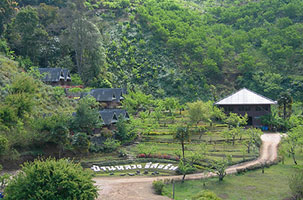
Ban Luang Resort, Doi Ang Kang
As we stood under a shelter watching this great bird, everyone felt considerably better about the rest of the day’s birding prospects and we also added Grey Wagtail and Mountain Bulbul to our list as we watched. With such a nice setting and Khun Tawatchai’s enthusiasm everybody commented to me that they would have preferred to stay here, even though the Ang Kang Nature Resort is more upmarket, Ban Luang has a simple charm about it. The only downside, I have been told, is that in the mornings it can be really chilly at this spot – Khun Tawatchai admitted this with an honesty I appreciated. Any birders wishing to stay here can contact Tawatchai by phone – 053 450010 or by fax 053 450022 and although he doesn’t speak English very well, he is pleasant and tries his hardest to understand so I wouldn’t anticipate any problems.
On Tawatchai’s recommendation we took lunch in the restaurant in the King’s project area. One must pay 50 baht per person to enter the project area, but the food is really good. Enjoying our food we suddenly realised the rain had stopped and we could get out for some birds. Although we struggled to see much we did get excellent views of both Common and Oriental Honey-buzzard and we also added Flavescent Bulbul, Blyth’s Leaf Warbler, Japanese White-eye and Grey Bushchat to our list. For a rainy day we hadn’t had such a bad time after all.
29th January
Hurrah! Clear skies. With such excellent weather our enthusiasm for the day couldn’t be dampened even by the somewhat feeble breakfast buffet served at the Ang Kang Nature Resort. For the price per room, the buffet really should be better than it is and I was particularly wary of it having received terrible food poisoning from an egg here back in 2002.
We began the day at the Mae Per forestry trail (see the Doi Ang Kang page on thaibirding.com for trail map) and a female Stripe-breasted Woodpecker obliged us with good views at the car parking area. As we slowly moved along the trail we ran into good numbers of birds although a Scaly Thrush and Red-faced Liocichlas were only briefly seen by myself and Pam. Still, very close-up views of Spectacled Barwing made up for this and birds such as Short-billed Minivet, Asian House Martin and Grey-cheeked Fulvetta were appreciated by all. At a small orchard a group of Mrs Gould’s Sunbirds were feeding on flowers and the whole group were delighted to see the males in breeding plumage.
The Mae Per trail is always good in the morning and before we reached the end we had seen Speckled Piculet, Lesser Racket-tailed Drongo, Himalayan Swiftlet and White-tailed Leaf Warbler. A few foolhardy members of the group decided to climb the steep firebreak trail for views of the mountains and we picked up Slaty-backed Flycatcher which is a common bird at Doi Ang Kang.
That wasn’t the ned of it though as back at the car park we watched Chestnut-vented Nuthatch scold us and got superb views of a beautiful Scaly Thrush, superb before lunch!
After lunch we decided to get a better view of the surrounding countryside and distant Burmese Army outposts intrigued all – however, I said we could get much closer – and we did. Driving through the village of Ban Nor Lae we ended up on the road which actually forms the border with a group of Burmese soldier chopping wood right in front of us! After establishing our safety we appreciated the view, put Fork-tailed Swift on our Thai and Burmese lists and moved back into birding mode.
We soon added White-browed Scimitar Babbler and Silver-eared Mesia to our total, although it took some members of the group an amusing amount of time to get onto these confiding and colourful birds. Great Tit and Olive-backed Pipit were also nice but it was at the army camp at Km 19 that we struck a rich vein of luck. It turns out that rice which is offered to appease the spirits at the army camp is appreciated by a number of species and we got nice views of Brown-breasted Bulbul (a species that the illustrations in the field guides does not do justice to), Oriental Turtle Dove, Grey-backed Shrike, Buff-throated warbler, Chestnut-crowned Laughingthrush and, best of all, 3 superb Red-faced Liocichlas. This species’ face is so bright that it can be spotted in dense undergrowth, but here we didn’t have to rely on that as they sat up on dead branches and a spirit house. This was excellent and everyone felt very lucky to see this bird. We took a look around the camp and turned up a male Chestnut-bellied Rock Thrush in the pines next to the camp – another beautiful bird!
With a little time left before dark we birded along the road adding a few species to our total before dinner and drinks.
30th January
This was our last chance for more birds at Doi Ang Kang and starting off at the army camp Km 19 produced even better views of the Liocichlas than the previous day! Birding along the road to Ban Arunothai is very good and as we moved out we continually stopped for birds. Best ones of the morning were Black Bulbul, Crested Goshawk, Common Rosefinch and an amazingly easy Giant Nuthatch that everyone watched with glee.
Our stay at Doi Ang Kang had been quite productive despite most of a day being lost to rain. This really is a nice spot in my opinion and even if we had seen no birds, I think everyone would have been happy with admiring the views.


The journey from Ang Kang to Chiang Dao Nest takes only about 1.5 hours so we were well in time for lunch. I usually stay at Malee’s here but Pam had booked Chiang Dao Nest 2 after being impressed with it the year before. Chiang Dao Nest 2 has lovely views towards the limestone cliffs of Doi Chiang Dao and a pleasant restaurant. The rooms here are slightly better than at Malee’s but in the high season they are significantly more expensive (not prohibitively so though). The food here is made from the finest ingredients, although I found some of the dishes overly sweet and overly flamboyant – perhaps I just ordered the wrong things as on a subsequent visit I had an excellent Green Curry, possibly the best ever!
After settling in here Pam was the only person keen to accompany me to the paddies near Chiang Dao with the others taking a stroll to Wat Tam Pa Plong. The paddies were easy to find and after a little searching we found some Oriental Skylarks in full song as well as getting some great views of Doi Chiang Dao. After Black-shouldered Kite, Black-collared Starling, Pied Bushchat, Siberian Stonechat and Long-tailed Shrike (nice birds but ones we had seen before) we were keen to find something new. before long we had found the spot where the Grey-headed Lapwings are frequently seen and we saw 15 of these handsome birds. A run of luck then brought 2 Wire-tailed Swallows onto the wires above our heads and a number of Chestnut-tailed Starlings collecting at a pre-roost site with numerous mynas.
With darkness arriving Pam and I were happy to go back and join the others for dinner and the appropriate amount of beer.
31st January
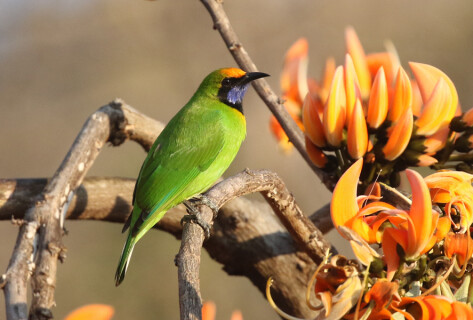
Oh dear! Dismal weather was looming but an early start saw us on the road to Muang Kong. Things were slow but we did manage a few new birds – the nondescript Plain Flowerpecker, Brown-cheeked Fulvetta, Golden-fronted Leafbird and Velvet-fronted Nuthatch were amongst the most memorable but the rain soon fell and washed out the birdwatching. For some time we persisted but after a damp view of Eurasian Jays we decided to go back to Chiang Dao Nest.
It turned out that the whole day was a washout with torrential rain this was wetter than the wet season! Fortunately, the restaurant of Chiang Dao Nest 2 was an excellent place to wait out the weather and chat but when half the group began a guitar playing singalong I knew things were bad!
The briefest break in the rain got me out into the garden where I photographed some flowers.


With this very slight easing in the downpour I persuaded Pam to join me for a walk towards the temple. We tried for Rusty-naped Pitta but failed. We tried for Streaked Wren Babbler – failed. An attempt for a feeding flock at the temple was also a failure and a walk along the temple gulley resulted in gloomy and brief view of a female Siberian Blue Robin and a Buff-breasted Babbler. The only bird we got a decent look at was a Little Spiderhunter reinforcing what I said about birding in the rain – better to stay in and read a book. Still, the cloud made for a very pleasing photo of the temple.
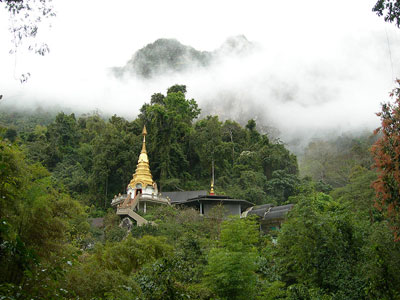
A far better idea was to go back, take a shower and head to Chiang Dao Nest 1 where we feasted on their excellent barbecue. 295 baht per person is a lot more than I would usually suggest poeple pay for dinner on a birding trip, but this was excellent value for money – worth splashing out for.
1st February
In regards to the weather our luck really ran out with another day of rain. Forest birding was a waste of time so we sadly moved along to Chiang Mai. However, eager to salvage something from Chiang Dao we all went to the paddies where the rain abated enough for us to all see the Grey-headed Lapwings and Wire-tailed Swallows – excellent! A few other interesting species were Intermediate Egret and Paddyfield Pipit although Jean-Pierre was unable to share Pam’s enthusiasm for this LBJ.
Our journey to Chiang Mai was quite a dismal one, dogged by grey skies and rain. we decided on an afternoon session at Huay Teung Tao but the rain even managed to wreck this. Still, we did get cracking views of an Asian Barred Owlet here as well as Purple Sunbird, Ruby-cheeked Sunbird, Greenish Warbler, Lineated Barbet and a perched Rufous-winged Buzzard before we abandoned the birding for a very overdue lunch.
Into Chiang Mai, this was where I would part with the group for a few days as they explored the city and watched the flower festival.
2nd Febrary
Whilst the rest of the group enjoyed the flower festival, I visited Mae Hia Agricultural College. Read about this visit here: A morning at Mae Hia.
3rd February
I took the opportunity of another day on my own to check out Huay Teung Tao, a site brought to my attention by Tony Ball in his blog. Read about my visit here: Huay Tueng Tao.
4th February
This was the day that we were off to our last destination as a group – Doi Inthanon. A late start saw us arrive at the Inthanon Highland Resort for about 10.30 am – it is only about 1 hour 15 minutes drive from Chiang Mai to the base of the mountain. The Highland Resort is a nice place with beautiful, spacious gardens and the accommodation is very pleasant indeed.
We decided to sit on the veranda for a while and here we spotted Black-naped Monarch, Indian Roller, Hoopoe, Common Iora and Yellow-browed Warbler. After some lunch in the restaurant we decided to try our luck on the mountain and we made a bee-line for Vatcharitan Waterfall. With the rain a few days beforehand, there was a good amount of water in the falls and it was time for an ice cream and photographs.


A little patience at the lower and smaller part of the falls is often rewarded, and even at this busy time of day we managed good views of a female and an immature male Plumbeous Water Redstart. Two subspecies of Blue Whistling Thrush were also easily seen and a Grey Wagtail turned up
Heading to the jeep trail at Km 37.5 we experienced yet more slow forest birding and at times it seemed that nothing would show at all. A number of Large Niltavas were calling and eventually we got some sort of view of one in the gloom of the forest. Whilst scanning the shady forest a Brown-throated Treecreeper began to call and we all got a good view of this cute little bird. Things were very frustrating though with just Grey-cheeked and Rufous-winged Fulvettas showing well and just glimpses of Maroon Oriole. Despite spending plenty of time on the tral we saw very little and it wasn’t until we were back on the road that we saw Short-billed Minivet, Dark-backed Sibia, Silver-eared Mesia and a very obliging Rufous-backed Sibia singing in vegetation a few feet in front of us.
The summit of Doi Inthanon is always good and it didn’t let us down with the ever-present Chestnut-tailed Minlas, Dark-backed Sibias, Yellow-bellied Fantails, Chestnut-crowned Laughingthrushes and Rufous-winged Fulvettas all showing up. As the light began to fail and things got colder at the top we decided to go back for dinner.
5th February
The last day of birding, but some of the group were so tired that they stayed at the resort so it was only myself, Pam, Jean-Pierre, Glenn and Linda who made it to the top of Doi Inthanon for the early morning. We had a great morning on the summit boardwalk with all the regular species giving good views and in addition we saw 2 male White-browed Shortwings, a male Snowy-browed Flycatcher and a very smart Pygmy Wren Babbler which came in to call. Everyone admired the colourful Green-tailed and Mrs Gould’s Sunbirds feeding on rhododendron flowers and Ashy-throated Warbler is a nice phylloscopus that everyone can identify!
I also got a brief but clear view of a female Orange-flanked Bush Robin which I was quite pleased with.
After a delicious hot chocolate at the summit (highly recommended) most of the group were ready for a nap back at the gardens of the Inthanon Resort, but I persuaded them to have the energy to take a look at the twin chedis. This was enough though and it was only Pam and I who moved down to Mr Daeng’s to take a look at the stakeout. Time here for us was running out and we had to be satisfied with seeing Lesser Shortwing, Hill Blue Flycatcher and a female Siberian Blue Robin, the resident Dark-sided Thrush was taking a snooze on some shady branch no doubt.
Down at Vatcharitan the Plumbeous Water Redstart was easily seen and a Little Heron was fishing in the rapids. Pam was keen to see a forktail but none was obliging here so we headed downhill and stopped Km 18. This is always a good stop for a forktail and we quickly spotted a pair of Slaty-backed Forktails on the rocky slopes surounded by falling water. With this excellent finish we went to join the others back at the resort.
We found the time to take a stroll around, seeing Coppersmith Barbet, Hoopoe and Indian Roller and we added a final bird to our species list; Yellow-streaked Warbler. Dinner was excellent and a couple of beers was a nice end to the trip.
6th February
Just time for us to review our trip list. 303 species wasn’t a bad total for a trip which included many non-birding days and 3 wet weather days. Time for our goodbyes and back to Chiang Mai.
birds, birding, thailand, nature, national parks
 March 10th, 2008
  Nick
Nick