dragonfly1-eske-11007.jpg

Cormorant Invasion

A pleasant sunny day to start October, with no wind either made for a very nice walk along the River Hull this morning.

A short way along the river’s flood defences I heard the noisy call of a Stonechat which I quickly spotted on top of a hawthorn bush. The calling came from a male Stonechat who was quickly joined by a female, and the pair soon flew down into a weedy headland in an arable field. A good number of other birds seemed to be using this weedy patch including 3 Yellowhammers, 6 Meadow Pipits, 7 Reed Buntings, 2 Skylarks and 9 Goldfinches. This peice of land was planned as a wader scrape but currently holds no water, however, its weedy status appears to be useful as a food source for farmland birds.

A little further along the river 2 Swallows flew north, the only ones I saw this morning, presumably most of them have already departed.

On an east-facing grassy bank quite a number of insects were busy feeding and I spotted a Red Admiral butterfly. This species overwinters in this country of course and its fine condition suggests that this individual has only recently emerged and will indeed hibernate here. Here are a number of shots I got of this butterfly. Click on the thumbnails for larger pictures.

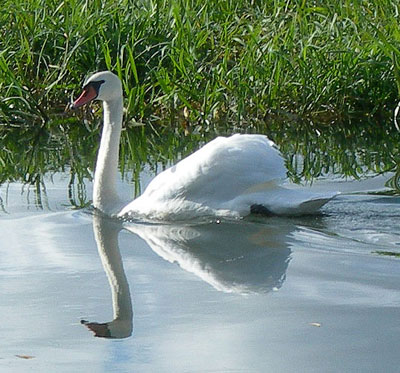
At the lake at High Eske huge numbers of Greylag Geese were taking up nearly all of the resting space, but there also seemed to have been an invasion of Cormorants with at least 23 birds present, fishing, sitting on the island and perched upon trees. There were also a lot of Great Crested Grebes with at least 14 birds and numbers of Tufted Ducks had also gone up to 46. A number of Mallard, 3 Teal and the long-staying female Goldeneye were also to be seen along with Coot, Moorhen and 3 Mute Swans as well as a further Mute Swan in the River Hull.
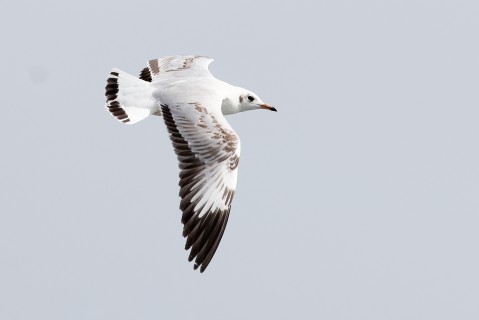
Also on the lake were about 30 Black-headed Gulls, but on closer inspection there was also a Little Gull amongst them – an adult moulting into winter plumage. Walking further  up river to some ploughed fields 3 Curlews flew east, calling as they went. On the fields themselves were a group of about 40 Lapwings, 60 Black-headed Gulls, 30 Common Gulls, a number of Woodpigeons, 3 Stock Doves, Starlings, Rooks and Jackdaws along with a Grey Heron.

I decided to walk back through the long grass to see what insects I might disturb and it turned out that there were quite a few Dragonflies around. I got a few decent photographs of some of them.
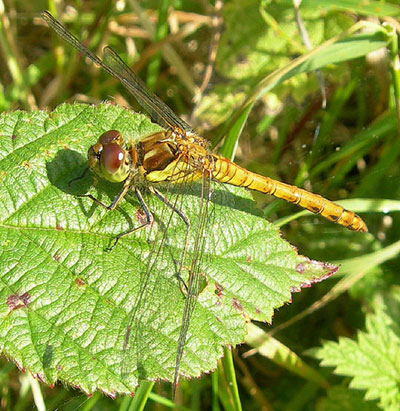
 

I think the first 2 of the photos below are the same species, but different sexes, but I think the 3rd picture is of a different species – not sure though. Click for larger pictures.

On the way back to the car I came across a few Large White butterflies, 1 Small White and 1 Small Tortoiseshell. I also watched two Black-headed Gulls violently and noisily mobbing a juvenile Kestrel; they drove it into a copse but continued to circle and call at it even after it had fled to safety.
Autumn has arrived

This week the weather has become truly autumnal with brisk winds and a chill in the air, so I walked to High Eske in hope that some interesting migrants may have arrived.

It was interesting to note that the fishermen alongside the River Hull were now underneath their shelters, whereas a few weeks ago they were soaking up what little sun there was.

Quite a number of Swallows and House Martins were still hawking for insects along the river and just a solitary Meadow Pipit gave me something to look at on the walk to the lake. Further disappointment was at the lake where hoards of Greylag Geese had comandeered virtually all feeding and roosting space, although numbers of Mallard had greatly increased to about 70-80. Other ducks included just 2 Tufted Duck, the long-staying female Goldeneye and 7 Gadwall.

A single Redshank was roosting at the lakeside along with a Snipe and 3 more Snipe flew overhead. 4 Grey Herons were standing around the lake and the usual assortment of Cormorants, Coot, Moorhens, Great Crested Grebes and Mute Swans were also present. Another sign of the seasons were much larger numbers of Black-headed Gulls than a month ago, with a group of a round 100 present in the area. However, the best sight was a pair of Foxes curled up, asleep together on the far side of the lake.

On the fields to the north of the lake a group of 47 Lapwings were feeding alongside Starlings, Stock Doves and Rooks. Whilst watching these a juvenile Marsh Harrier flew across and scared the whole lot away. The Marsh Harrier was consequently chased away by an angry Skylark!

With the rain beginning I started off home, but my attention was drawn to anumber of small birds in willow trees at the water’s edge. 7 Tree Sparrows, 8 Reed Buntings, a Willow Warbler, 18 Goldfinches, a Robin and a Dunnock formed something of a feeding flock but it was the group of 30 Pink-footed Geese flying south that really brought home the fact that the colder weather is on its way along with the darker evenings.

How depressing.

Tawny Owls in Beverley

For over a year I have been hearing the screeching and hooting of Tawny Owls from my flat, just off of Beverley High Street, at night. Some nights it has been so loud that it has woken me up and there have been at least two Owls calling to each other. Although I live right in the town centre, I am close to the library, which has a number of mature trees in its grounds, and a car park which also has some very large trees. Added to this there are a couple of large gardens nearby and tree-lined residential roads.

Last night, I finally got to see one of these owls. At about 7.30 pm as it was getting dark my wife and I went out. To get to the car we had to cross the nearby car park and as we did a big tawny Owl flew over some roof tops and into the large trees in the car park at the back of some houses.

It was quite satisfying to finally see one here and it is quite amazing to see this species right in the town centre.

In addition, this morning as I was walking across the car park again, a large group of Long-tailed Tits were feeding noisily. In the past I have heard Goldcrests singing in the same location; maybe I should start a Beverley town centre list!

toptensbs.jpg

Restore Saemangeum for Migratory Shorebirds

A few days ago I received an e-mail about the disasterous mud flat reclaimation project at Saemangeum in South Korea. For those that don’t know, this estuary is (was?) one of the most important sites for migratory shorebirds in the east Asian flyway with internationally important numbers of Spoon-billed Sandpiper and Nordmann’s Greenshank. Since the reclaimation project sealed off the mudflats the number of shorebirds using the site has seriously declined and threatens the aforementioned species with extinction.


Spoon-billed Sandpiper by Johan Svensson

On the Restore Saemangeum website bird lovers are urged to send an e-mail to the South Korean ambassador to your country appealing for his government to recognise its commitments to the Ramsar convention and to restore this site for shorebirds. With the next Ramsar meeting taking place in South Korea in 2008 there is a real opportunity to persuade the South Korean government to reverse the reclaimation project, particularly as it is opposed by many within South Korea itself, including by local government.

Please visit the Restore Saemangeum website and send a message to the South Korean government.

Shorebird Ringing

Whilst rummaging through a pile of stuff on my desk I found a CD with a collection of photographs that I took when I was lucky enough to accompany Phil Round on a ringing trip to Laem Pak Bia in Thailand in August 2003.

Phil and I went to the site the evening before the ringing session to set up the nets. We ended up doing this in the dark which meant I got stuck in the mud although it gave me a chance to see hundreds of Fruit Bats flying from their roost in the mangroves to forage for the evening.

The next day we caught a number of shorebirds (along with some other species), although not in any great numbers as the migratory period had not got into full swing.

I took a number of pictures of the birds in the hand and have put a few here for people to view.

Pictures 1, 4, 6 and 7 are of Lesser Sand Plovers, picture 2 is of a Long-toed Stint and pictures 3 & 5 are of a Wood Sandpiper. Click on the images to see larger versions.

People visiting Thailand or other countries in Southeast Asia should look out for leg-flagged shorebirds

deadpigeon-eske-170907.jpg

It feels like Autumn now

The bright sunny skies tempted me out for a walk along the River Hull to the lake at Eske this morning. However, the brisk wind had a cold feel to it and with some trees beginning to change colour there was a real feel of autumn.

Unfortunately, this did not really extend to the birds. Autumn is a time of expectation for birdwatchers but quite frankly I always find it rather disappointing as I am not really into chasing around after rarities. Today was a typical autumn day for me, with few birds of interest.

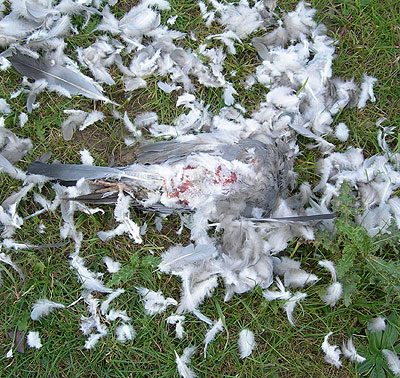
The most interesting bird turned up on my walk up to the lake with a female Wheatear flushing from the grassy track. Plenty of Swallows and House Martins were flying around over the river catching insects – their last feed before migration? The only other interesting species on the walk to the lake was a Yellowhammer in an advanced state of moult. On the grassy bank I found a dead Woodpigeon that looked like it had been destined to be something’s dinner, but the feast had been cancelled due to the diner being scared off.

At the lake very little out of the ordinary was to be found, just Greylag Geese, 10 Great Crested Grebes, 13 Coot, 15 Black-headed Gulls, 1 Common Gull, 24 Mallard, just 2 Tufted Ducks, 1 male Teal and a female Goldeneye. In willow trees at the north end of the lake a Whitethroat was flitting around, showing off its fresh plumage.

Ploughed fields to the north of the lake held good numbers of Lapwings and Starlings along with Rooks and Black-headed Gulls. Whilst I was soaking up the sunshine in a spot sheltered from the wind 2 Lesser Black-backed Gulls flew overhead, one adult and one second winter.

Heading back I added Kingfisher and Cormorant to the list at the lake and 2 Meadow Pipits flew overhead along with a Pied Wagtail – possibly a small migrating group. Someway back a Snipe flew south along the river and a Kestrel was hunting overhead as the weather became worse, buildling for rain which came later.

flamborough2.jpg

British Birding: Flamborough Head once more

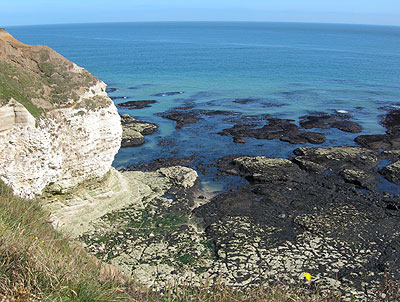
With Great Shearwaters having been seen in the preceeding days at Flamborough, I made the trip there hoping for a view of this species. On arrival, however, it was clear that the wind had changed and was coming from completely the wrong direction for good seawatching, making for a flat sea.

Still, the sunshine was welcome and there were plenty of the more common species to be seen. Large rafts of Razorbill were floating around in the water and Shags were busy flying back and forwards too. The numbers of Gannets had greatly decreased from a month ago although there were still quite a few to be seen. Through two hours on the cliffs I only saw 3 Fulmars and 4 Kittiwakes, including one juvenile but Sandwhich Terns and Common Terns were passing north and south in groups of 10 – 20.

A bit of luck struck me only about 20 minutes after I arrived with 2 Sooty Shearwaters passing very close to the cliffs giving me a great view in the sunshine. However, that was to be the end of the excitement for the next hour apart from a kestrel flying between the cliffs. After getting a bit bored I moved to another spot out of the wind and enjoyed the sun. This gave me the chance to watch some birds on the rocks below the cliffs: 1 Oystercatcher, 6 Turnstones and a number of Herring Gulls and Great Black-backed Gulls.

Then came a period of some activity with a Peregrine Falcon coming in off the sea only to be attacked and chased away by another already in residence on the cliffs. Two Red-throated Divers flew south within about 5 minutes of each other and a dark morph Arctic Skua flew north in pursuit of Herring Gulls. Also flying around the cliffs were a number of House Martins and Goldfinches and the last species to add to the day list was a group of around 30 Common Scoters flying north quite far out to sea.

Unfortunately no Great Shearwater but quite a nice collection of birds nevertheless.

, ,

Free WordPress Themes