hawthorn-berries-eske-100.jpg

Back to Eske

After a break of a few weeks I went for a walk to the lake at High Eske. Unfortunately strong winds made the walk a little chilly, despite the sunshine, although in places with some shelter the sun was pleasantly warm.

Interesting birds were few, with a group of 4 Meadow Pipits on the River Hull flood defences the only notable birds on the way up. At the lake 34 Black-headed Gulls were hanging out with 4 Common Gulls and a single Black-tailed Godwit with a limp was feeding in the shallows. 10 Great Crested Grebes were also on the lake along with lots of Greylag Geese, Mallard and a few Tufted Ducks; 3 Teal were also present as were 2 Grey Herons and 5 Cormorants.

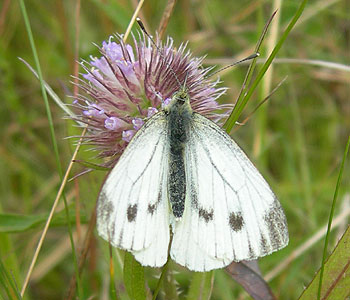
Attempting to get out of the wind I lurked around behind a bank and found a lingering Willow Warbler, 5 Greenfinches, a Reed Bunting, a Goldfinch, a Blackbird and 8 Tree Sparrows, all obviously doing the same as me. A good number of insects were also taking advantage of the shelter and sunshine of a large bramble with lots of Craneflies, a few Dragonflies and plenty of Small Tortoiseshell butterflies. Large White butterflies were also plentiful and I found a few rather battered Common Blues and a lone Green-veined White which I got a single dodgy picture of.

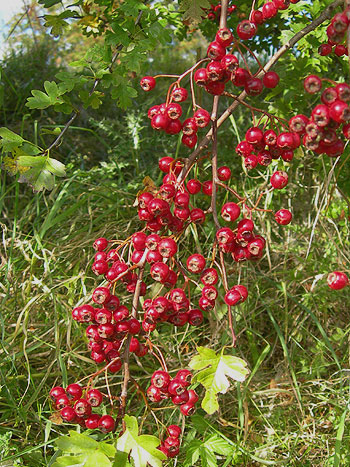
Whilst rummaging around in the undergrowth I noticed a number of plants still flowering: some type of yellow vetch, a few teasle and Black Knapweed. I also noticed that the Hawthorns had huge clusters of berries waiting for the winter thrushes.

Making the most of the insect abundance was a group of about 30 House Martins and 20 Swallows presumably gathering energy for their forthcoming migration and as I walked back to the car I located a male Yellowhammer and heard a calling Red-legged Partridge.

Hopefully a little less wind will make for some nicer walks soon.

greatlangdale-030907.jpg

Camping in the Lake District

Last week my wife, Srasri, and I went camping in the Lake District. We had mixed weather with some dreadful rain but also some bright sunshine which at least allowed us to get out into the mountains a little.

We arrived in Eskedale on wednesday 29th August, driving over Hardknott Pass which provided some excitement and excellent views as well as a Stonechat, several Meadow Pipits, a Raven and a Buzzard. Staying at Fisherground campsite the weather became rather windy and cold in the evening and waking up in the morning of the 30th confirmed the change in the weather. However, in the campsite plenty of birds were busy feeding, including 2 Nuthatches, a Great Spotted Woodpecker, a Song Thrush, numerous Chaffinches, Blue Tits and Great Tits.

After breakfast we went for a walk along the river Eske, where the woodland could give us some shelter from the winds.
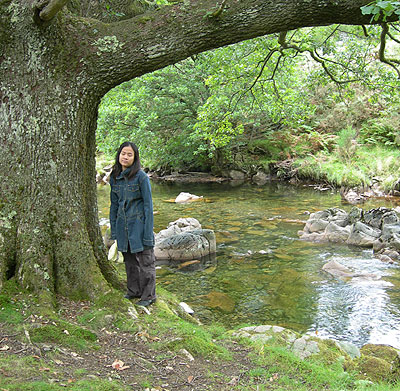
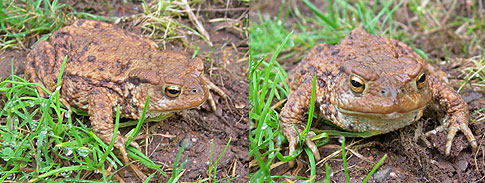
Beautiful scenery was compensation for a surprising lack of birds, although a Grey Wagtail joined us for a paddle in the stream and a few Coal Tits were feeding in the trees. However, the highlight of the walk was a Red Squirrel which seemed to creep up on us from behind and was busy collecting something tasty from the ground. After watching it for some time and unsuccessfully trying to take a photo of it, it finally ran away. Further along the stream we found a Nuthatch and a couple of Magpies and when we were admiring the view into the mountains a Common Toad jumped out onto the trail.
After a shopping trip and lunch we spent a windy afternoon along Wasdale, admiring the view and drinking beer. In Wastwater a few Black-headed Gulls were fishing and 2 juvenile Goosander were resting. In the pub, lots of people were drinking beer and eating which reminded us to get back to the campsite and start our barbeque.

On friday 31st August the weather became pretty dreadful with rain and winds, so we decided to take a trip on the Ravenglass-Eskdale railway. It was interesting to note that a pair of House Martins were still busy feeding young in a nest under the eaves of the station at Boot.

We spent all day riding on this and visiting various pubs but I did see some birds as the train passed through some marshes. A Curlew, a Whimbrel, several Redshank, a Snipe and numerous Black-headed Gulls along with a few Lesser Black-backed Gulls were easily seen.

Despite the rotten weather we walked up to Eel Tarn in the late afternoon and got wet, although the weather did break up enough to see something of the mountains. The only birds were 2 Ravens, a Kestrel, lots of Swallows and Jackdaws.

Saturday 1st September was pretty much a bird free day with poor weather to start we spent the day visiting several villages in the national park. On the way back to the campsite in the evening we did drive over Hardknott Pass as the weather had cleared somewhat and saw the obligatory ravens near the top.

On sunday 2nd September the weather improved somewhat and we moved to the National Trust campsite in Great Langdale. Plenty of birds in the campsite including Great Spotted Woodpecker, Nuthatch, Robin, Chaffinch and Great Tit. The clearer skies gave us the impetus to walk further along the valley to take in the mountain views. Crossing a river we saw a flock of Yellowhammers and a large group of Linnets. In fact, lots of groups of Linnets, Chaffinches and Meadow Pipits made me realise that the small birds are already flocking and summer migrants such as Wheatear were conspicuous by their absence. An adult lesser Black-backed Gull seemed slightly out of place in this mountainous valley but a Peregrine Falcon being mobbed by a huge cloud of Swallows was more expected.

Despite some nice birds, the most impressive sighting of this walk was perhaps the rescue helicopter that flew into the valley and proceeded to land on a pointy mountain top. I am not sure if they were just practising or actually rescuing someone, but it was a memorable sight regardless.
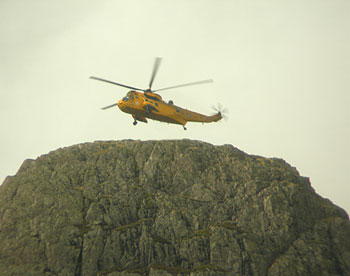
The activity of the helicopter flushed out a group of 4 Buzzards which then proceeded to circle around the valley, calling to each other.

The next day, 3rd September, was a beautiful sunny one and Srasri and I went for a longer walk along the valley. Beautiful scenery more than made up for only a few species: Swallow, Rook, Carrion Crow, Jackdaw and Meadow Pipit, although flocks of Linnets and Chaffinches were also obvious. With such good weather and amazing views it was difficult not to take too many pictures.
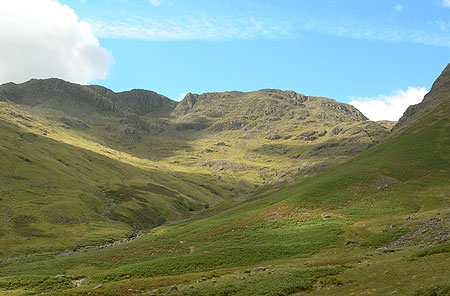
Our enthusiasm meant that we climbed some way up the mountainside, although we didn’t get anywhere near the top before heading down for lunch. A female Stonechat showed itself on the way back.

In the evening we had a barbeque and headed to the pub for a few pints of Old Peculiar for a nice conclusion to our stay in the Lakes.
common-frog-eske-240807.jpg

A second day of sun

Yesterday I didn’t anticipate going out, but as the weather was sunny with no wind at all it was a case of go out whilst the weather lasts. I couldn’t be bothered to go far, so I took another walk to Eske.

Along the river very little was to be seen; a single Cormorant, an overhead Yellow Wagtail and a Common Sandpiper were the only birds of interest. However, at the lake a group of about 20 Lapwings were feeding at the water’s edge along with 2 Common Sandpipers and the same group of acrobatic Pied Wagtails as I saw the previous day.

For once, the sunshine made it very pleasant to just sit and look across the lake and when a group of 13 Black-headed Gulls took off, two noisy Common Terns also became apparent. One bird was an adult and cruised around catching small fish for the other which was a juvenile. The adult was so intent on fishing that it continually passed just a few feet away, catching fish from a shoal right next to the lake’s bank, virtually at my feet – an amazing sight.

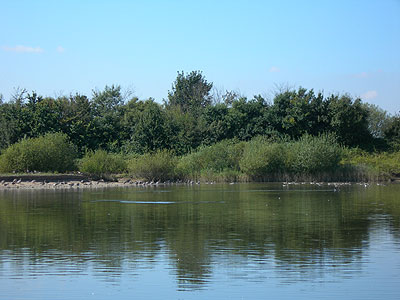
The usual species were on the lake: Greylag Goose, Mallard, Tufted Duck, Great Crested Grebe, Moorhen and Coot, but lurking in the shady part of the lake was a single Little Grebe and a Mute Swan had also joined the regular inhabitants. I walked a little further along to look for the other sandpipers that I saw yesterday, and sure enough I found 4 Green Sandpipers and a total of 6 Common Sandpipers as well as a single Snipe. With the weather so calm I decided to take a picture of the lake with still water – a rare sight this year!

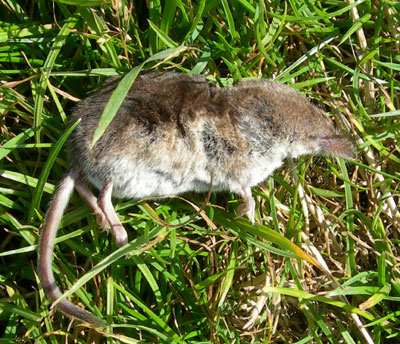
A few small passerines were to be found in the trees and bushes, including a family party of Long-tailed Tits, a Willow Warbler in fresh yellow plumage, a Blue Tit and a couple of Tree Sparrows. The sun had brought out plenty of butterflies again with even more Small Tortoiseshells, Peacocks and Painted Ladies than the day before and today the heat was sufficient to bring out a large Slow Worm which sneaked off into the bushes as I walked by. On the path was a dead shrew; there wasn’t any visible problem with it (other than it being dead)and I wondered if perhaps the heat had killed it.

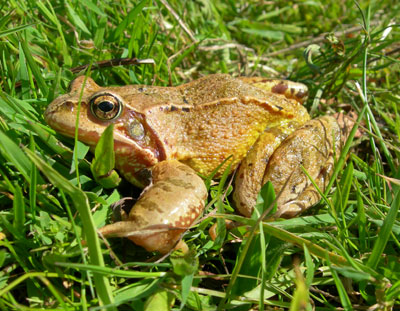
After the shrew funeral I sat at the lakeside chatting to a lady who was also out for a walk. The adult Common Tern continued to fish right in front of us and a Grey Heron flew out of the vegetation by the lakeside. Whilst sitting in the sun talking a Common Frog turned up on the grass behind me; in this heat it was in danger of drying up, but it had the sense to quickly hop of into a damper place.

Leaving the lake a swift walk back to the car brought on a sweat and also turned up a Kingfisher which flew along the river and perched on a small stump at the water’s edge giving me a good view. Eventually it left and so did I.

small-tortoiseshell.jpg

A story of Sandpipers

Today the sun came out. Not only did it come out, but the wind stopped and it became hot – I could almost believe that it was actually summer.

 Walking north along the River Hull the warmth from the sun was very pleasant and groups of House Martins and Swallows were feasting upon the insects that were also making the most of the weather. On the muddy banks of the river 2 Common Sandpipers flushed and flew southwards and a Yellow Wagtail flew overhead whilst on a newly ploughed field a group of about 50 Lapwings and a flock of around 250 Starlings were feeding.

On the lake at Eske, things looked pretty quiet at first with a large group of Greylag Geese monopolising the island, although a group of 4 Pied Wagtails were busy chasing each other. About 30 Mallard, 20 Tufted Ducks and numerous Coots were also on the lake as were 8 Great Crested Grebes. The female Goldeneye was once again lurking around and a group of 4 eclipse plumage Teal were hiding in the overgrown shallows. Walking alongside the lake I scared off a group of 4 Common Sandpipers which in turn flushed 2 Green Sandpipers. As they flew around, not knowing where to land another Common Sandpiper joined them as did a further 2 Green Sandpipers – quite a total for a small lake like this.

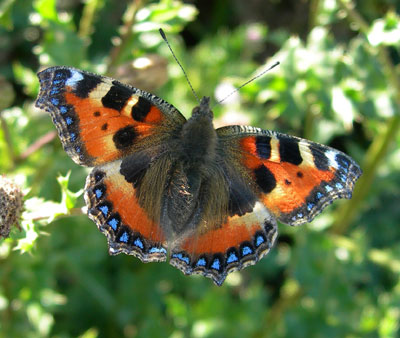
With the sunshine lots of butterflies and bees were feeding on thistles and teasle. A few Large Whites were greatly outnumbered by Painted Ladies and Small Tortoiseshells and a few Peacocks. Here’s a picture of a Small Tortoiseshell I took.

Small Tortoiseshell

Very few passerines were present, I guees the sun was keeping them in the undergrowth; just a few Blackbirds and another Yellow Wagtail heading south along with a lone male Chaffinch.

Heading back 2 Black-headed Gulls had arrived on the lake and something scared off 10 Cormorants that proceeded to cruise around like some sort of Jurassic airforce. At the lake’s edge I flushed out a Snipe which wheeled around looking for a suitable resting place. My resting place was now beckoning so I headed home for lunch.

Persistence pays off, but the weather is still terrible.

With Sooty Shearwaters being seen all along the east coast of the UK in the last few days I decided to give Flamborough another try, despite the strong winds. The winds at Flamborough were very strong and it was difficult to stand up properly, but not that many seabirds were close to shore, even though the winds were northeasterly. Due to large numbers of birdwatchers, it was impossible to find anywhere sheltered to sit, but I managed to find a spot fairly well sheltered by a tussock of weeds.

Looking out to sea plenty of gannets were fishing and cruising up and down and good numbers of Fulmars were also easily seen. Very few gulls were seen in the two hours I spent there, with just about 10 Great Black-backed Gulls and 2 Herring Gulls. Plenty of Shags were easily seen flying back and forwards and a couple of razorbills sat in the water being tossed around by the waves. There were also only a dozen or so Kittiwakes; maybe the winds were too strong for them. After about 1 hour I was beginning to wonder if anything out of the ordinary would come along: 3 Sandwich Terns heading south were a small distraction until I saw a distant shearwater. Luckily, it began to head closer to shore and as it banked from side to side over the waves I could see that its belly was quite dark, in fact, due to the poor light, the bird appeared completely dark, both above and below. The powerful flight and larger size than Manx Shearwater confirmed it as a Sooty Shearwater. Finally, after 4 visits trying for this bird one came close enough for a reasonable look.

I decided to try a different spot, but half an hour of looking didn’t reveal anywhere more sheltered, so I returned to my original place. Soon, a Manx Shearwater came very close to shore, and a few minutes later 2 more came along slightly further out. This sudden flurry of activity gave me high hopes of more interesting birds but it took another 30 minutes before a 4th Manx Shearwater came along, this time quite distant, but its white belly and underwings were still easily seen.

Just as I was thinking about leaving two more distant Shearwaters came into view and headed towards shore. This was almost too good to be true as one each of Manx and Sooty Shearwaters comprised this pair, allowing me to compare the two side by side: the Sooty Sheawater’s dark underside and larger size were obvious this time. With this bit of good fortune I decided to go home to escape the strong, cold winds and sea spray – can this really be August?.

speckled-wood-drewton-210.jpg

Drewton Estate provides some shelter for birds, butterflies, flowers and me!

I woke up feeling like my legs needed stretching this morning and with strong winds I decided to head to the Drewton Estate near North Cave where plenty of woodland in a valley provides shelter.

This proved to be a good choice. The first birds of interest were huge numbers of House Martins and Swallows hawking for insects over cut hay fields and woodland; along with these were 3 Swifts, possibly the last I’ll see this year? Whilst watching the Swifts a Red Kite flew over at low altitude: a rather ragged individual with its wings and tail in an advanced state of moult. I had heard rumours that the Kites in this area had moved on, but this was proof that they are still present.

Walking along the valley a family group of Bullfinches were tricky to see before they flew off, but a Marsh Tit gave a nice display of feeding upside-down on thistle seeds. A small hay field contained a good variety of plants, such as red clover, harebells and thyme (not sure which species though) which were being fed upon by a few butterflies including Large White, Small White and Wall Brown.

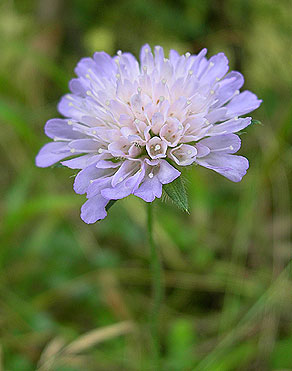
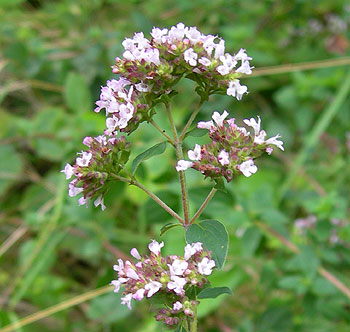
Walking further along another Red Kite passed overhead: a different individual to before as this one was rather smart. There is a small spring along this valley and it provided drinking water today for Blue Tits, a Great Tit and a Coal Tit. Further along, the path heads alongside some woodland and an old railway track. This path held large numbers of calcareous plants, with Field Scabious, Thyme, Wild Basil, Marjoram, Harebell and Agrimony all common.

Field Scabious

Marjoram

The woodland here contains a mixture of broadleaved and coniferous species and I came across a large group of Coal Tits and Goldcrests feeding in pine and spruce trees. Whilst watching these a Buzzard began noisily screaming from a little further along the path and I managed to get a view of it sitting on a tree just about 50 metres away. As it flew off and circled around over some pasture, another Buzzard joined it and they called to each other as they glided off, being mobbed by a Kestrel at the same time. This comotion flushed a Great Spotted Woodpecker into the open and it landed on top of a conifer and began feeding on the seeds from the cone.

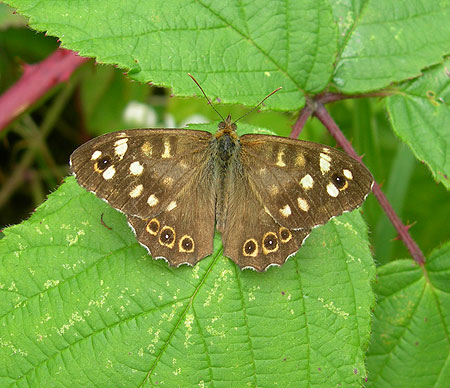
With my attention back on the plants I noticed 2 Speckled Wood butterflies and managed to get some decent photos of the female.

Speckled Wood

Beginning to walk back to the car I quickly came a cross a family group of Marsh Tits which allowed me to approach closely and watch for some time. This site is really good for Marsh Tit, I have never failed to see it on my visits here, both in the woodland and in the hedgerows. Also on the way back to the car I saw a very bright, fresh plumage Willow Warbler along with common species such as Robin, Wren, Blackbird, Wood Pigeon and Moorhen.

Strong winds but fewer birds than expected

With a pronounced northerly wind it seemed that seawatching at Flamborough could be good, particularly with seabirds migrating at this time of year. On arrival at Flamborough the sea looked like it should be bringing in seabirds but once on the cliffs it was strange how quiet things were. Quiet in terms of seabirds that is, not in terms of the weather with a strong wind.

Plenty of Gannets were easily seen, in fact every time I thought I’d seen something interesting, it turned out to be a Gannet, with the juveniles being particularly confusing at long range. However, not long after sitting down, a Great Skua came past, very close to the shore, giving me a great view. Surprisingly few Kittiwakes were present and just about 10 Guillemots seen in 2 hours of watching. Plenty of Shags and Fulmars were present though, with the sea conditions perfect for the Fulmars’ swooping flight. A couple of Oystercatchers flew noisily past and 9 Sandwich Terns first flew north and then returned south. As usual, a few Herring Gulls, Great Black-backed Gulls and Lesser Black-backed Gulls flew past and out at sea an Arctic Skua was busy harrassing a juvenile Herring Gull.

Just when I was ready to leave, I finally saw a single Manx Sheawater, but missed out on the Sooty Sheawaters that had been seen, although I was told that these were quite distant. Unbelieveably, after getting home, a Melodious Warbler was also seen at Flamborough, meaning that I’d missed 2 potential lifers.

Oh well.

Free WordPress Themes