Deceptive weather equals few birds

When I looked out of the window this morning the sunshine and blue(ish) skies tempted me out for a walk. Sunshine has been a rather scarce commodity this summer so I thought, “let’s get out before it starts raining again”. Unfortunately things weren’t quite as good as they seemed. On arriving at Tickton and walking to Eske it was apparent that a very strong and chilly wind meant that birdwatching here was not going to be that great.

Almost nothing to be seen on the walk up to the lake, and not much more on it. Three Grey Herons were resting on some dead trees and large groups of Greylag Geese were present on the water. A female Goldeneye was on the water too, I suspect it has been here all summer as I saw it up until mid June. I expect it has just been in hiding whilst moulting.

Most notable was a group of Swallows, Sand Martins and House Martins gathering and feeding, presumably preparing for their journey south. No Swifts to be seen, I expect most of them are already in the process of departing.

I found a sheltered spot and sat for about half an hour hoping something interesting might fly in, but just a few Black-headed Gulls and a Lesser Black-backed Gull passed through. In the sheltered spot, the sunshine had brought out many bees, hoverflies, grasshoppers and butterflies; just a few square metres of concentrated summer. Here’s a Painted Lady butterfly that was feeding in this small sun spot.

avocets2-blacktoft-sands-1.jpg

British Birding: Blacktoft Sands and rain – can this really be summer?

It is hard to remember such a poor summer as this year’s has been, although I am told 1984 was pretty rough. With yet more wet and chilly weather forecast this wasn’t a natural choice of day to go out birdwatching, but I had electricians round my flat doing some work, so I decided to head to Blacktoft Sands where there are at least hides to shelter from the rain in.

This turned out to be a good choice as there were good numbers of migranting waders present, as I drove into the reserve car park a Curlew flew overhead – the only one of the day. In the first hide I visited (can’t remember its name) I was surprised to see large numbers of waders feeding and roosting on the pools. Around 150 Black-tailed Godwits were loafing around with at least 12 Greenshank, 15 Ruff, 20 Redshank, around 40 Lapwings and 40-50 Dunlin. On closer inspection a single Little Stint revealed itself, spending most of its time roosting but moving around from time to time, giving good views. Right in front of the hide were 15 Snipe and a Green Sandpiper. I spent quite some time watching the Snipe as it is quite rare that I get to see them at such close range. Also on this pool were a number of Mallard and lots of Teal. Three different Marsh Harriers passed through, scaring all the birds into the air where they whirled around before coming back to their original positions.

Along at the next hide there was very little, just a few Little Grebes, a single Great Crested Grebe and a number of Ducks: Mallard, 4 Ruddy Duck, Gadwall, Shoveler, 2 Wigeon, Tufted Duck and 2 Pochard. I have read that Pochard feed at night, but these two obviously hadn’t read the same book as they were busy diving every 12 seconds or so.

I walked back along towards the reception, stopping at First Hide, which didn’t seem to be getting many visitors. Very few birds here which explained the lack of birders, with just Mallard, Gadwall, Shoveler, Moorhen and Coot. There was a Little Grebe with 3 tiny young and on much closer inspection I spotted a Pintail in eclipse plumage – a bird which seemed to have escaped everyone else!

Further along at Xerox Hide anothe good assortment of species awaited, with a group of 12 Avocets feeding together. It was quite funny to watch them feeding in a circle together as if they were some sort of co-ordinated marching group. I got a few pictures of them through my binoculars, in the second photo it is clear to see how grim the weather got.

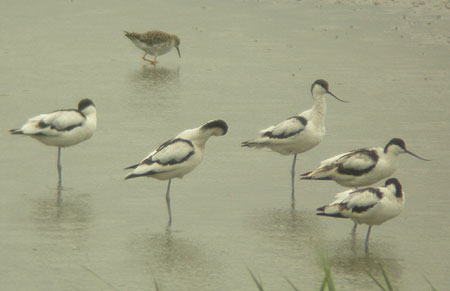
Avocets

Also close to the hide were about 30 Ruff, 10 Black-tailed Godwit, 30-40 Redshank and 4 Green Sandpiper. Lots of Teal were on the water too and a Black-headed Gull flew in followed by two immatures, calling for food. Other waders feeding included 50-60 Dunlin, 1 Snipe, 6 Lapwings and 2 Knot and a Pied Wagtail was catching insects to feed a chick.

At the final hide almost nothing was present, just 2 Greenshank and a flyover Common Gull, although there was a Tree Sparrow feeding chicks in a nestbox close to the hide. With the weather getting ever worse I headed for home having seen quite a number of nice birds.

, , ,

A morning at Welton Waters

I hadn’t been to Welton Waters for quite some time; it can be quite a good place for birds so I decided a visit could turn up something interesting. The weather turned out to be quite hot and there was not a breath of wind, possibly the warmest day this year.

The birds were a bit thin on the ground to start with, but good numbers of warblers were lurking around in the bushes, feeding young. I saw 2 female Blackcaps foraging and a male feeding on crab apples. A young Chiffchaff was easily separated from its parent by its fresh plumage in contract to the scrffy appearance of the adult. Other small songbirds included Wren, Dunnock and Robin.

On the main lake quite a few Little Grebes were busy tending their young and a group of 4 Cormorants were perched on a dead tree. The water of the lake was so calm it looked like a mirror until some noisy water skiers began creating a noise. There were very few other waterbirds present, just 5 Black-headed Gulls, a couple of Mute Swans and a couple of Coot and Moorhen. However, the waterskiing made a Common Scoter come quite close to the bank – a female which spent a long time preening itself.

The nice thing about Welton Waters is that there are a variety of habitats and the mud alongside the Humber turned up a few other birds; 6 Curlew, 24 Lapwings and numerous Black-headed Gulls, Great Black-backed Gulls, Common Gulls and one or two Lesser Black-backed Gulls and Herring Gulls. Then into a patch of woodland where a couple of Goldfinches were shading themselves and a juvenile Robin was being fed by a parent.

The sun was actually getting pretty hot, so I walked back via Brough Airfield where haymaking was in progress. Quite late for cutting the hay, but that is great for the Meadow Pipits and Skylarks to fledge their chicks. Catching the insects coming from the hay were 6 Swallows and 13 Sand Martins whilst in the marsh on the airfield a couple of Gadwall, Mallard, Tufted Ducks and Great Crested Grebes were joined by 3 Grey Herons.

By the time I got back to the car I was quite hot and 2 pikeys on motorbikes were spoiling any chance of seeing more birds. The guy back at the railway crossing asked me if I’d seen anything interesting then told me he’d seen 2 Ruddy Shelduck crossing the road on foot! Now that sounds like stringing at its worst!

dragonfly-north-cave-980.jpg

Coot watching at North Cave Wetlands

I don’t often go to North Cave Wetlands as I usually find it too much of a “Coot Museum”, that is there is very little to see other than Coots, Greylag Geese and Mallards – this is a bit unfair really considering the list of birds that have been found there, but reflects my experience of the site. However, with the sun out and no wish to go far I headed to the reserve for a change of scenery.

The first birds pretty much confirmed my fears; Feral Pigeon, COOT, Greylag Goose, Mallard and Starling. Sitting in a hide I watched a large flock of Lapwings and a juvenile Black-headed Gull. A Great Crested Grebe was taking care of its two young – which strangely were the first I’ve seen this year. In many places in this area the nests were destroyed by the flooding. I then spotted a distant Common Sandpiper but then found one much closer along with a Green Sandpiper. So, in terms of the quality of the birds, things were improving. Further round I found a number of Gadwall coming out of eclipse plumage and a Pied Wagtail.

However, what was most interesting was the numbe of juvenile birds present. Numerous broods of very tiny Tufted Ducklings were learning how to dive alongside their mothers; this provided quite an amusing spectacle. A number of Little Grebes were nurturing their chicks as were a few Coot and Moorhens. It was remarkable how small these young were. Considering how early these species begin their breeding season, it is quite amazing that they still have small young.

About 30 Black-headed Gulls were present further along and 3 Pochard were loafing around on the side of one pond. Some Common Terns were interesting to watch. One came in with a fish and attempted to feed one of its three chicks. However, its mate seemed rather hungry itself and kept attempting to steal the fish. After much fighting and flying around the tern that had caught the fish decided to eat it.

Soon after all the birds flew into the air, including about 40 Jackdaws that were somehow hiding in the grass. Looking up, I saw a male Sparrowhawk circling around, which was immediately bombarded by four noisy Common Terns and a Black-headed Gull. Despite this it took a remarkably long time before it left the area.

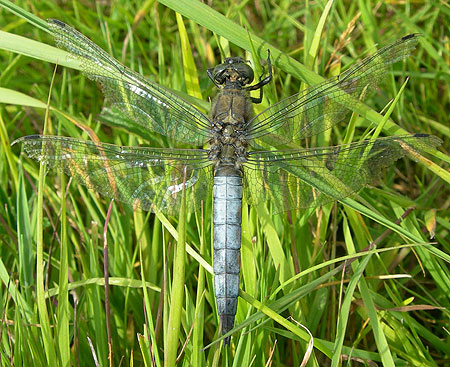
On the way back to the car I took some time to sit in the sunshine and saw a group of about 10 Tree Sparrows and then managed to get some photographs of a Black-tailed Skimmer with badly damaged wings, below. I identified this dragonfly with the assisstance of the East Riding Drogonflies website.

The flooding goes down and the birds begin to arrive – hooray!

Once again, bright sunshine tempted me from my lair and as I couldn’t be bothered to go anywhere far I took a walk along the River Hull to the lake at Eske.

The level of the river was much lower than it has been for months, however, very few birds were to be seen walking along it; just 3 Black-headed Gulls, 2 Mallard and a couple of Swallows. At the lake, though, the lower water level meant that there was somewhere for birds to feed and rest. Quite a large group of Mallard and Gadwall were taking a breather and 4 Lapwings were feeding on the water’s edge. Also on the small patch of exposed mud were 2 Green Sandpipers which swiftly flew away soon after I had spotted them. 9 Cormorants were perched on dead trees, looking rather prehistoric and a Grey Heron was fishing at the lakeside.

Perhaps the most interesting thing I saw was a Kingfisher flying out of a nest hole with a faecal sack. It flew quite some distance away too in the effort to avoid drawing attention to the nest hole.

A couple of Common Gulls flew overhead as I walked back and the wind also began to gust – something that seems to be a regular event on my walks here.

Nightjar listening and Mosquito feeding

Somehow I have never seen a European Nightjar – mainly due to the fact that every time I think about finding them I then decide I am too tired to stay out half the night as I have to get up for work. Well, with no work to worry about I headed, with my friend Simon Tonkin, to Crowle Moors, part of the Humberhead Peatlands National Nature Reserve.

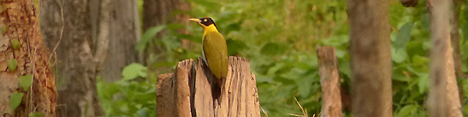
We got there at about 9 pm and walked into the best Nightjar habitat, seeing a juvenile Green Woodpecker along the way. We selected a watch point and waited for the churring. However, it very quickly became obvious that mosquitos were way more common than Nightjars here. In fact standing still attracted a huge cloud of monster mozzies that needed constant flapping of the arms to keep away. Whilst we were being driven crazy a number of mallard and smaller numbers of Teal flew overhead to roosting spots. Just before dusk a large group of Carrion Crows flew in to a roost too.

Unfortunately the mosquitos were by now co-ordinating their assualt, making it very difficult to stand still. Then, a churring Nightjar sparked our hopes, and it was soon joined by at least 5 others. I thought now that it would be a simple case of waiting for them to emerge. Something that they didn’t seem too keen on. No wonder – they had no need to fly to catch insects, simply sit with their mouths open and a swarm of mosquitos were bound to fly in.

By now, both Simon and I were swelling up from mosquito bites and dancing around trying to flap them away. We managed to stay still for a few moments to take a look at the amazing sight of Jupiter and 4 of its moons – wonderful, if only a Nightjar had flown past!

This had to be good enough to be the trip highlight and we made a hasty getaway, by this time we were both on the verge of insanity from the constant barrage from the mosquitos. Nightjars certainly live here, but if you decide to go to see them, soak yourself in deet for a week beforehand.

How to go birdwatching and see almost nothing

Step 1: Choose a warm, sunny day in mid summer.

Step 2: Take a long lie-in and slowly eat breakfast so as to miss any morning bird activity.

Step 3: Go out at midday.

Step 4: Sit in a hot car in atraffic jam for 30 minutes in order to dull the senses and increase impatience.

Step: 5: If the weather should become windy so much the better, this will drive any small passerines into the undergrowth and make it almost impossible to find birds.

This is exactly how I prepared for my walk along the River Hull to Eske/Pulfin and as a consequence saw almost nothing of note – in fact I may have set a record for the least eventful birdwatching walk in history. The “highlights” were 2 juvenile Grey Herons, a group of 21 Coot, 4 Cormorants, a male Yellowhammer and a female Kestrel. Wow!

In fact the walk was rescued from a total non-event by a noisy Little Owl which flew into a hawthorn tree from a point on the ground where presumably it had just caught something to eat.

Free WordPress Themes